
Personalized Social Image Recommendation: Navigating the Hierarchical Nature of Human Interest
Personalized Recommendation of Social Images by Constructing a User Interest Tree With Deep Features and Tag Trees
This paper introduces a personalized social image recommendation framework that constructs a dual "User Interest Tree" by integrating deep visual features (AlexNet) with structured tag trees. The method achieves state-of-the-art performance on the NUS-WIDE dataset by effectively modeling the hierarchical nature of user preferences through both image content and semantic metadata.
TL;DR
Social image recommendation is often chaotic due to the noisy, unstructured nature of user tags and the complexity of visual content. This paper proposes a User Interest Tree framework that marries Deep Learning (AlexNet) with Tag Tree structures. By modeling user preferences as a hierarchical path—from broad categories to specific interests—the system achieves a substantial jump in Precision and Recall on the NUS-WIDE benchmark.
The Problem: Why "Flat" Recommendations Fail
When we browse Flickr or Instagram, our interest isn't just a list of keywords; it's a hierarchy. You might start with a broad interest in "Animals," narrow it down to "Dogs," and eventually focus on "Golden Retrievers."
Current SOTA methods often treat recommendation as a flat similarity match. Furthermore:
- Tag Noise: Users tag images subjectively ("bravo," "awesome"), which creates semantic clutter.
- Unstructured Metadata: Tags like "Flower" and "Rose" are treated as isolated units rather than parent-child concepts.
- Semantic Gap: Visual features alone often miss the "intent" of the user.
Methodology: The Dual-Tree Architecture
The proposed solution utilizes a "User Interest Tree" composed of two sub-structures:
1. The Tag Tree (Semantic Logic)
Instead of accepting tags as-is, the authors perform Tag Ranking based on visual content. They extract SIFT (local) and HSV (global) features to find "neighbor images" and vote on the most descriptive tags. These tags are then organized into a tree where frequent, broad terms occupy the top layers and specific terms are sub-nodes.
2. The Interest Tree of Social Images (Visual Logic)
The system leverages AlexNet to extract 4096-dimensional latent features from images. To handle the scale, they utilize a Huffman Tree structure—a technique traditionally used in data compression—to organize users and images as nodes.
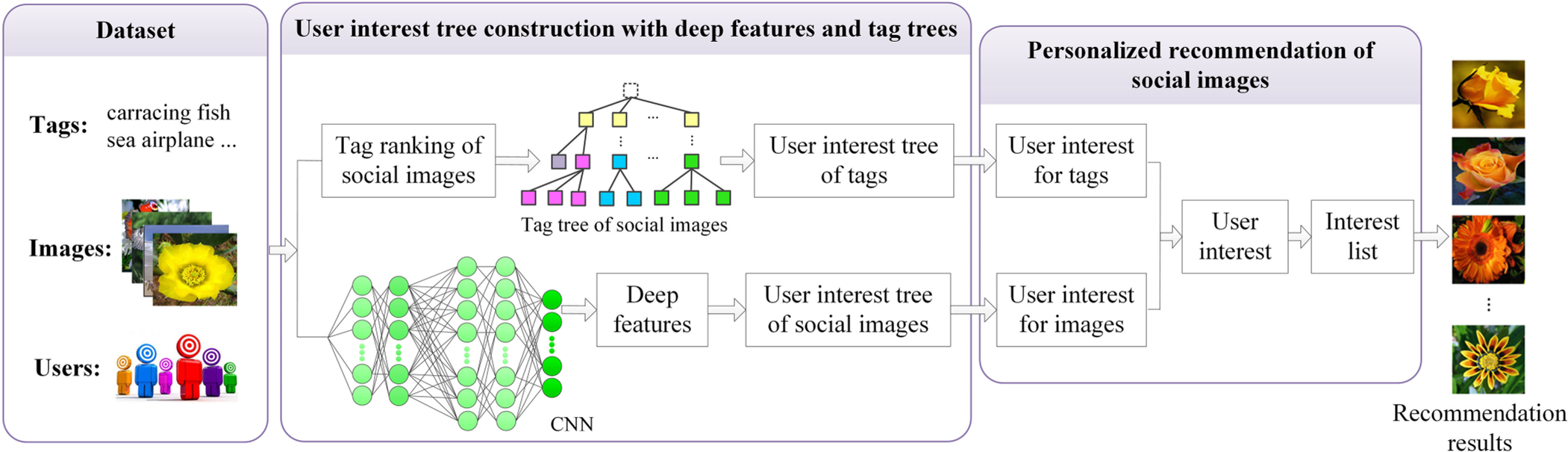 Fig 1. Overview of the Personalized Recommendation System.
By applying Stochastic Gradient Ascent (SGA), the model learns a "User Deep Value" () within this tree. To calculate the final interest, the system computes the Euclidean distance between this learned user vector and candidate image features.
Experimental Results: Precision Meets Efficiency
The authors tested their model against the NUS-WIDE dataset (10,000 images, 36 categories).
Key Breakthroughs:
- Dimensionality Optimization: Using PCA to reduce AlexNet features to 256 dimensions yielded the best balance between precision and computational cost.
- Superior Accuracy: Compared to the "Image-User" baseline, this method increased precision from 0.276 to 0.673 at k=15 recommendations.
- User Satisfaction: Visualization of user paths (e.g., "Flower-Rose-Pink") confirmed that the system effectively maps interests from the extensive to the concrete.
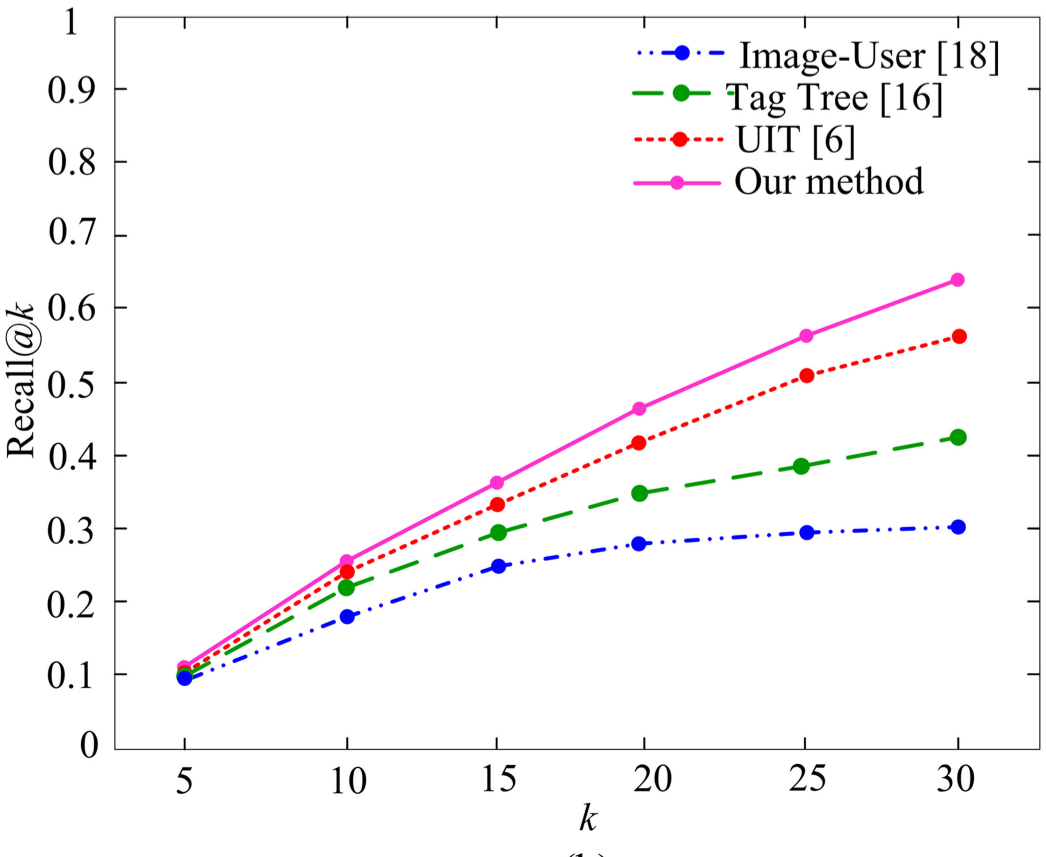 Fig 2. Precision and Recall curves showing the method (Red Line) outperforming UIT and Tag Tree baselines.
Latency Analysis
While the training time is higher (~9856s) due to the dual-tree construction, the Average Recommendation Time (0.775s) is comparable to much simpler models, making it viable for real-world application.
Critical Insight: The "Subjective" Tag Tree
A unique takeaway from this work is the admission of the "User Subjective Factor." Unlike pure computer vision models that aim for objective truth, this system acknowledges that the hierarchy of a tag tree is partially defined by how a specific community uses language. By integrating this subjectivity into the Tag-User Bipartite Graph, the model doesn't just find similar images—it finds personally relevant images.
Conclusion and Future Outlook
This paper successfully demonstrates that tree structures are more than just data silos—they are effective proxies for human cognition. For future developments, the authors suggest replacing AlexNet with more modern architectures (like ResNet or Transformers) and utilizing Natural Language Processing (NLP) to further refine tag relationships.
As social media becomes more visual, the ability to "understand" a user’s path from a broad category to a specific niche will be the defining feature of the next generation of recommendation engines.