
The Architecture of Persuasion: How Facebook’s Mobile App Hooks Its Users
Persuasion strategies in mobile systems: a case study of Facebook application
This study investigates the implementation of B.J. Fogg’s "Captology" principles within the Facebook mobile application, specifically focusing on how mobility and connectivity enhance persuasion. By mapping app features to 7 distinct persuasive strategies and surveying 224 users, the research evaluates the effectiveness of these triggers in altering user behavior and maintaining long-term engagement.
TL;DR
This research dissects how Facebook utilizes "Captology"—the study of computers as persuasive technologies—to influence user behavior via mobile-specific triggers. By analyzing features like Instant Articles, Live Notifications, and Stories, the authors identify 7 core strategies that exploit the unique timing (Kairos) and convenience of smartphones to maximize user retention.
The Shift from Tools to Influencers
Historically, computers were tools for data processing. Today, they are "Social Actors." The core motivation behind this study is the realization that mobile devices are no longer just communication portals; they are extensions of ourselves (the "känny" concept) that provide a 24/7 channel for psychological influence. The authors argue that the "time and context" dimensions of mobile technology are the most under-explored yet critical factors in modern UX design.
Methodology: Mapping Influence
The researchers mapped B.J. Fogg's 42 persuasive principles specifically to Facebook’s mobile-only features. They focused on why users behave differently on their phones than on their desktops.
The Core Framework: Mobility & Connectivity
The study highlights the taxonomy of persuasive principles, prioritizing those that thrive on connectivity.
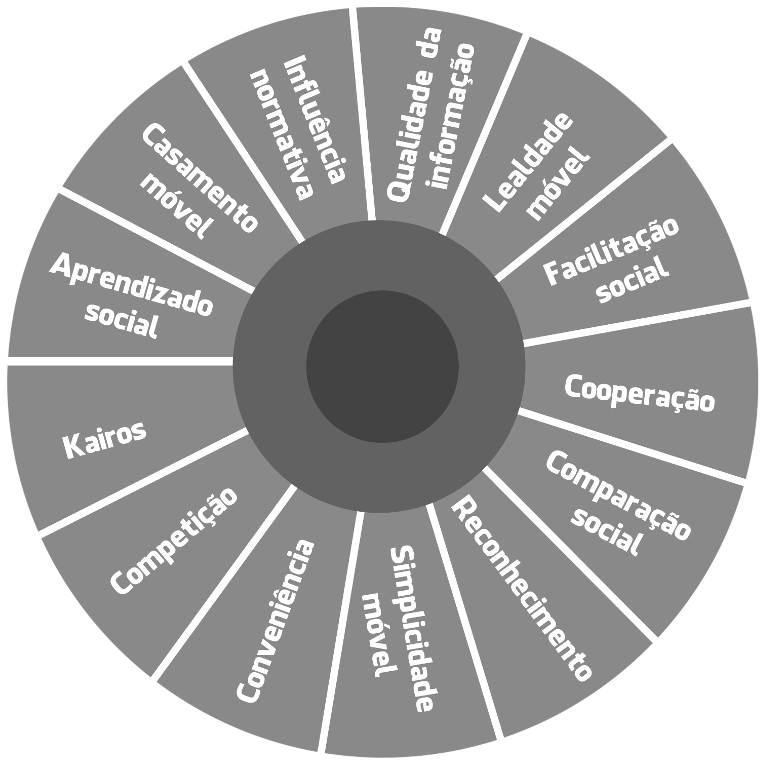 Figure: The six areas of persuasive technology defined by Fogg, focusing on Mobility and Connectivity.
Key Persuasive Strategies in Facebook Mobile
1. The Power of "Kairos" (The Opportune Moment)
The app uses location data to send notifications about events happening now near the user. By suggesting behavior at the exact moment a user can act on it, Facebook significantly increases the probability of conversion.
- Feature: Event notifications.
- Insight: Users are more likely to attend or interact when the prompt includes social proof (friends attending), combining Kairos with Normative Influence.
2. Mobile Marriage & Notifications
The "Mobile Marriage" principle describes the intense, positive relationship between the user and the app. Notifications act as the heartbeat of this relationship.
- Finding: Over 81% of users access the app at least "eventually" or "always" upon receiving a buzz in their pocket.
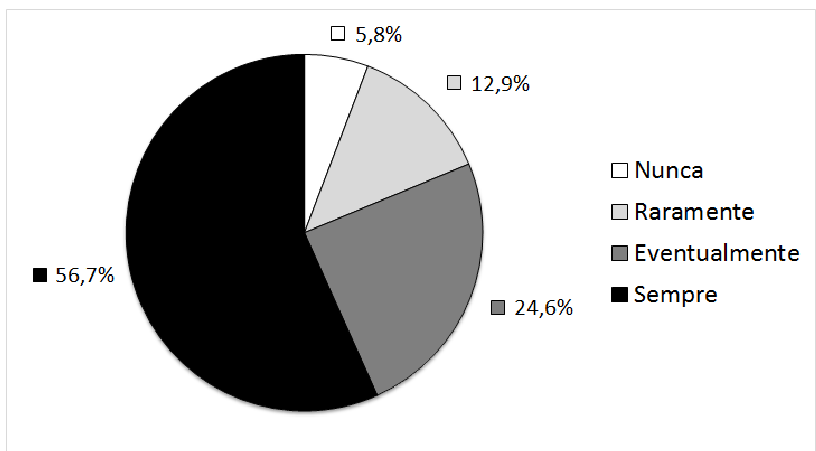 Figure: Survey results showing the high frequency of app access triggered by notifications.
3. Simplicity and Convenience
One of the highest-performing areas was photo and video publication. The "Mobile Simplicity" principle suggests that limiting input/output complexity (due to small screens) actually increases persuasion if the core task is frictionless.
- Result: 79.5% prefer mobile for media because the "photo was already there" and the process is "faster."
Critical Analysis: Where Persuasion Fails
The study isn't just a praise of Facebook's design; it reveals significant friction points:
- Trust vs. Quality: While Facebook offers weather updates and location services (Mobile Loyalty), 52.4% of users find this information "hardly or not at all" reliable.
- Resistance to Cloning: Features like Facebook Stories (a clone of Snapchat/Instagram) faced resistance, with 71% of surveyed users refusing to use them, citing "excessive exposure" or "lack of original value."
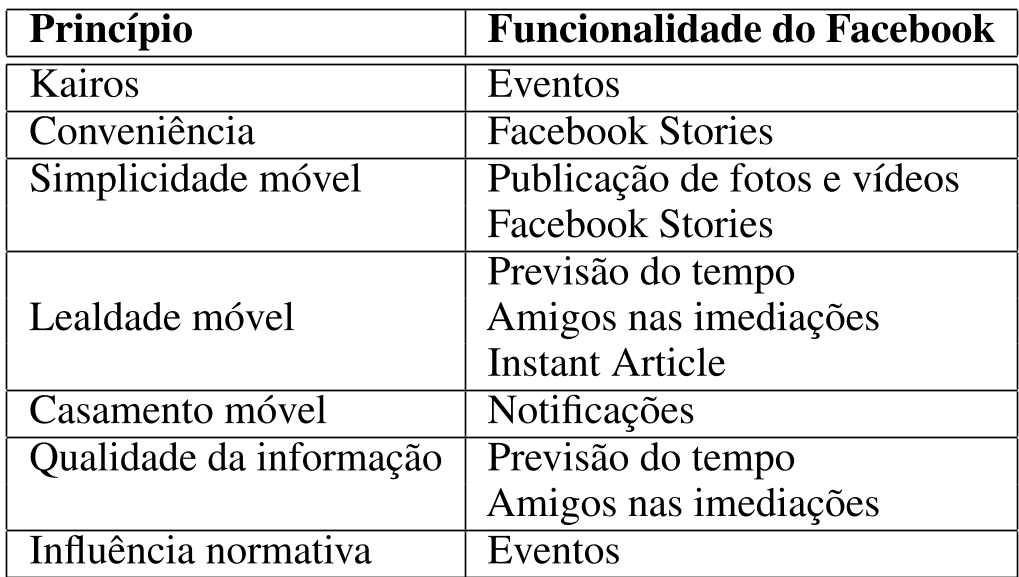 Table: Summary of principles mapped to specific Facebook functionalities.
Takeaways & Future Outlook
The success of a mobile application is not random; it is governed by the strategic deployment of psychological triggers.
- Context is King: Use location and timing (Kairos) to make suggestions relevant.
- Friction is the Enemy: Successful persuasion requires "Mobile Simplicity"—reducing steps to a single click.
- The Loyalty Gap: Persuasion fails without Information Quality. If users don't trust the data (e.g., weather or nearby friends), the persuasive loop breaks.
For future research, the authors suggest applying this lens to more "temporary" media like Snapchat or utility-heavy platforms like WhatsApp to see if these principles hold across different cultural contexts.