
Persuasive Healthcare: Beyond Monitoring to Behavioral Transformation
Persuasive Healthcare Self-Management in Intelligent Environments
The paper introduces a persuasive healthcare self-management framework for intelligent environments, specifically targeting chronic diseases like diabetes. It integrates ubiquitous computing (smartphones/sensors) with social computing to influence user behavior through personalized persuasion strategies and expert-defined clinical rules.
TL;DR
This research addresses the "adherence gap" in chronic disease management by shifting the focus from simple data collection to active persuasion. By combining smartphone ubiquity, social network influence, and expert-driven rules, the authors present a framework that uses Fogg’s Behavior Model to turn intelligent environments into proactive health coaches.
Background: The Limits of "Silent" Monitoring
Intelligent environments have long been capable of tracking our steps and glucose levels. However, as the authors point out, a system that only records data is a failure if the user ignores its recommendations. Chronic patients (e.g., those with diabetes) face "daunting" follow-ups and lifestyle changes. The missing link isn't more data; it's persuasion.
The Core Insight: The Monitoring-Assessment Model
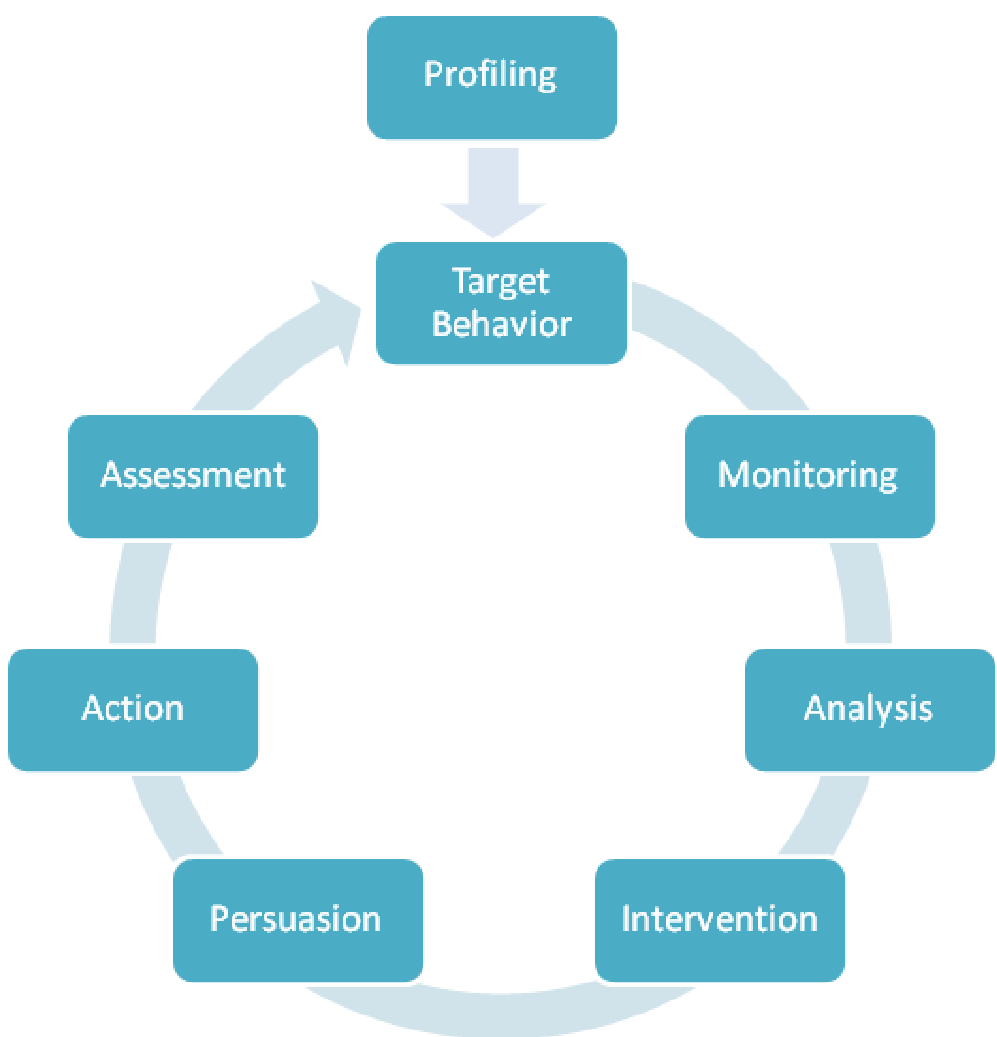
The paper moves away from a linear "collect-and-report" style toward a dynamic 8-stage cycle. The most critical stages are:
- Target Behavior identification: Defining exactly what needs to change (e.g., more exercise).
- Persuasion: Applying specific strategies (Social Proof, Authority, Commitment).
- Assessment: Measuring if the persuasion actually led to an action.
Methodology: Fogg’s Behavior Model as a Technical Blueprint
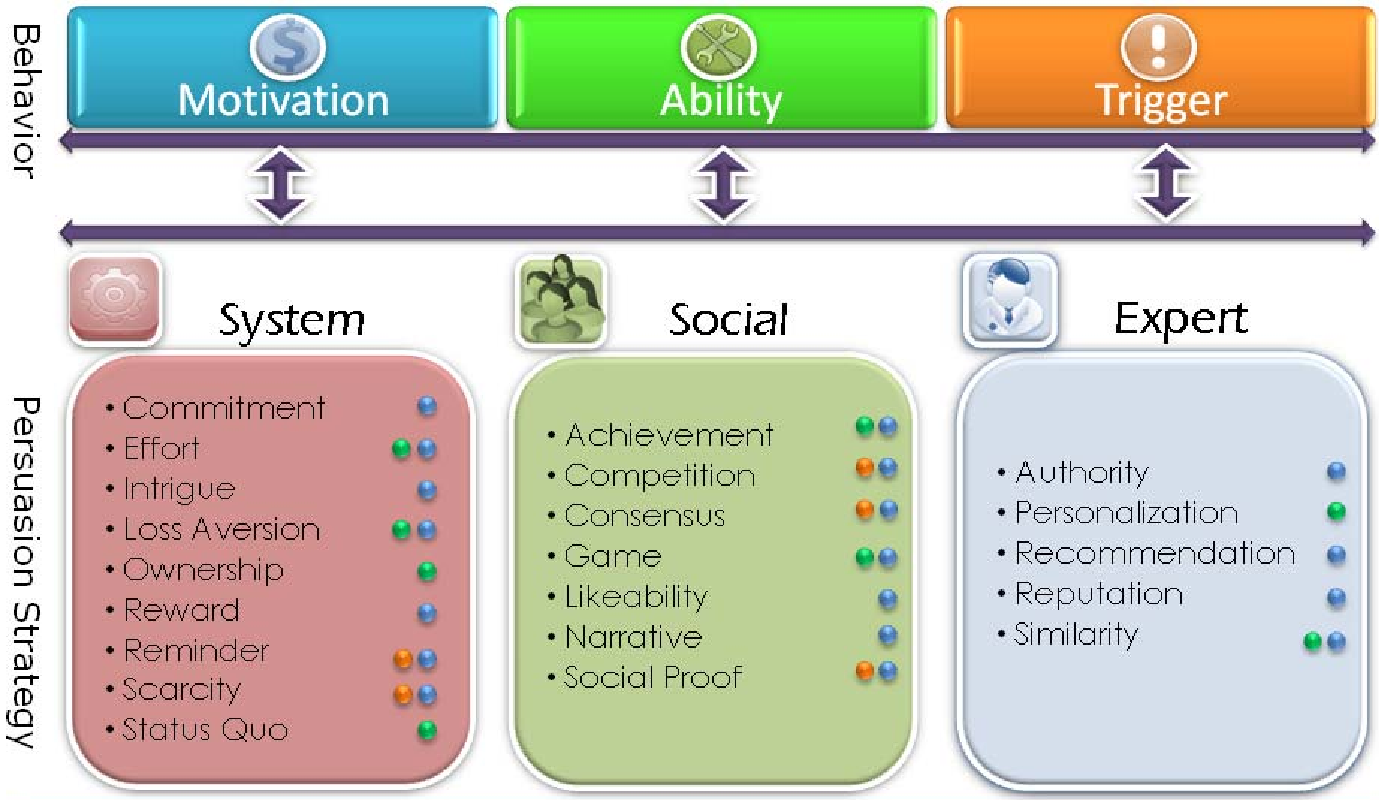
The authors utilize BJ Fogg’s Behavior Model, which posits that behavior happens when Motivation, Ability, and a Trigger converge simultaneously.
- System Persuasion: Uses "Commitment" (goal setting) and "Reminders" to reduce the effort required for healthy actions.
- Social Persuasion: Leverages "Social Proof" (seeing peers exercise) and "Narratives" (sharing success stories) to boost motivation.
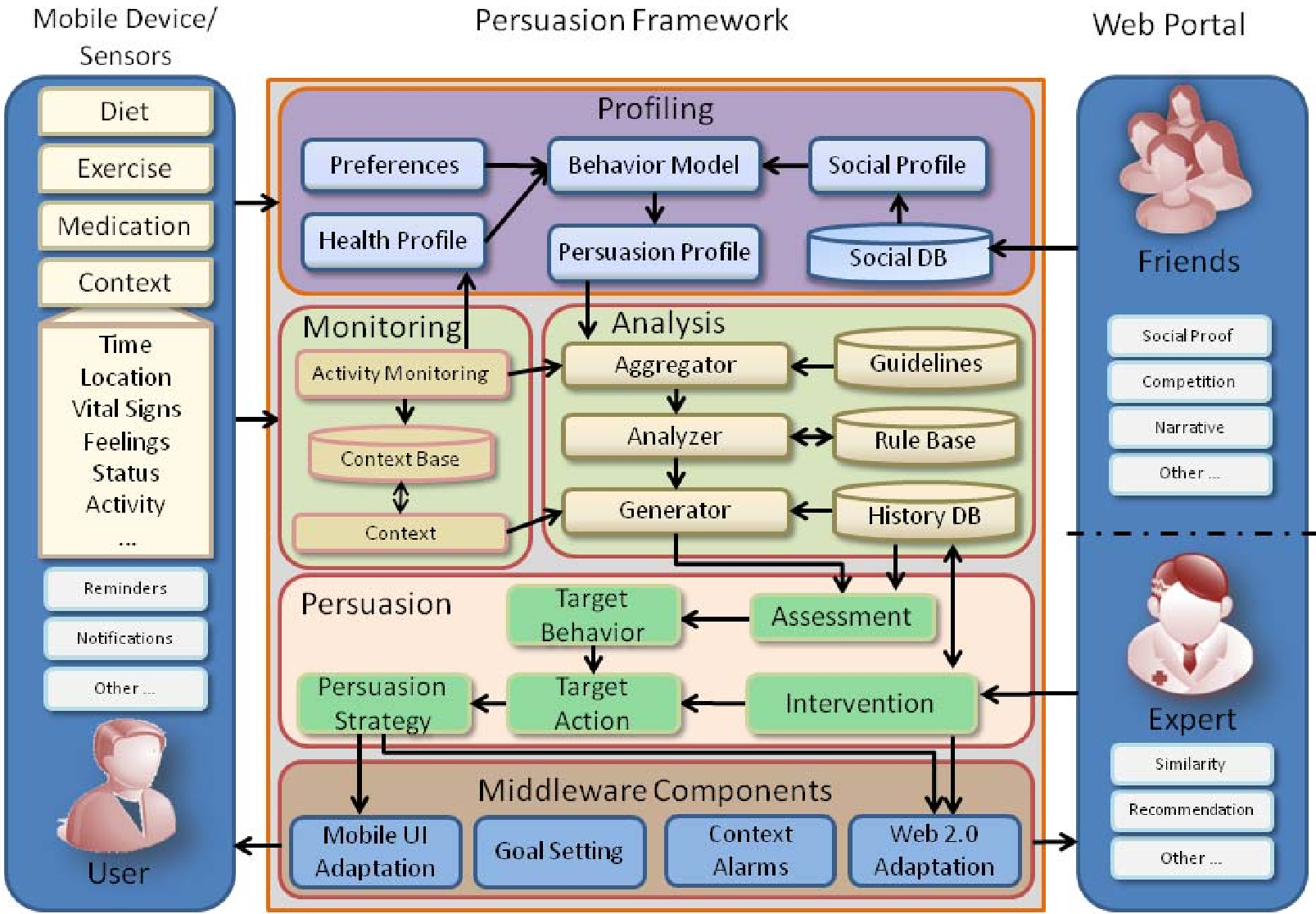
- Expert Persuasion: Incorporates clinical rules validated by endocrinologists to provide high-authority recommendations that carry more weight than automated alerts.
Case Study: Diabetes Self-Management
Diabetes is the "perfect" test case because it requires constant balancing of diet, exercise, and medication. The implementation used an Android Widget—a strategic choice. Unlike a standalone app, a widget lives on the home screen, serving as a persistent "trigger" every time a user checks their phone.
Key Strategies Mapped to Features:
- Motivation: Rewards and status updates via a social portal.
- Ability: Simplification of data entry through smartphone sensors (GPS/Accelerometer).
- Triggers: Context-aware notifications (e.g., suggesting a walk after a high-calorie meal).
Critical Analysis & Future Outlook
The strength of this work lies in its "Persuasion Profile," recognizing that what motivates one person (a doctor's order) might not motivate another (a friend's progress).
Limitations: While the social aspect is powerful, it raises significant privacy concerns regarding sensitive medical data. Furthermore, as the authors note, the system generates massive amounts of data that will eventually require cloud-scale processing and more sophisticated AI (perhaps LLMs in today's context) to maintain personalized interaction.
Takeaway: The "Intelligent" in Intelligent Environments should stand for for "Influence." The future of MedTech isn't just a better sensor; it's a better psychologist.