
Mobile Social Networking Middleware: Architecting the Next Generation of Pervasive Sociality
Pervasive and mobile computing
This paper provides a comprehensive survey and a novel taxonomy of Mobile Social Networking (MSN) middleware. It identifies the paradigm shift from traditional Online Social Networking (OSN) to MSN, where physical location, co-presence, and opportunistic computing are leveraged to build dynamic communities through specialized middleware solutions like MobiSoC, SAMOA, and Yarta.
TL;DR
The digital social landscape is shifting from "Virtual-Only" (OSN) to "Cyber-Physical" (MSN). This paper surveys the middleware and architectural guidelines necessary to support this transition, proposing a taxonomy that moves beyond simple client-server models to embrace opportunistic, location-aware, and decentralized social ecosystems.
Background & Motivation: Beyond the Centralized Feed
For over a decade, social networking has been synonymous with Online Social Networking (OSN) like Facebook or LinkedIn—platforms that are fundamentally agnostic to physical space. Whether you are in New York or Tokyo, your feed remains the same.
The authors argue for Mobile Social Networking (MSN), which represents a fundamental paradigm shift. MSN isn't just "OSN on a phone"; it is the use of mobility, co-presence, and local context to create opportunistic communities. Imagine a bookstore where your phone detects a fellow student with the same research interests, triggering an instantaneous, temporary social bond. To make this a reality, we need Middleware—a layer that shields developers from the complexities of intermittent connectivity and privacy management.
The Taxonomy of MSN Structures
The paper introduces a structured way to look at MSN through two primary lenses: Focal Nodes and Scopes.
1. User-Centric vs. Place-Centric
- User-Centric: The network revolves around the "Ego-user," filtering the world based on their specific profile and movement.
- Place-Centric: The "Place" (e.g., a museum or stadium) is the focal point. The middleware manages the social interactions of whoever happens to be within its boundaries.
2. Spatial and Temporal Scopes
The authors define the "Quality" of social awareness through its scope:
- Spatial (Global vs. Local): Does the middleware see everyone (Infrastructure-based) or just immediate neighbors (Ad-hoc)?
- Temporal (History-based vs. Instantaneous): Does the system record encounter frequency over months to infer deep social ties, or is it just about "right now"?
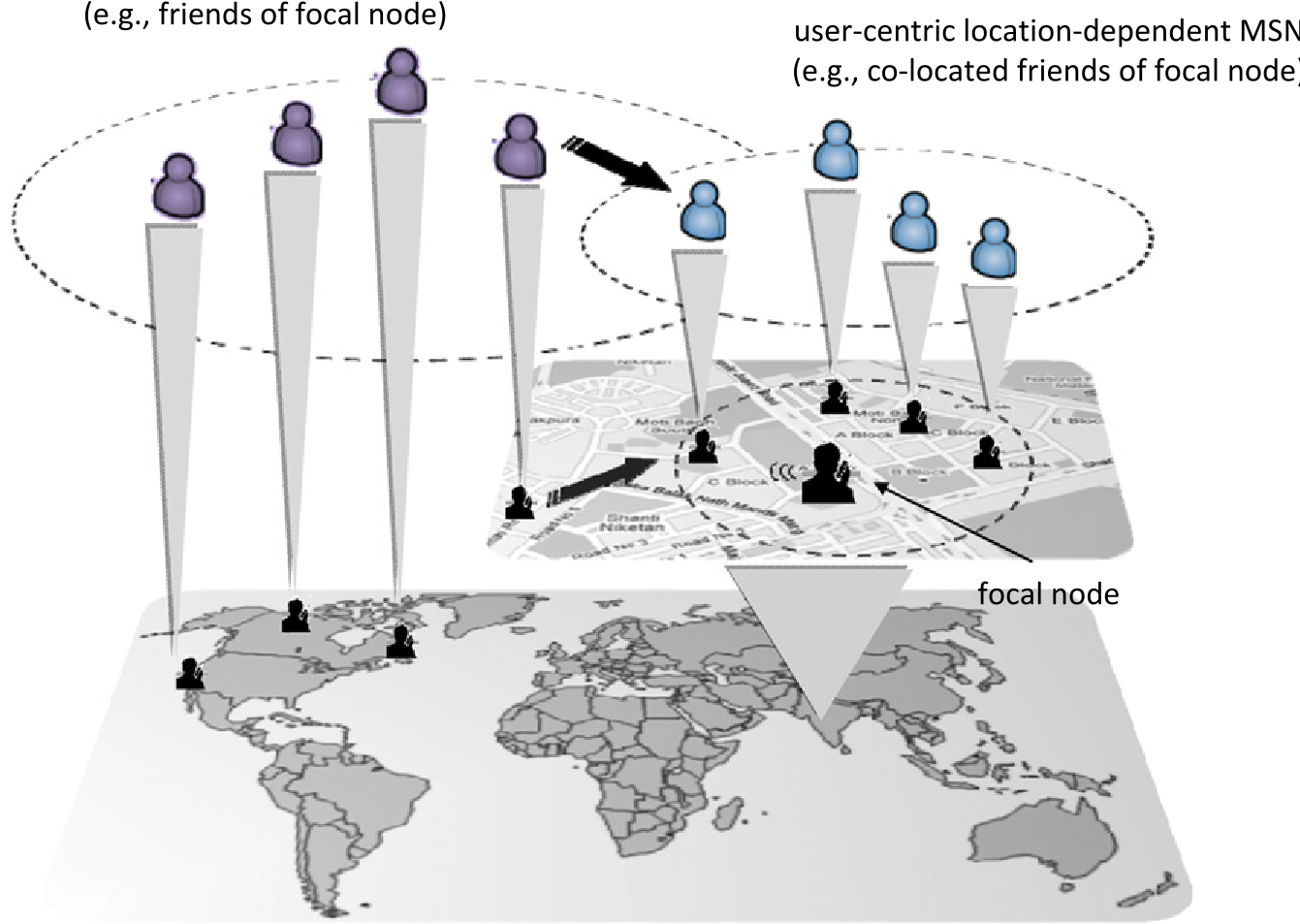 Figure 1: The proposed MSN structure classification, illustrating location-dependency and the role of focal nodes.
Methodology: The Layered Architecture
To standardize MSN development, the paper proposes a horizontal architecture:
- Social Data Inference: Uses semantic reasoning (RDF/OWL) or machine learning to turn "raw" proximity data into "weighted" social bonds.
- Community Detection: Filters the massive global social graph into localized "MSN Views."
- Social Multicast: Enables efficient communication within these dynamic groups without requiring a central server.
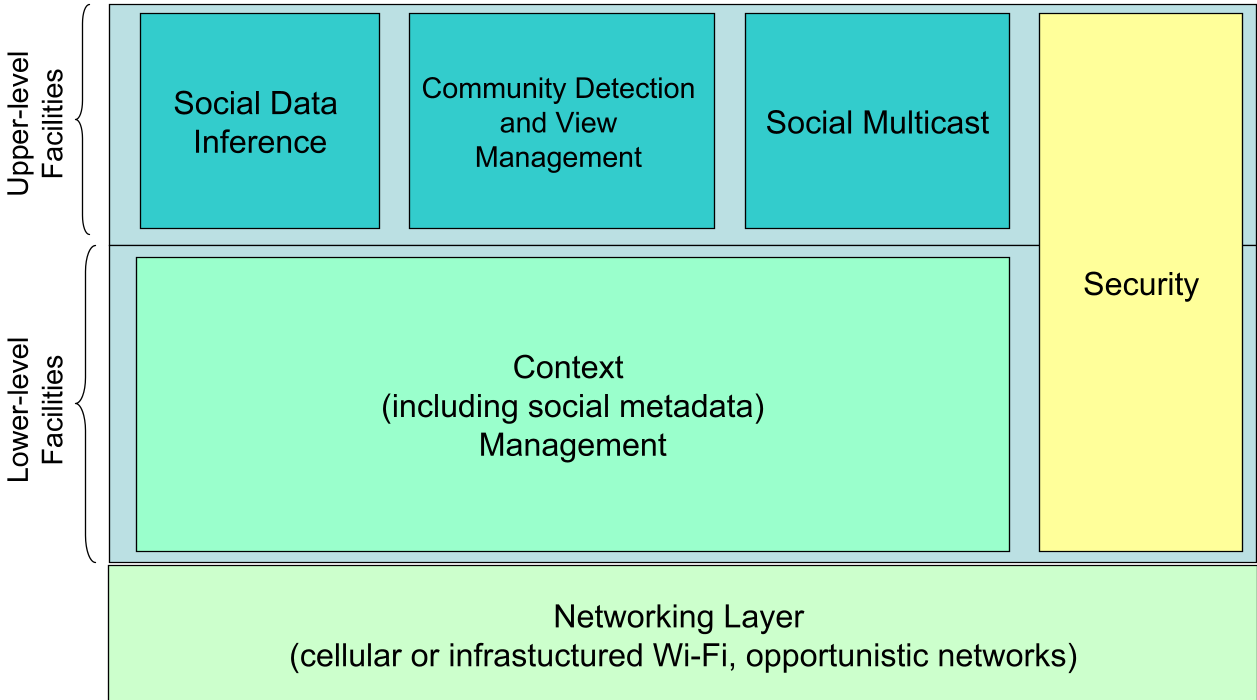 Figure 2: The conceptual MSN middleware architecture, highlighting the integration of social and context management.
Comparative Analysis of SOTA Middleware
The survey compares several key academic prototypes:
- MobiSoC: The "Big Data" approach. Heavily centralized, it excels at finding long-term patterns (e.g., "People who visit this gym usually work in tech").
- SAMOA: Focuses on "roaming" networks. It’s decentralized and emphasizes semantic matchmaking using ontologies.
- Yarta: The most modern approach discussed, treating the social network as a dynamic "Ecosystem" represented by RDF triples, allowing for highly flexible metadata sharing.
Critical Insight: The Scalability and Privacy Paradox
A recurring theme in the paper is the trade-off between visibility and efficiency. To get perfect social recommendations, a server needs all your data (Privacy Risk); to be perfectly private, nodes must exchange data ad-hoc (Scalability/Completeness risk). The paper suggests that future middleware must support Dynamic Allocation—deciding at runtime whether to process data locally on the device or offload to a trusted cloud/edge node.
Conclusion & Future Outlook
The paper concludes that while we have the building blocks (Bluetooth, GPS, Semantic Web), we lack a standardized API for social context. The authors point towards Big Data and Cyber-Physical Convergence as the next frontiers—where the middleware isn't just helping you find friends, but helping urban systems understand human flow to manage crises and public health.
Key Takeaways for Developers:
- Don't build social logic into the App; use a middleware that treats social ties as a specialized Context layer.
- Prioritize semantic interoperability (RDF/OWL) to allow different social apps to "talk" to each other during opportunistic encounters.
- Consider "Place-centric" models for public events and "User-centric" models for personal networking.