
POST-VIA 360: Re-imagining Tourism Loyalty through Bio-Inspired Algorithms and Semantic Intelligence
Pervasive and mobile computing
This paper introduces POST-VIA 360, a comprehensive mobile platform designed to enhance long-term tourism loyalty through a social and context-aware recommendation system. It leverages a unique combination of Semantic Technologies, Feature-based Opinion Mining, and Bio-inspired algorithms (specifically Artificial Immune Systems) to provide personalized Point of Interest (POI) suggestions.
TL;DR
POST-VIA 360 is a cutting-edge platform that shifts the focus of tourism technology from "attraction" to "loyalty." By combining Artificial Immune Systems (AIS), Semantic Ontologies, and Opinion Mining, it creates a recommendation engine that understands not just where a tourist is, but how they feel about what they've seen. Validated against human experts, it achieved a 91.7% precision rate in providing relevant local recommendations.
The Loyalty Trap in Modern Tourism
Most tourism organizations spend their budgets attracting "one-and-done" visitors. However, true economic value lies in loyalty—visitors who return, spend more, and act as brand ambassadors. The technical challenge is creating a system that maintains a relationship after the first visit.
Prior works often treated recommendations as a static problem (e.g., "people who liked X also liked Y"). The authors of POST-VIA 360 argue that this ignores the spatial-temporal context and the rich sentiment hidden in written reviews, which are far more descriptive than simple 5-star ratings.
Methodology: The "Immune System" of Personalization
The core innovation lies in its Artificial Immune Recommender System. In this framework:
- Antigens represent a user's current profile or needs.
- Antibodies represent previous successful visits or POI profiles.
- Affinity (measured via Pearson’s correlation) determines how well a POI "matches" a user’s immune response (preferences).
1. Architectural Blueprint
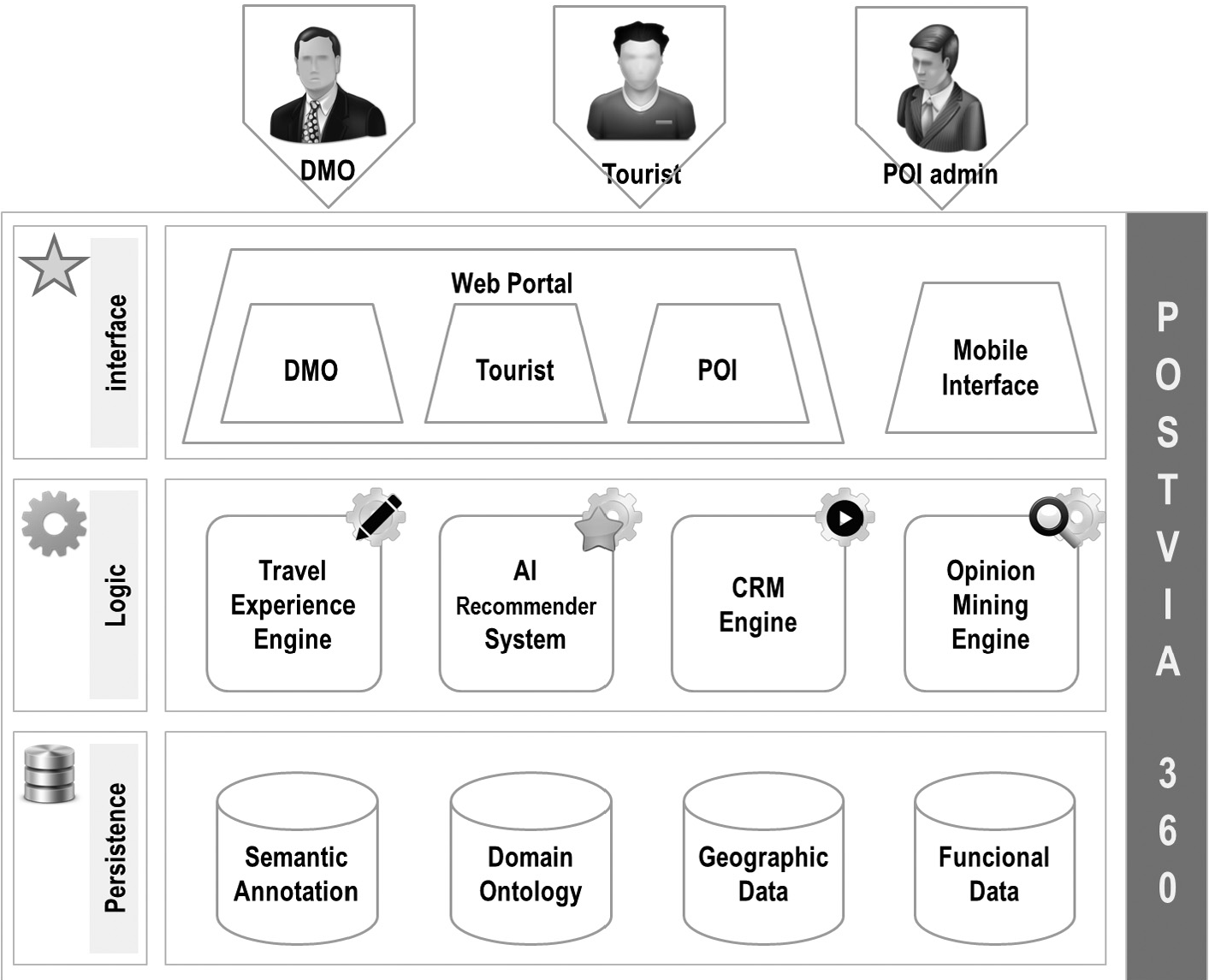
The system follows a robust three-layer design:
- Interface Layer: Adaptive HTML5 and native mobile apps.
- Business Logic Layer: The "brain," housing the AIS engine and the CRM module.
- Persistence Layer: Utilizing PostGIS for spatial data and Jena API for semantic OWL ontologies.
2. Semantic Opinion Mining
Unlike basic systems, POST-VIA 360 doesn't just read stars. It uses a Natural Language Processing (NLP) module to break down reviews, identifying specific "features" (e.g., "tapas quality," "service speed") and calculating their polarity using SentiWordNet 3.0. This allows the system to recommend a bar specifically for its atmosphere if that's what the user values.
Experiments: Human vs. Machine
The authors validated the system in Madrid, comparing its outputs against a "Gold Standard" set by four professional tourism guides using the Delphi method.
Evaluation Metrics:
The study used Precision, Recall, and the F1-measure. While the system struggled to match the expert's exact first choice (only 5.6% match), it showed high utility when looking at the recommended set as a whole.
| Metric | POST-VIA 360 (Whole Set) | [60] Baseline | [62] Baseline |
|---|---|---|---|
| Precision | 0.917 | 0.864 | 0.480 |
| Recall | 0.306 | 1.000 | 0.480 |
| F1 | 0.458 | 0.927 | 0.480 |
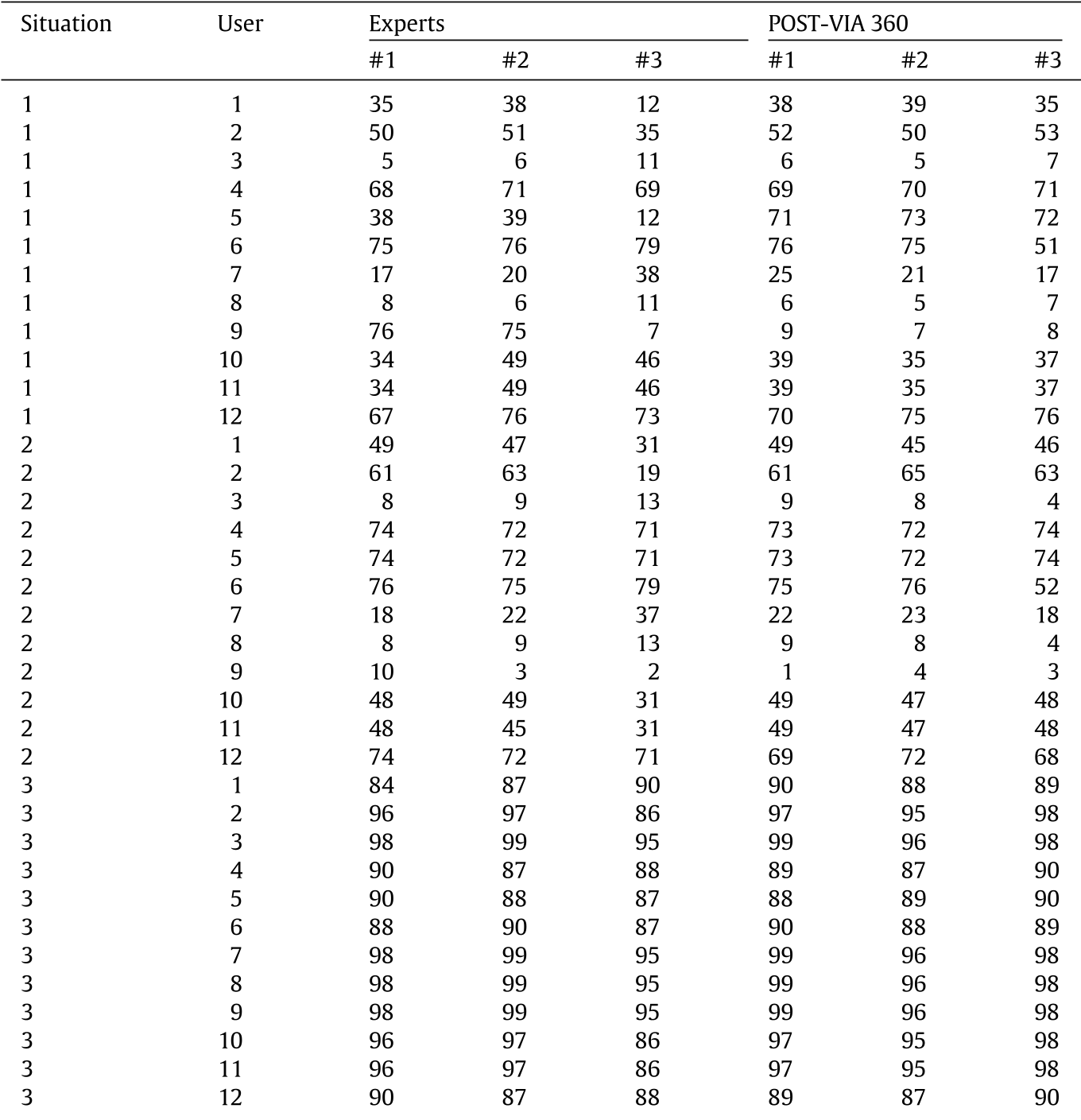
Analysis of Results: The remarkable 0.917 Precision suggests that nearly all of the system’s top-3 suggestions were deemed relevant by experts. The lower Recall (0.306) is attributed to the vast diversity of Madrid's culinary scene—there are simply too many similar "good" options (pubs, tapas bars) for any system to capture the entire spectrum of "correct" answers.
Critical Insight & Future Outlook
Takeaway: POST-VIA 360 proves that high-precision recommendations in tourism require more than just collaborative filtering; they require semantic depth. By understanding the "why" behind a visit (through opinion mining), the system mimics human expertise.
Limitations:
- Data Dependency: The system is only as good as the data provided by DMOs (Destination Management Organizations).
- Social Silos: Currently, it does not ingest real-time data from external social giants like Instagram or Twitter, which are primary drivers of modern "hyped" POIs.
The future of POST-VIA 360 involves integrating Social CRM tools to automatically detect social media trends and incorporating micro-blogging status updates to better reflect real-time "tourist hype."