
Photo-Narratives: Bridging the Intergenerational Gap in a Globalized World
Photo-based narratives as communication mediators between grandparents and their children and grandchildren living abroad
This study explores how young Malaysian mothers living in the UK use photo-based narratives on platforms like Flickr to maintain intergenerational communication with grandparents back home. It identifies specific "baby storytelling" patterns and the mediator roles siblings play in bridging the digital divide for older family members.
TL;DR
This research investigates how geographically separated families use photo-based storytelling to sustain emotional bonds. By following Malaysian mothers in the UK, the authors uncover the "grammar" of baby stories and the critical role of social media in making grandparents feel present in their grandchildren's lives, even when they cannot use the technology themselves.
Contextualizing Digital Storytelling
In the landscape of modern Human-Computer Interaction (HCI), communication isn't just about the transfer of data; it's about the transmission of presence. This paper sits at the intersection of migration studies and technical mediation, exploring how tools like Flickr and Fotopages serve as "communication mediators."
The Problem: The "Silent" Disconnect
When families migrate, the "nuclear family" often loses the physical and emotional support of the extended family (grandparents). While phone calls provide a voice, they fail to capture the subtle developmental milestones—a first step, a specific facial expression, or the "messy" reality of daily life. The barrier isn't just distance; it's the technological gap where the creators (young mothers) are digital natives, but the intended audience (grandparents) are often digital novices.
Methodology: Decoding the "Baby Story"
The researchers categorized 1,405 photos and 29 specific narratives created during the study. They identified a fascinating shift in content based on the child's age:
- Infants (<1 year): Stories focus on Emotion (facial expressions) and Basic Skills (rolling, eating).
- Toddlers (1-2 years): Stories shift to Experiences and Moments (trips, walking on snow).
- Preschoolers (2-3 years): Content evolves into Performance and Activity (dancing, "helping" with chores).
The Mediated Access Model
Unlike typical social media usage where the consumer interacts directly with the platform, this study highlights a multi-tier mediation system:
- The Creator: The mother in the UK.
- The Bridge: A sibling in Malaysia who prints photos or opens the laptop.
- The Consumer: The grandparent who experiences the story through the bridge.
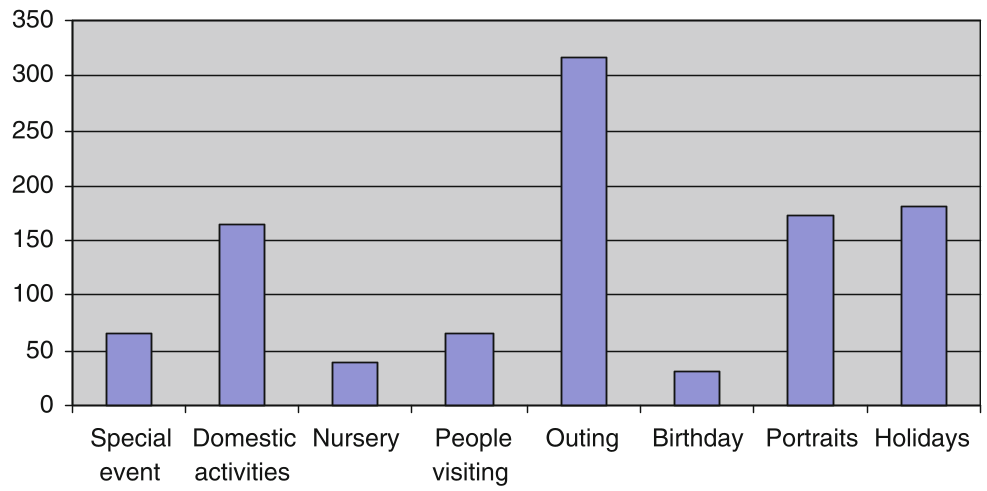 Figure: Comparison of photo categories between daily social media use and the specific storytelling exercise.
Key Insights: Why Photo Stories Work
The study reveals several "social hacks" mothers use to enhance the bond:
- Young Children as Narrators: Mothers often write captions in the first person ("I'm busy with the iPhone, Mum!") to simulate the child speaking directly to the grandparent.
- Content Filtering: There is a purposeful "amplification of the good." Mothers hide minor illnesses or accidents to prevent unnecessary worry back home.
- The "Touch" Factor: Despite the digital nature of the stories, grandparents expressed a deep desire to "touch" the photos, often leading to heirs printing the digital images for bedside keepsakes.
 Figure: A 'Performance' story where the child acts for the camera, providing a sense of personality to distant relatives.
Quantitative Impact
The emotional data was overwhelmingly positive. On a 5-point Likert scale:
- "I feel closer to the family": 4.5
- "I feel happy": 4.4
- "I miss the baby less": 3.9
Interestingly, the stories also triggered "positive sadness"—a bittersweet longing that actually reinforced the familial bond rather than causing distress.
Critical Analysis & Conclusion
Takeaway
The paper proves that technology’s primary value in intergenerational contexts is its ability to facilitate asymmetric intimacy. We don't need grandparents to become IT experts; we need systems that allow digital natives to "broadcast" stories into the analog or semi-analog worlds of seniors.
Limitations
The study is localized to Malay culture, which has high "Intergenerational Solidarity." The results might differ in cultures with more individualistic family structures. Additionally, the study was conducted in the pre-smartphone/WhatsApp explosion era, though the core psychological triggers (storytelling, mediation) remain relevant today.
Future Outlook
Future systems should look at "Reciprocal Storytelling." While mothers share stories of the UK, how can we help grandparents share their "legacy stories" back to the grandchildren in a way that is just as engaging?