
PHY-Aided Security: Hardening IoT Healthcare via Hardware Fingerprints
A PHY-Aided Secure IoT Healthcare System with Collaboration of Social Networks
This paper introduces a Physical-Layer (PHY)-aided security framework for Social Internet of Things (SIoT) healthcare systems. It leverages device-specific hardware impairments, specifically Carrier Frequency Offset (CFO) and In-phase/Quadrature-phase Imbalance (IQI), to generate a unique PHY-ID for resource-constrained medical body sensors.
TL;DR
To protect sensitive medical data in Social IoT (SIoT) environments, researchers have moved beyond pure digital encryption. This paper proposes using unique hardware "flaws"—specifically Carrier Frequency Offset (CFO) and I/Q Imbalance—as unforgeable identities (PHY-IDs) for medical sensors. This approach provides a nearly 100% authentication rate without adding a single cycle of extra computation to the power-hungry body sensors.
Problem & Motivation: The "Resource-Security" Paradox
In the healthcare IoT (HIoT) landscape, we face a critical paradox:
- High Sensitivity: Medical data requires top-tier confidentiality.
- Low Capability: Wearable and implanted sensors are extremely resource-constrained (limited CPU, memory, and battery).
Existing solutions like Elliptic Curve Cryptography (ECC) attempt to lower the math overhead, but they still rely on digital keys. If a key is stolen or cracked via exhaustive search, the network has no way of knowing the signal isn't coming from the legitimate device. The authors argue that security must be tied to the physics of the hardware itself.
Methodology: Turning Flaws into Features
The core insight is that every radio transmitter is imperfect. Due to manufacturing variations, each IoT device possesses a unique "fingerprint" in its analog front-end:
- CFO (Carrier Frequency Offset): Tiny deviations from the intended transmission frequency.
- IQI (In-phase/Quadrature-phase Imbalance): Mismatches in the amplitude and phase of the complex signal components.
1. The PHY-ID Architecture
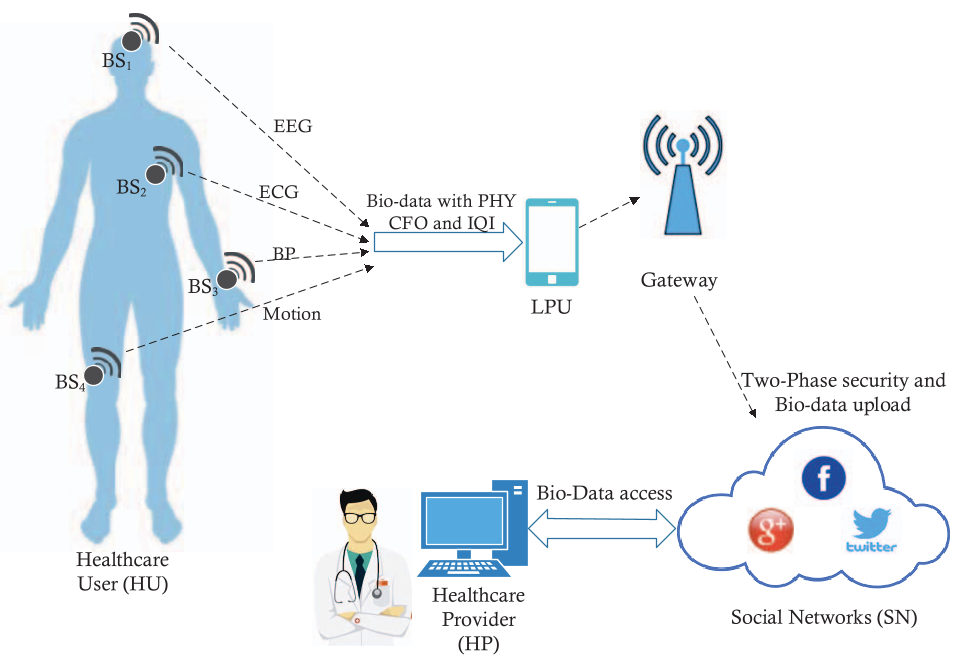
Instead of the sensor calculating its own identity, the Local Processing Unit (LPU) (like a smartphone) and the Social Network (SN) do the heavy lifting. When a sensor sends data, the LPU estimates these RF impairments and generates a PHY-ID.
2. Two-Phase Security Protocol
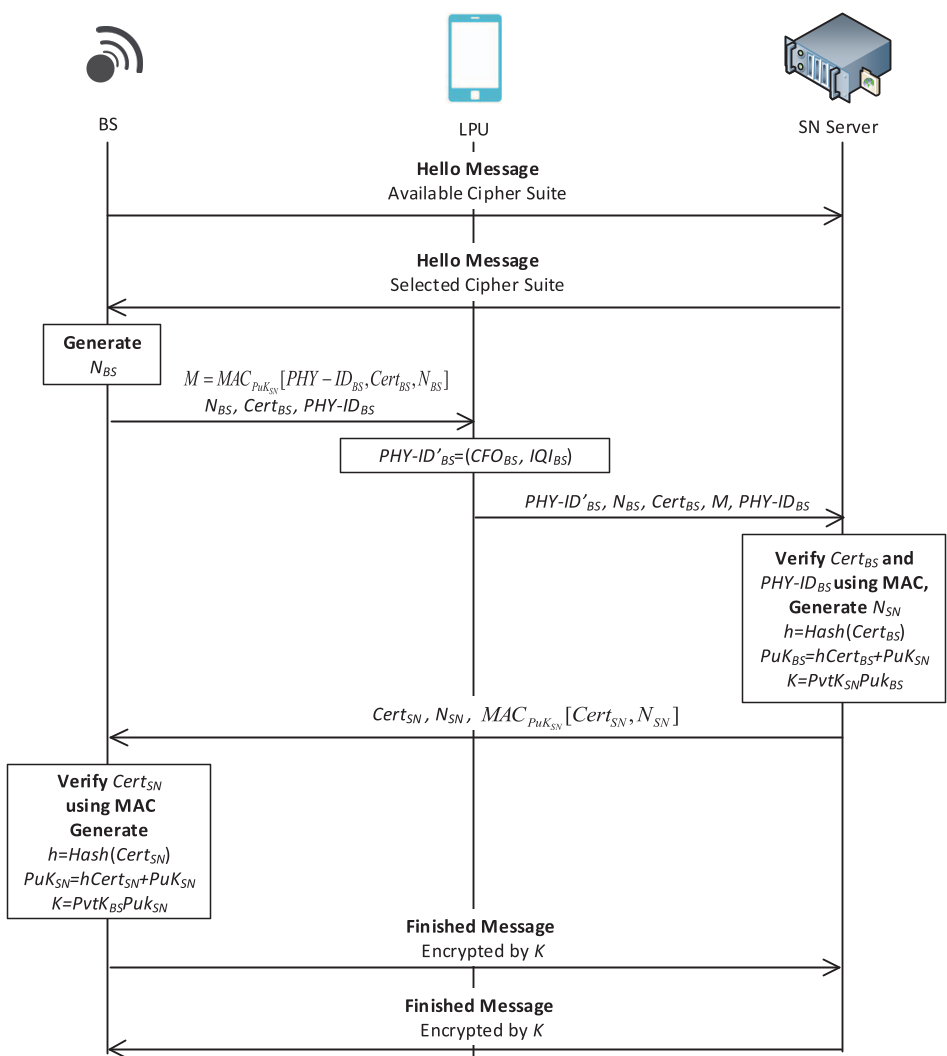
- Registration Phase: The LPU estimates the device's native CFO/IQI and registers this "fingerprint" with the Social Network server.
- Authentication Phase: Every time the sensor shares data, the LPU re-estimates the PHY attributes. If they don't match the registered fingerprint (within a specific tolerance threshold ), the connection is flagged as an impersonation attack.
Experiments & Results: Performance at Zero Cost
The authors evaluated the system across several metrics, focusing on Authentication Rate (AR) and Efficiency.
High Accuracy under Noise
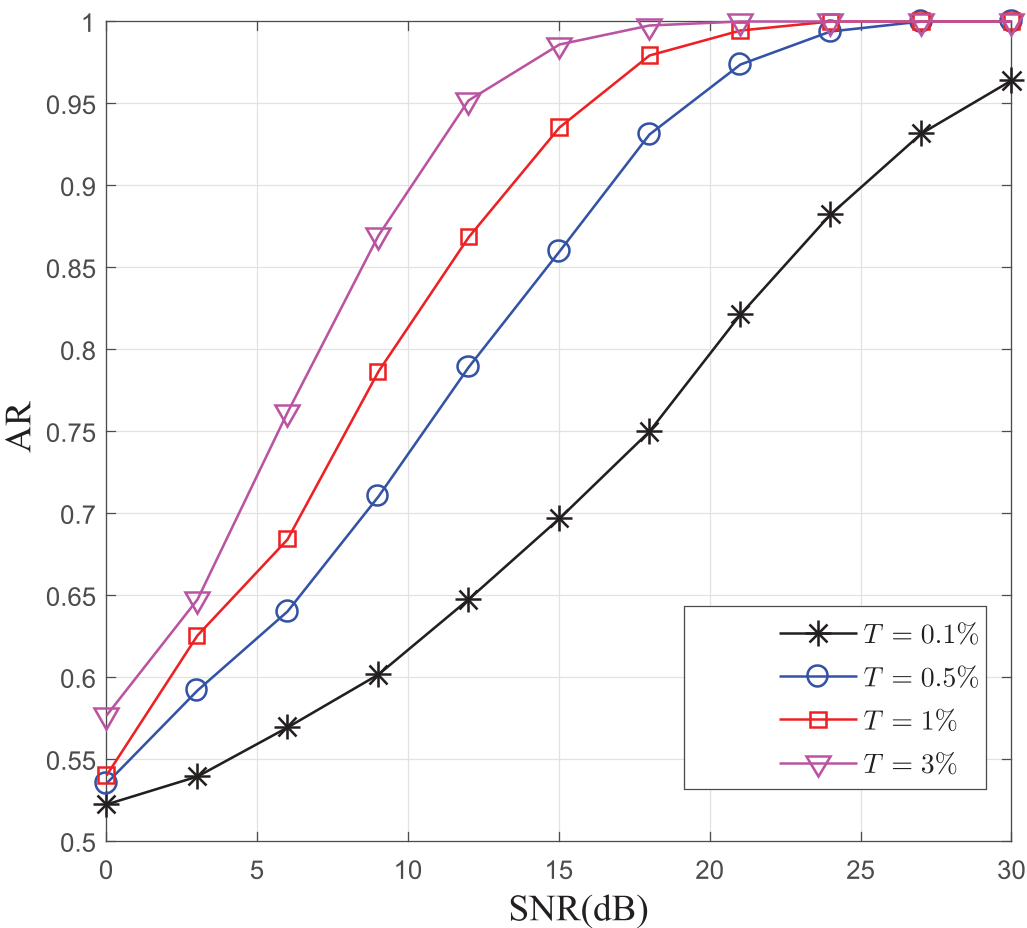
The system proves highly resilient to wireless interference. At an SNR of 18 dB, the Authentication Rate hits nearly 100%. By combining both CFO and IQI, the system avoids the "collision" risk where two devices might happen to have one identical attribute.
Zero Implementation Overhead
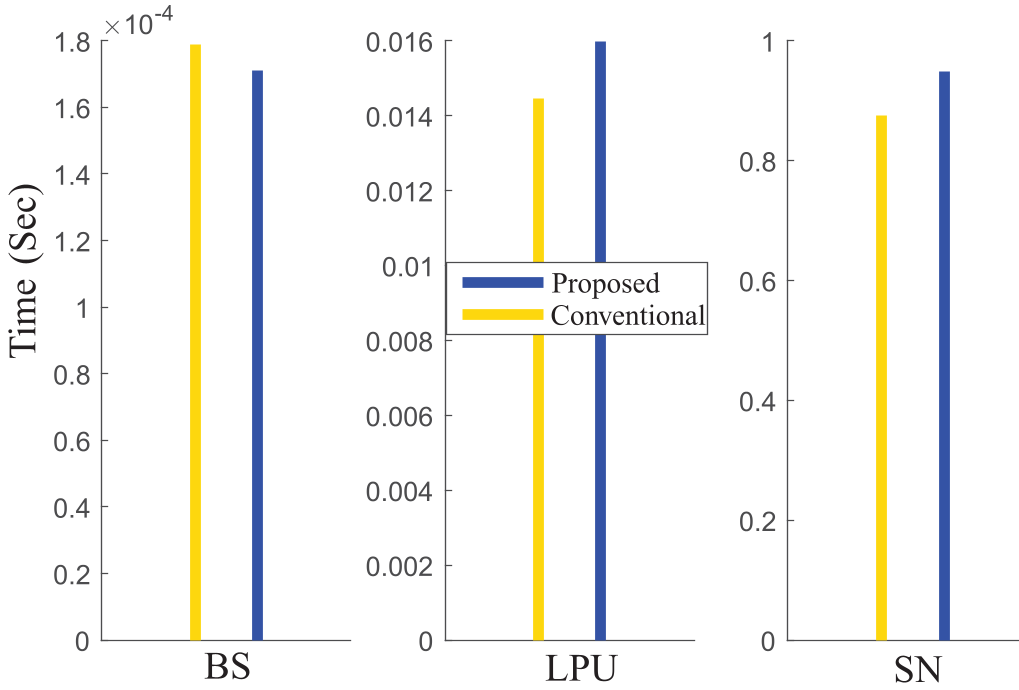
This is the "killer feature." Because the RF impairments affect the signal automatically during transmission, the sensor node (BS) performs zero extra calculations to support this security layer. In fact, the total time cost for the sensor is lower than traditional ECC-only methods because some identity verification is offloaded.
Deep Insight & Conclusion
Why it Works
The beauty of this method lies in its Cross-Layer Design. It uses physical-layer characteristics to reinforce upper-layer (cryptographic) security. Even if an attacker perfectly clones a device’s software and digital certificates, they cannot clone the specific atomic-level silicon variations of the original RF transceiver.
Takeaway
For developers of medical IoT and SIoT systems, this paper provides a blueprint for "Security-by-Physics." By leveraging social networks as trusted platforms and using PHY-IDs as a "Hardware Root of Trust," we can secure the most vulnerable nodes in the healthcare ecosystem.
Limitations & Future Work
The authors acknowledge that hardware ages. CFO and IQI might drift over years. Therefore, a "periodic re-registration" is necessary to track the hardware's aging profile. Future research could explore using these powerful social network resources to optimize PHY-ID selection dynamically.