
Beyond the Wrist: Transformative Use of Activity Monitors in Smart Cities
Using Physical Activity Monitors in Smart Environments and Social Networks: Applications and Challenges
The paper explores the integration of Physical Activity Monitors (PAMs) into smart environments, specifically focusing on how data from wearables like smartwatches and fitness trackers can be leveraged by smart cities. It introduces a taxonomy of applications that utilize shared social network data (e.g., Strava) to optimize urban planning and public health monitoring.
TL;DR
Wearable technology has evolved from an elite athletic tool to a democratic data source. This paper argues that the massive influx of data from smartwatches and social fitness networks like Strava can be repurposed to build "healthier" smart cities—optimizing urban infrastructure, creating public health indices, and gamifying citizen well-being.
Contextual Positioning
This work serves as a strategic bridge between mHealth (Mobile Health) and Smart City Planning. It moves beyond the "what" of technology (specs of a watch) to the "how" of societal application, positioning human activity data as a critical layer in the modern urban digital twin.
The Problem: Data Silos and Static Urban Design
Traditionally, city planners relied on periodic surveys or static traffic counters to understand movement. This approach fails to capture the physiological stress or specific preferences of pedestrians and cyclists. Furthermore, while millions of users record their VO2 max and heart rate daily, this health data rarely informs local government policy, missing an opportunity for proactive public health management.
Methodology: The Smart City Social-Fitness Loop
The authors propose a methodology where individual tracking feeds into a collective smart environment.
1. Data Aggregation via Social Networks
Instead of installing expensive RFID or camera-based tracking infrastructure, the city leverages existing platforms like Strava or MapMyRun. By analyzing anonymized "Heatmaps," planners can see exactly which routes are preferred and which are avoided due to poor conditions or heavy traffic.
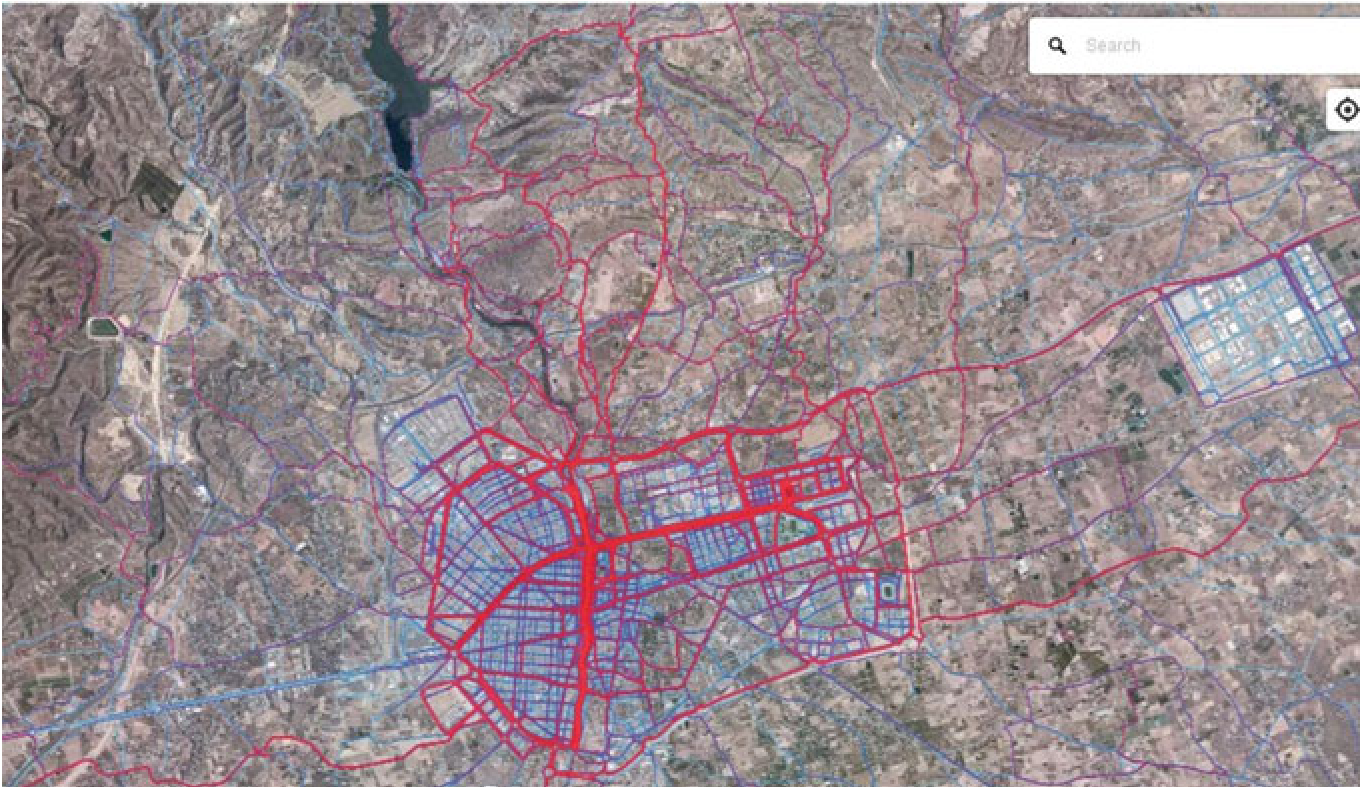 Detailed visualization of runner activity in the city of Elche, allowing for granular infrastructure analysis.
2. Public Health Indices
The paper suggests creating specialized medical teams that use massive data analysis to monitor:
- Training Frequency: Detecting sedentary trends in specific neighborhoods.
- Heart Rate vs. Slope: Identifying areas where the physical demands of the terrain might pose risks to certain age groups.
- Environmental Correlation: Mapping activity zones against pollution maps to steer citizens toward cleaner air corridors.
Experiments and Results: Proven Utility
The paper cites the effectiveness of Strava Metro. With over 8 million activities uploaded daily, the scale of data is unprecedented.
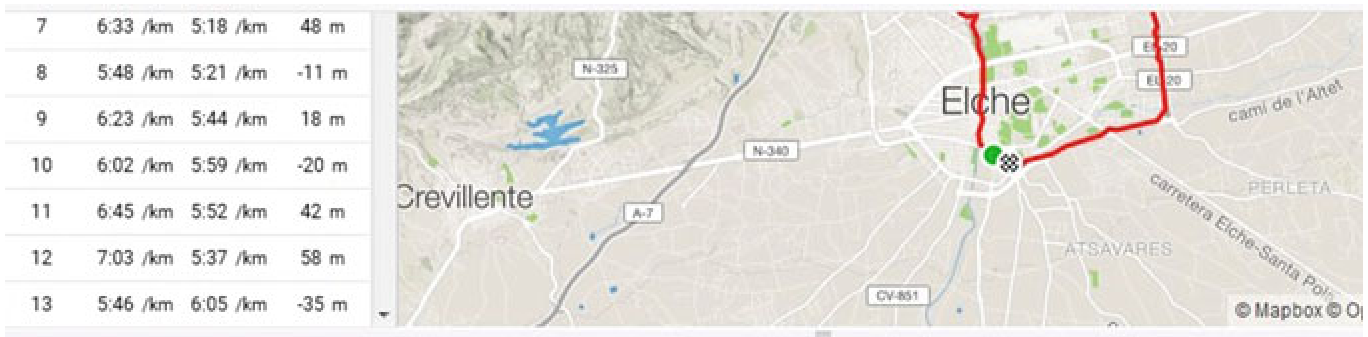 Example of physiological data (speed/heart rate) correlated with track slope, illustrating the depth of information available to planners.
Key findings include:
- Infrastructural Refinement: Transport departments in over 100 cities use this data to justify the conversion of motorized lanes into cycling paths.
- Safety Improvements: Identifying "conflict zones" where cyclist speed drops significantly due to traffic congestion, enabling targeted safety interventions.
Critical Insight: Gamification and Incentives
One of the paper's most forward-thinking proposals is the Virtual Local Currency. By rewarding healthy metrics (verified by wearables) with points for public transport or parking, cities can create a self-sustaining loop of health and mobility. While such apps exist (e.g., Sweatcoin), the authors argue for a deeper integration within the municipal governance framework.
Conclusion and Future Outlook
The paper concludes that the fusion of social networking, E-Health, and smart city management represents a "Biotech Fusion" that restores the focus of smart cities back to the human element.
Limitations: The authors acknowledge that high-intensity data collection raises privacy concerns and necessitates a voluntary, opt-in "local group" model to ensure ethical data use.
Future Work: The next step is the development of a unified numerical model to calculate a "City Health Index" from these disparate data streams, effectively turning the city itself into a platform for preventative medicine.