
Beyond Invisibility: The Socio-Technical Blueprint for Pervasive Computing
8938_Physical, Social, and Experiential Knowledge in Pervasive Computing Environments.
The paper presents BufferWare, a selective-archiving system deployed in public academic spaces to study user reactions to pervasive recording. It introduces a tripartite framework—Physical, Social, and Experiential knowledge—to analyze how people evaluate the utility, safety, and privacy of pervasive computing technologies.
TL;DR
Pervasive computing often aims for "invisibility," but this paper argues that total transparency is actually a hurdle for trust. Through a year-long deployment of BufferWare, a selective-archiving system, researchers from Georgia Tech discovered that users rely on a triad of Physical, Social, and Experiential knowledge to navigate the ethics of being recorded in public. The study proves that "visible" technology is better than "hidden" technology for establishing long-term user acceptance.
Background: The Paradox of the "Always-On" Environment
As recording technologies become cheaper and smaller, they are becoming pervasive. However, the psychological "tax" of being recorded often prevents these technologies from reaching their full utility. This paper moves the needle from "can we build it?" to "how do people feel when we build it?" by placing a selective-archiving system in an informal academic lounge.
The Problem: The Aura of Danger vs. Ease of Use
The researchers identified a critical tension in pervasive design:
- If it’s invisible, users feel a lack of control and develop suspicion (the "surveillance feel").
- If it’s highly visible (e.g., blue tape on the floor, intimidating legal signs), it creates an "aura of danger," making users self-conscious and causing them to avoid the space.
The inherent difficulty lies in finding a "Goldilocks zone" where notification is sufficient for consent but subtle enough to maintain the "informal" nature of public spaces.
Methodology: The BufferWare Framework
BufferWare used a selective archiving approach: it recorded everything into a short-lived cache (temporary buffer), but unless a user explicitly pressed a button to "save," the data was automatically discarded.
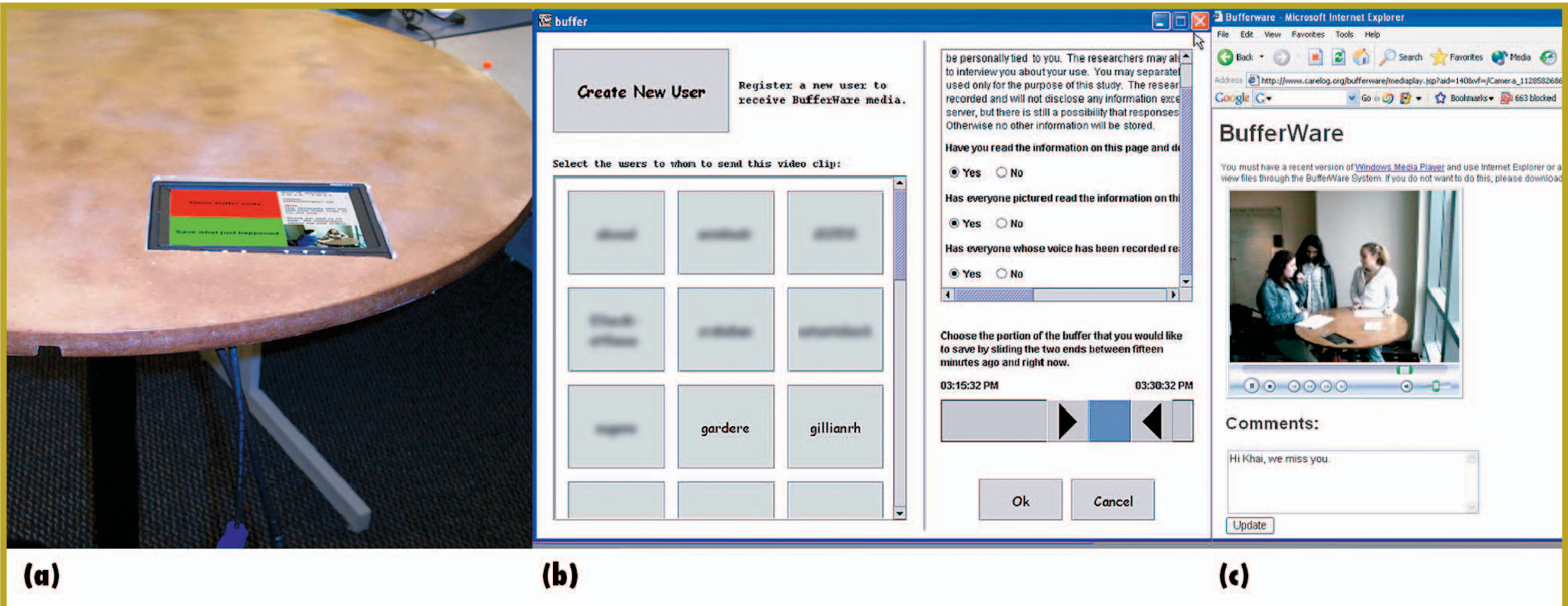 Figure 2: The BufferWare interface featuring the save/purge buttons and the web-based review portal.
The researchers categorized the user response into three pillars:
- Physical Knowledge: How the visible camera, the touch screen, and even the blue tape on the floor signaled the system's "affordances."
- Social Knowledge: How groups influenced each other. If one person in a meeting felt uncomfortable, the whole group moved.
- Experiential Knowledge: How users compared BufferWare to "webcams" or "security cameras" to make sense of what happens to their data.
Key Insights and Results
The longitudinal study revealed that human behavior in "instrumented" spaces is highly sensitive to the removal of recording equipment.
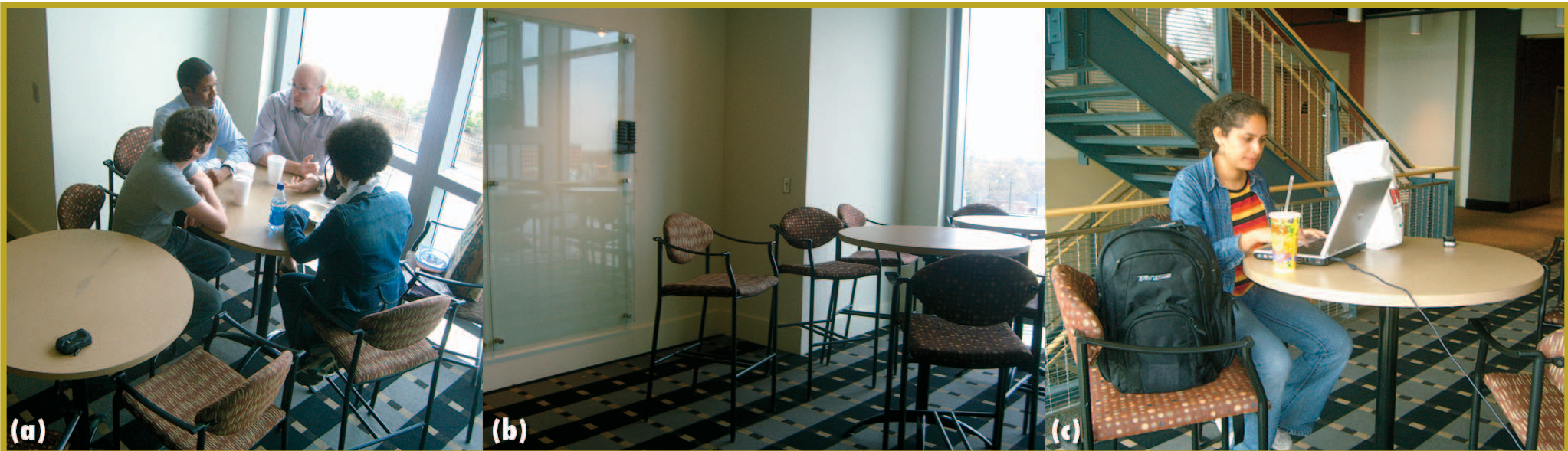 Figure 1: The public area where BufferWare was deployed. The study monitored these spaces for over a year.
- The Inhibition Effect: People used the space significantly more (roughly 10 minutes more per day) once the recording hardware was physically removed, despite the system being "safe" during deployment.
- The Purge Reflex: Users pressed the "Delete" button 598 times—far more than the "Save" button—indicating that the psychological need to ensure deletion is stronger than the technical reality of automatic expiration.
- The Privacy Hump: Initial exposure triggered high pessimism, but over time, as positive experiences accumulated (Experiential Knowledge), users became more "optimistic" and normalized the system's presence.
Critical Analysis: Lessons for Future Designers
The most striking takeaway is the failure of "Invisibility" as a design goal. The paper suggests that transparency (knowing who is watching and how to stop it) is a prerequisite for trust.
Limitations: The study was conducted in a "tech-savvy" academic environment. The authors acknowledge that a general population might have even more visceral or less rational responses to pervasive recording.
Conclusion
BufferWare demonstrates that security in pervasive computing isn't just about encryption—it's about the Physical, Social, and Experiential context. Future products, from AI pins to smart glasses, must leverage these three types of knowledge to help users bridge the "privacy hump." Instead of hiding the sensors, we should be designing better "mirrors" that reflect what is being captured and who has the power to delete it.