
"PIN"pointing the Why: Decoding the Motivational DNA of Pinterest
“PIN” pointing the motivational dimensions behind Pinterest
This study identifies the unique motivational dimensions of Pinterest users using the Uses and Gratifications (U&G) framework. Through a mixed-method approach—qualitative item collection followed by quantitative confirmatory factor analysis (CFA)—the researchers established a five-dimensional model of user gratification. The study highlights that Pinterest effectively bridges the gap between traditional social networking and commercial image curation.
TL;DR
Why do millions of people spend hours "pinning" images of things they may never buy or do? This research applies the Uses and Gratifications (U&G) theory to Pinterest, discovering that unlike Facebook (focused on social connection), Pinterest is driven by Fashion, Creative Projects, Entertainment, Virtual Exploration, and Organization. It positions Pinterest not just as a social site, but as a "virtual filing cabinet" for consumer identity and future intent.
Background: Beyond the Textual Social Network
In the early 2010s, social media pivoted from "what are you doing?" to "what do you like?" Pinterest emerged as the leader of this visual revolution. While retailers flocked to the site, academic understanding of why it worked lagged behind. The authors of this study sought to bridge the gap between traditional SNS (like Facebook) and image-sharing SNS by identifying the specific psychological needs Pinterest satisfies.
The "Aha!" Moment: Motivation through Curation
The authors argued that each medium has unique motivational dimensions. Through a rigorous two-phase study—starting with qualitative student interviews and moving to quantitative survey modeling—they moved past general labels like "socializing" to find the specific "allure" of the Pin.
Methodology: The Core Architecture of the Study
The researchers used a two-tier approach to ensure the measurements weren't just academic guesses, but reflected actual user language.
- Phase One (Qualitative): Collected 153 terms from active users (e.g., "ideas," "recipes," "DIY").
- Phase Two (Quantitative): Tested these items on a larger sample using Confirmatory Factor Analysis (CFA) to see how these words "clumped" together into psychological motivations.
The Five Pillars of Pinterest
The final model revealed five distinct reasons people use the platform:
- Fashion: The highest variance factor, including "shopping" and "style."
- Creative Projects: The DIY and craft element, unique to Pinterest’s utilitarian nature.
- Entertainment: Using the site as a "pastime" or to relieve boredom.
- Virtual Exploration: The "inspiration" factor—learning new things through images.
- Organization: The "filing cabinet" effect—keeping everything in one place.
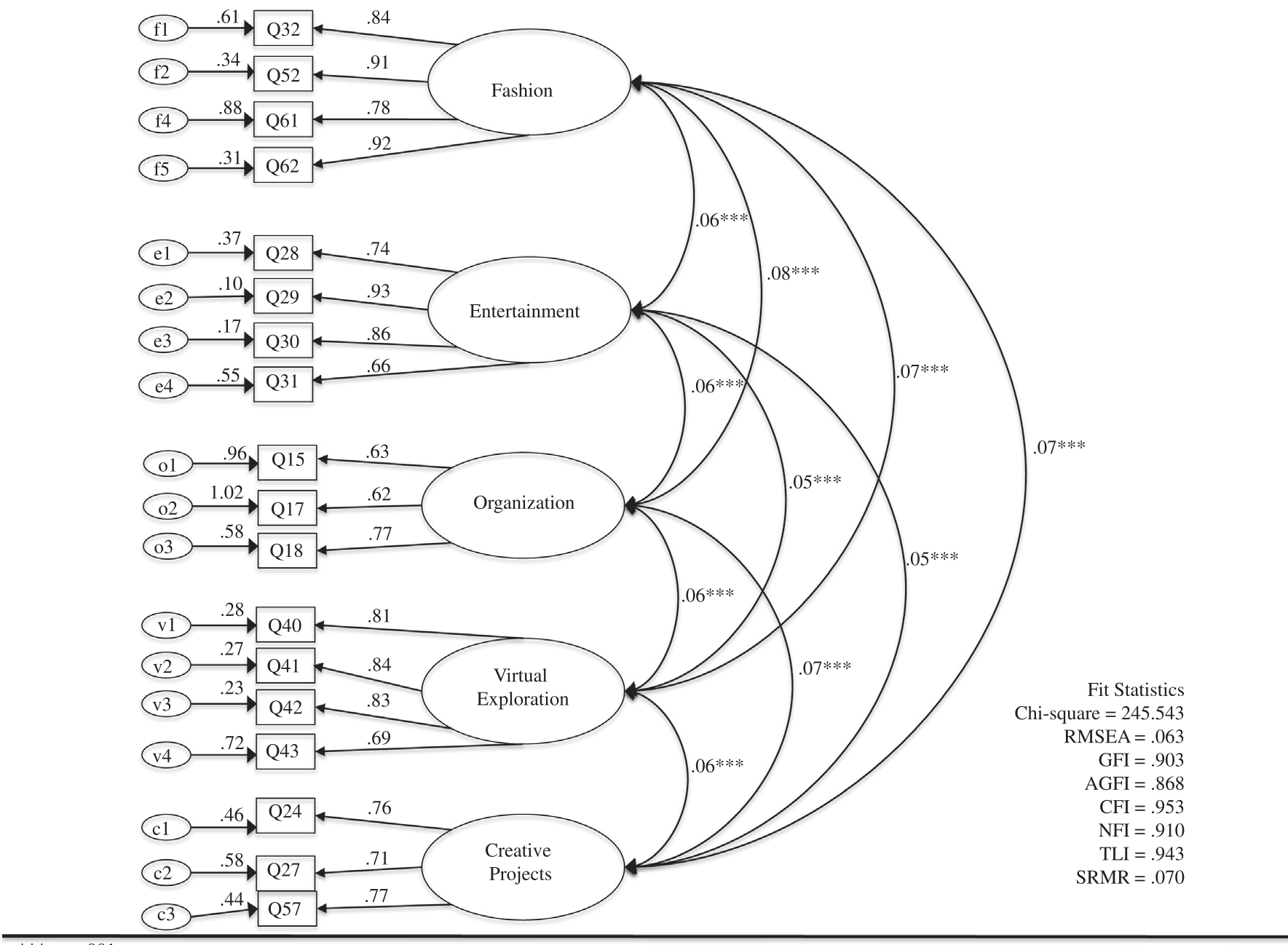 Figure 1: The First-Order Factorial Model representing the five dimensions of Pinterest gratification.
Key Results & Insights
The stats don't lie: Pinterest is a commerce engine. The study found that 28% of users utilize the site specifically to make purchasing decisions.
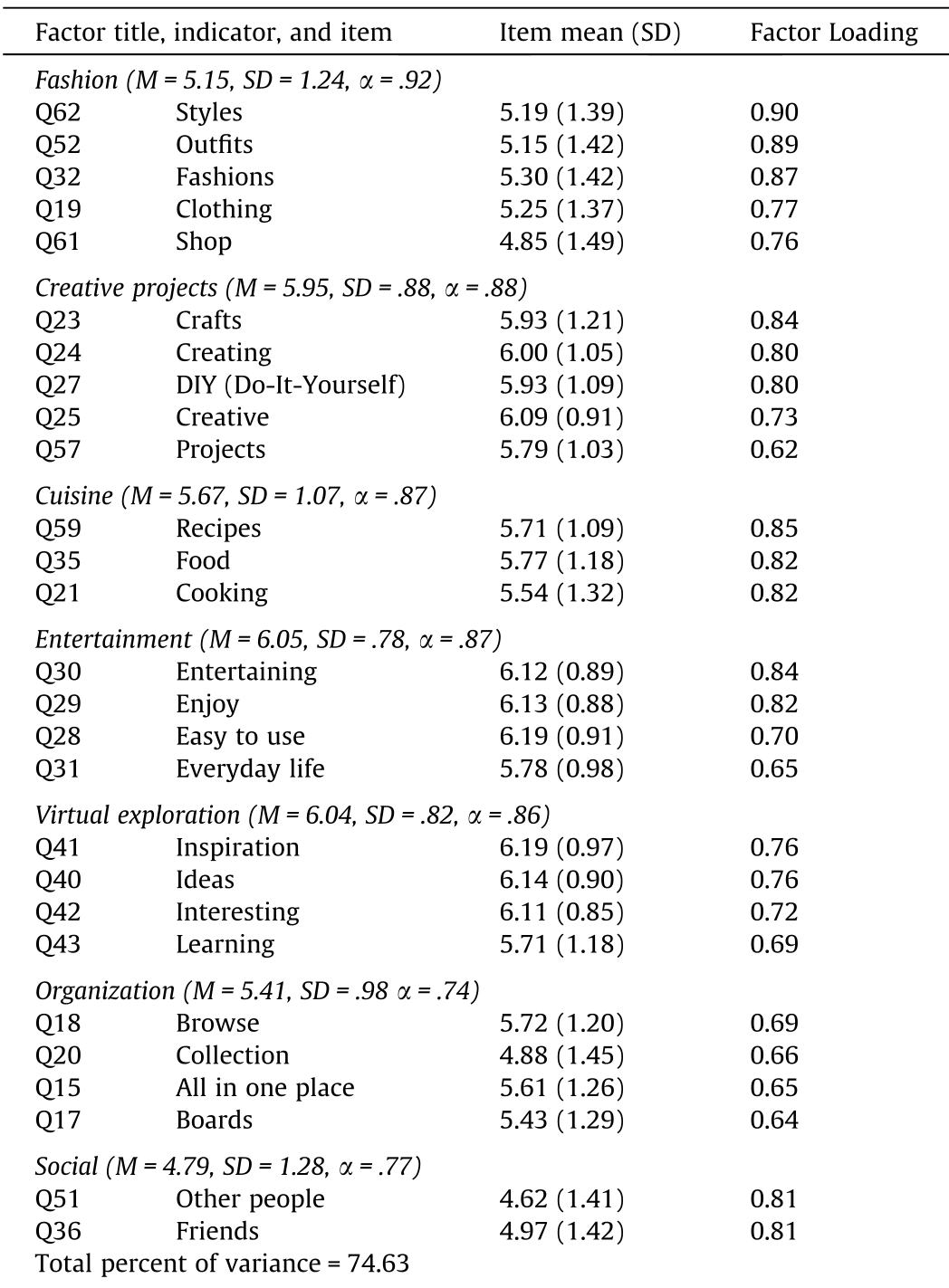 Table 1: Factor titles and item loadings showing high reliability (Alpha > 0.70) for the identified dimensions.
The "Organization" Factor: A Retail Revolution
Perhaps the most significant finding is the Organization motivation. Unlike other social sites where content is fleeting, Pinterest users view the platform as a storage space. The authors draw a fascinating parallel to "virtual shopping cart abandonment," suggesting that pinning is a form of "shopping research"—a way to hold items for future purchase consideration.
Deep Insight: Challenges and the Future
The study highlights that Pinterest is uniquely non-social in its sociality. While "Social" was a factor in the early results, it was eventually trimmed from the final first-order model to achieve a better fit. This suggests that while we can follow friends, we are mainly there for the content (the images) and the self (our own boards).
Limitations
- Gender Bias: The sample was overwhelmingly female. While reflective of Pinterest's early user base, it limits the study's generalizability to male users.
- Demographics: The study focused on college students. Older demographics might use the site differently (e.g., focusing on home-buying or parenting rather than fashion).
Conclusion: Why It Matters
This paper "PIN"points why Pinterest is more than a trend—it fulfills a psychological need for visual organization and creative inspiration. For marketers, it proves that blatant sales pitches don't work; instead, providing "pins" that help users organize their "everyday life" or "creative projects" is the key to building brand loyalty.
Takeaway: If you are a brand, stop trying to be "social" and start being "useful." Help your customers curate their identities, one board at a time.