
PATRON: Solving the Cold-Start Paradox in Real-World Crowdsourcing
PATRON: A Unified Pioneer-Assisted Task RecommendatiON Framework in Realistic Crowdsourcing System
This paper introduces PATRON, a unified Pioneers-Assisted Task RecommendatiON framework designed for realistic crowdsourcing systems like Tencent SOHO. It addresses the "cold-start" problem of recommending new, content-diverse tasks to workers by using a small set of pioneer workers to bootstrap quality estimation and a k-medoids clustering strategy to scale recommendations.
TL;DR
In the world of professional crowdsourcing (like Tencent SOHO), the luxury of "redundancy" and "historical data" is a myth. Short task lifespans and strict budgets mean we must recommend brand-new tasks to thousands of workers without knowing their content or the workers' specific aptitude for them. PATRON (Pioneer-Assisted Task RecommendatiON) bridges this gap by using a small "scout" team of pioneer workers and an intelligent clustering-pruning framework to maximize acceptance rates and data quality.
The Realistic Crowdsourcing Bottleneck
While academic papers often assume we can assign the same task to 10 people to find the "truth," real-world platforms can’t afford it. Most tasks are:
- Unique: No duplicate executions allowed due to budget.
- Fleeting: Categories appear and disappear so fast that they have no execution history.
- Opaque: Analyzing video or audio content for worker-task matching is too expensive or technically unfeasible at scale.
This creates a "Cold-Start" paradox: How do you match the right worker to a task you know nothing about?
The Methodology: Pioneers and Clusters
The PATRON framework operates on a simple yet profound intuition: Workers who performed similarly on old tasks will likely perform similarly on new ones, regardless of the task content.
1. The Pioneer Phase
For every new task category, the system selects a micro-set of Pioneer Workers. These workers are given "Test Packages" (tasks with known answers). Their performance acts as a probe, providing the initial "knowledge" of how different worker profiles interact with this task.
2. Clustering via k-Medoids
Instead of calculating similarity for every individual (which is computationally heavy), PATRON abstracts workers into Quality-Willingness Tuples.
- Willingness: Modeled using the "Long Tail" effect; newer workers are usually more eager to accept recommendations.
- Familiarity: A vector based on historical performance across different task types.
Using the CLARA (k-medoids) algorithm, it groups the entire worker pool into clusters centered around these pioneers.
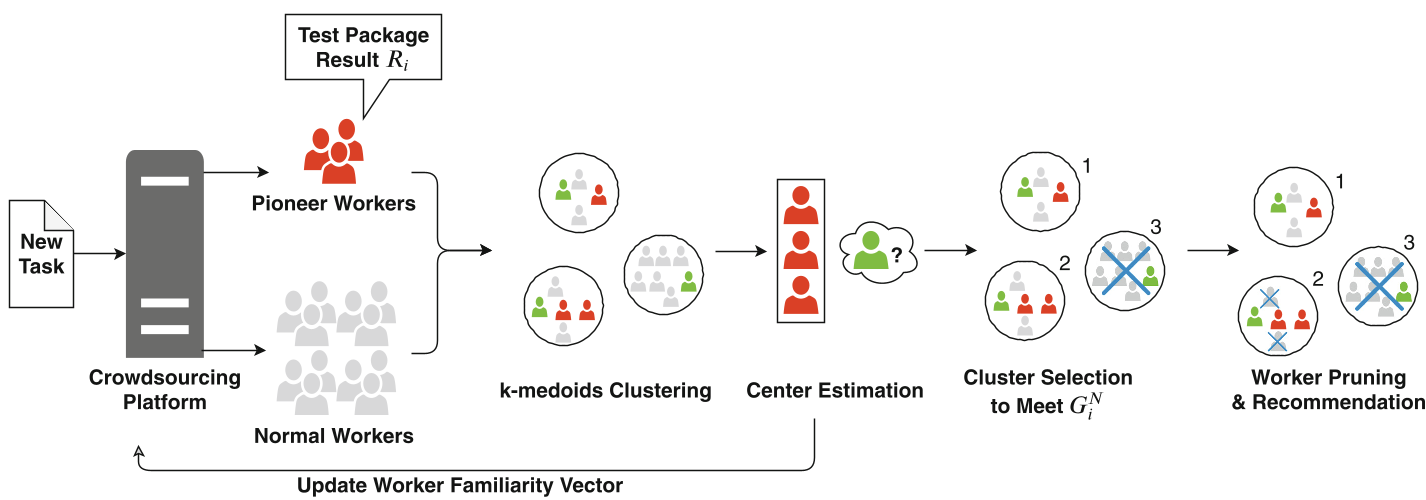 Figure 1: The Iterative Workflow of the PATRON Framework.
3. Smart Pruning
To avoid "spamming" workers (which reduces platform authority), the framework calculates the Expected Valid Recommendations. It picks the best clusters and then prunes workers with the lowest "modified willingness" until the requester's requirements are met with surgical precision.
Experimental Proof: Real-World Performance
The authors tested PATRON against three baselines: Random (RAND), Pure Greedy (GDY), and Full Estimation (FES - traditional collaborative filtering).
Acceptance Rate
PATRON significantly outperformed baselines in Acceptance Rate. By factoring in the worker's declining willingness as they become more experienced, the system avoids annoying veterans with irrelevant tasks.
Worker Quality
Quality remained high and, more importantly, stable. While random or greedy methods fluctuate wildly based on the worker pool, PATRON’s reliance on pioneer-guided similarity ensures the recommended workers are actually qualified.
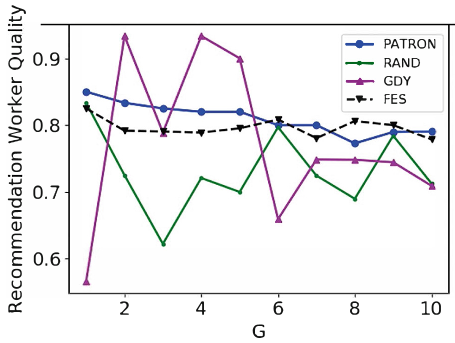 Figure 2: Performance Evaluation on Recommendation Success rate (Left) and Worker Quality (Right).
Critical Insight: Beyond Content Analysis
The genius of PATRON lies in its Content-Agnostic nature. By treating tasks as "black boxes" and focusing on worker behavioral manifolds (the Similarity Vector), the system bypasses the need for high-cost NLP or Computer Vision modules.
Limitations: The framework relies heavily on the quality of the pioneer set. If the pioneers are not representative of their clusters, the estimation error propagates. Future work might explore "Optimal Pioneer Selection" strategies to further harden the system.
Conclusion
PATRON offers a robust, industry-ready solution for crowdsourcing giants. It proves that in the face of high uncertainty and "zero-history" tasks, a combination of small-scale probing (Pioneers) and behavioral clustering is the most efficient path to high-quality data.