
Decoding the Social Map: Multi-Objective Place-Type Detection in LBSNs
Place-Type Detection in Location-Based Social Networks
This paper introduces a novel framework for Place-Type Detection in Location-Based Social Networks (LBSNs), categorizing venues into public, private, or virtual types. By employing a multi-objective ensemble learning approach combined with features from specific check-in patterns and latent relatedness, the method achieves significant improvements in classification accuracy and enhances downstream POI recommendation tasks.
TL;DR
Unstructured user-generated data in LBSNs often mixes public landmarks with private homes and virtual online stores, creating "noise" for recommendation engines. This paper presents the first systematic approach to classify venues into Public, Private, or Virtual types using a multi-objective ensemble learning framework that leverages both check-in behaviors and latent graph relationships.
The Hidden Noise in Location Data
When you search for a "café" on a social map, the last thing you want is a suggestion for someone's private living room or an online-only Shopify store. However, statistics show that nearly 30% of venues in LBSNs lack descriptions, and a significant portion are not actually public POIs.
The challenge is four-fold:
- Data Diversity: Mixing time, GPS, and text.
- Sparsity: Many venues have only a handful of check-ins.
- Ambiguity: Place names like "My Office" could be a public coworking space or a private room.
- Volume: Manually tagging millions of venues is impossible.
Methodology: Beyond Simple Classification
The authors propose a dual-feature extraction strategy followed by a sophisticated ensemble layer.
1. Feature Engineering (SP & LR)
- Specific Patterns (SP): The model analyzes how people visit. Public places see high volumes and distinct weekly patterns (e.g., universities peak on weekdays), while virtual places show check-ins scattered across vast geographical distances.
- Latent Relatedness (LR): This treats the LBSN as a graph. If "User A" visits "Place X" and "Place Y," and "Place X" is known to be a park, there is a high probability that "Place Y" is also a public space. They use Random Walk with Restart (RWR) to propagate these probabilities through visitor-place and time-place graphs.
2. Multi-Objective Ensemble Learning
Instead of relying on a single classifier (like a Random Forest), the authors use NSGA-II (Non-dominated Sorting Genetic Algorithm) to combine multiple models.
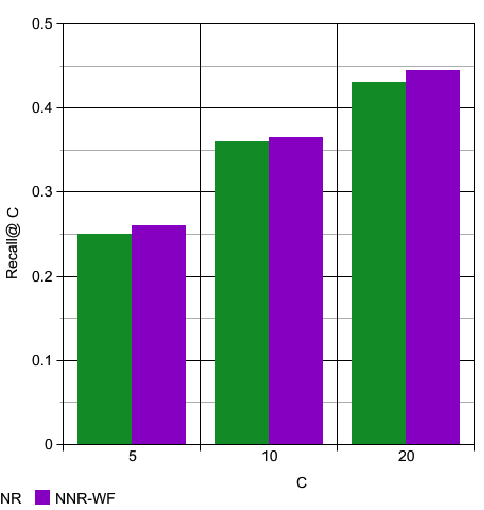 Figure 1: The trade-off between Precision and Recall. The MOO approach provides a "Pareto Front" of solutions, allowing developers to choose a version optimized for their specific needs.
Experimental Breakthroughs
The framework was tested on a massive dataset of 2.7 million check-ins crawled from Twitter/Foursquare.
Key Performance Metrics:
- RVCE (Real-weighted Ensemble): Achieved the best balance with a 0.75 F-measure.
- Baselines: Traditional boosting and SVM methods lagged behind at 0.65-0.66, proving that simple voting isn't enough for such noisy data.
 Table 1: The RVCE method consistently dominates across Public, Private, and Virtual categories.
Real-World Application: POI Recommendation
To prove the method's utility, the authors integrated it into a Neural Network Recommender (NNR). By simply filtering out venues identified as "private," the recommendation precision for new locations increased. This proves that place-type detection is not just a theoretical exercise but a vital "cleaner" for commercial AI engines.
Critical Insight & Future Outlook
This work highlights a shift from Global SOTA (aiming for one number) to Pareto Optimization (providing a spectrum of solutions). While the current accuracy (75%) leaves room for improvement—likely through the use of modern Graph Neural Networks (GNNs) or Large Language Models (LLMs) to better parse venue names—it establishes the baseline for a cleaner, more reliable spatial web.
Takeaway: Effective LBSNs must respect the boundary between the public and private spheres, not just for privacy, but for the fundamental utility of the service.