
Smart Citizen: Bridging the Gap Between Daily Habits and Urban Policy Through Gamification
Placemaking for Urban Sustainability
The paper introduces "Smart Citizen," a gamified mobile application designed to foster long-term pro-environmental behavior and urban participation in Salzburg, Austria. It integrates behavior change theories with interactive game mechanics like "city heartbeats" to transition users from passive service recipients to active co-producers of urban sustainability.
TL;DR
"Smart Citizen" is a gamified urban platform designed to transform citizens from passive residents into active sustainable change-makers. By combining behavior change psychology with location-based play, it addresses the "wicked problem" of climate change through a 7-stage engagement model, using a "heartbeat" metaphor to quantify and reward pro-environmental actions.
The Core Conflict: Intuition vs. Deliberation
Sustainability is often sidelined by behavioral biases. Human decision-making is split between System 1 (fast, automatic, intuitive) and System 2 (slow, deliberate, analytical). Most environmental problems require System 2 thinking, yet our daily routines are governed by System 1.
The authors argue that current "nudging" apps are insufficient because they are often isolated, paternalistic, and fail to address the underlying urban infrastructure. To solve this, they propose a framework where technology acts as a bridge, moving users from automatic habits to reflexive, collaborative urban participation.
Methodology: The 7-Stage Engagement Process
The heart of the paper is a structured progression that aligns psychological behavior change with political participation levels.
- Defaults & Triggers: Establishing the app as the single entry point for city sustainability.
- Information & Simplification: Aggregating scattered service listings.
- Incentives: Using "City Heartbeats" and badges.
- Reflexivity: Dashboards that show individual and collective impact.
- Trust: Direct interaction with local service providers.
- Active Citizenship: Reporting urban design issues.
- Co-production: Face-to-face workshops and co-design of city strategies.
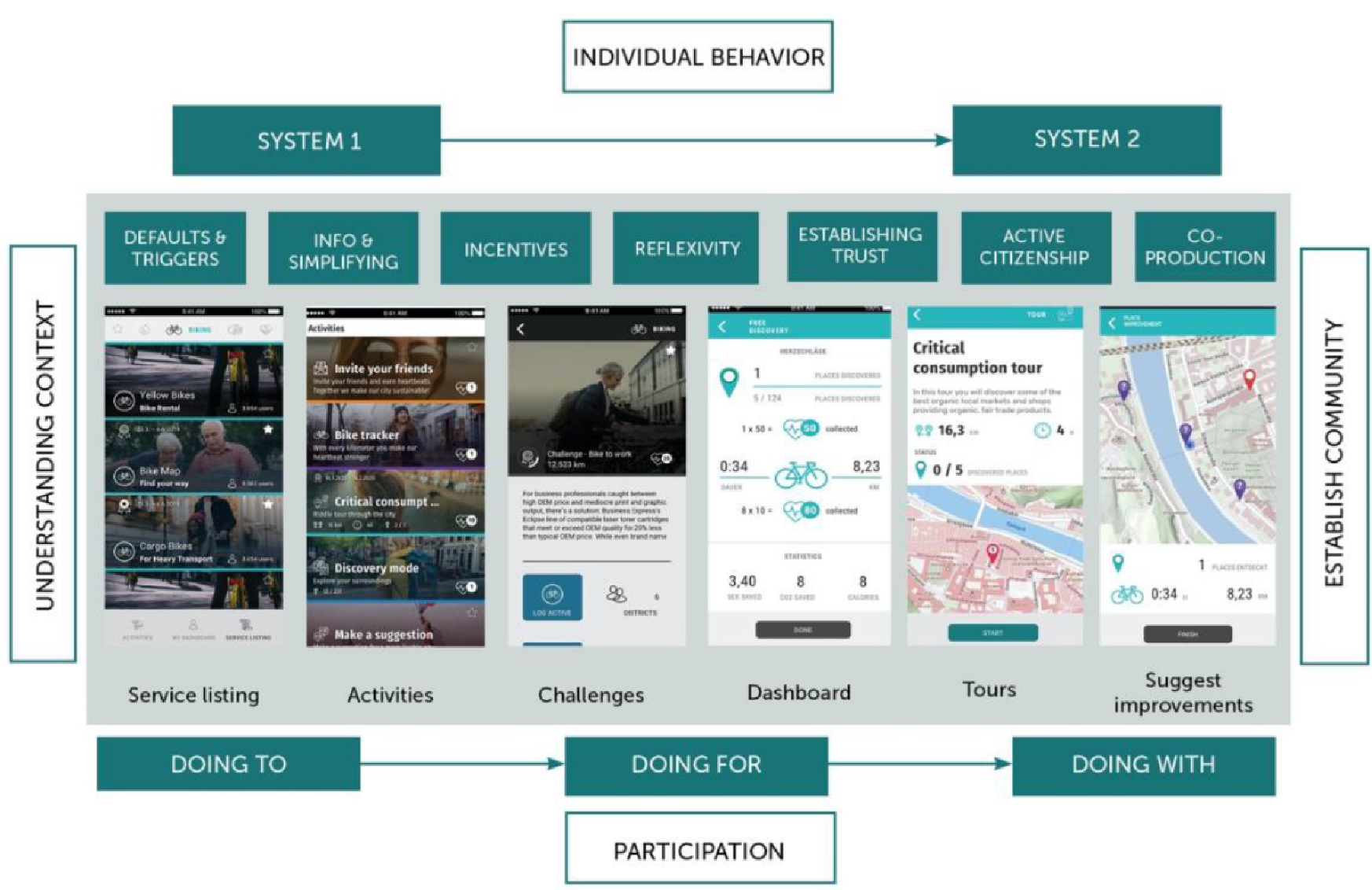
Key Features:
- Service Listing: A searchable database of sustainable mobility and consumption options.
- Tours & POIs: 11 district-specific tours that use riddles and quizzes to build "place attachment."
- Heartbeat Economy: A shared objective where biking, recycling, or taking tours generates "heartbeats" for the city, creating a sense of collective purpose.
Experimental Insights
The researchers conducted a two-week pilot in Salzburg with 31 participants, primarily university students.
Quantitative Results
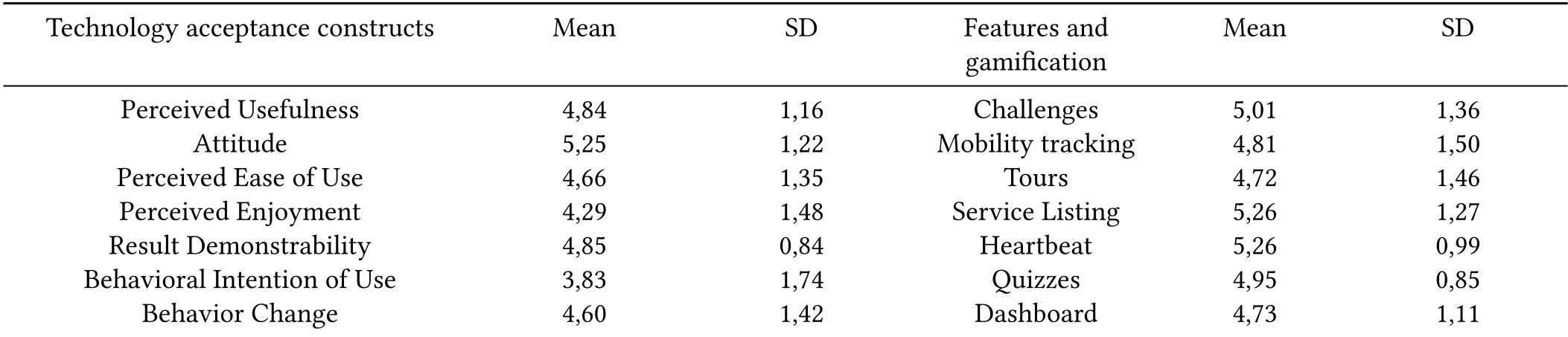
The app was highly successful in improving Attitude toward sustainable action. Users perceived high Result Demonstrability, meaning they could clearly see the impact of their participation through the heartbeat metaphor.
Qualitative Feedback
- The "Interest Gap": The app was most effective for "the middle ground"—people who care about the environment but lack the tools or prompts to change their routines.
- Seamlessness is Key: Users expressed a strong desire for integration with wearables (Apple Watch, Fitbit) to avoid manual tracking of walks and bike rides.
- Social Dynamics: Participants suggested adding "daily streaks" and community forums to further strengthen the social fabric of the app.
Critical Analysis & Future Outlook
While Smart Citizen successfully builds a positive attitude, the study stopped short of measuring actual long-term behavior change. The 2-week testing window is a common limitation in HCI (Human-Computer Interaction) research.
The Takeaway: The real value of this work lies in its "Placemaking" approach. By turning the city into a game board, it doesn't just ask users to "save the planet"—it asks them to "make their city's heart beat stronger." This emotional, local connection is likely the key to moving beyond short-term gamification and into long-term civic engagement.
Future Work: The team plans to release the app publicly to track 1-3 month engagement cycles, focusing on whether "active citizens" actually influence local policy through the platform’s consultation tools.