
Plain Style: Data-Driven Proof That Less is More in Professional Writing
Plain-Style Preferences of US Professionals
This study quantitatively analyzes style preferences among 614 US professionals, comparing "Plain Style" (clear, concise, direct) against bureaucratic or complex alternatives. The researchers utilized a student-recruiter technique and a binary-choice survey to establish that US professionals overwhelmingly prefer plain language in workplace communications.
TL;DR
Is the "Plain Language" movement just academic idealism, or do real-world professionals actually prefer it? A comprehensive study of 614 US workers confirms an overwhelming 76% preference for plain style. However, the study uncovers a surprising "education gap": while experts love conciseness, readers with less formal education are significantly more skeptical of brevity.
The Battle of Styles: Logic vs. Prestige
For decades, writing coaches have preached the gospel of the "Plain Style"—direct, simple, and vigorous. Yet, we often see the "Bureaucratic Style" (filled with nominalizations and legalese) persisting in the wild. The researchers behind this paper wanted to solve a fundamental tension: Is complex writing a sign of authority, or just a barrier to efficiency?
They investigated whether professionals actually prefer clear writing or if they secretly equate complexity with competence.
Methodology: The Choice-Pair Experiment
To test this, the authors moved beyond theory into quantitative measurement. They presented professionals with 21 pairs of sentences—one written in "Plain Style" and one in a "Complex/Bureaucratic Style"—and asked them to choose the most appropriate version for a routine business email.
The Two Pillars of Style
The study split style into two major buckets:
- Conciseness: Avoiding "nominalizations" (turning verbs into nouns like provide a definition vs define), expletives (It is believed that...), and "hedges" (I believe...).
- Word Choice: Focusing on formality, standard grammar, correct homonyms, and avoiding unnecessary jargon.
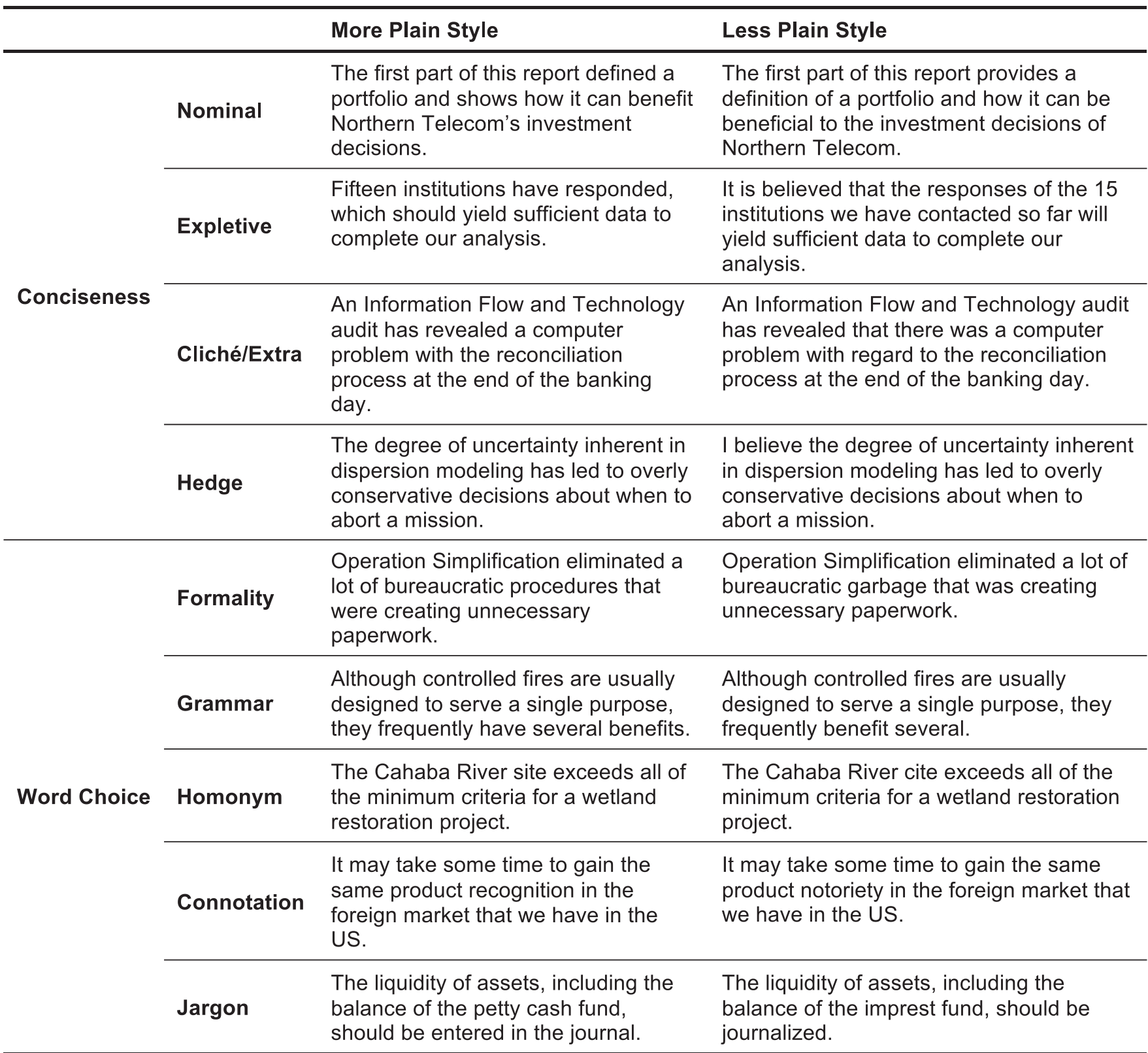 Table 1: Examples of the "Plain" vs. "Less Plain" style choices used in the survey.
Key Results: Word Choice Reigns Supreme
The data doesn't lie: professionals prefer plain language. But they care about some things more than others.
- The Power of Word Choice: Respondents felt most strongly about word choice (80% preference). Errors in formality, connotation, and grammar were viewed much more negatively than wordiness.
- The "Hedge" Penalty: Using "hedges" (e.g., "I believe that...") was one of the most disliked traits, suggesting that professionals value decisiveness and directness.
- The Conciseness Hierarchy: Eliminating "Expletives" and "Hedges" was highly preferred, while avoiding "Clichés" and "Nominals" sat at the bottom of the preference list.
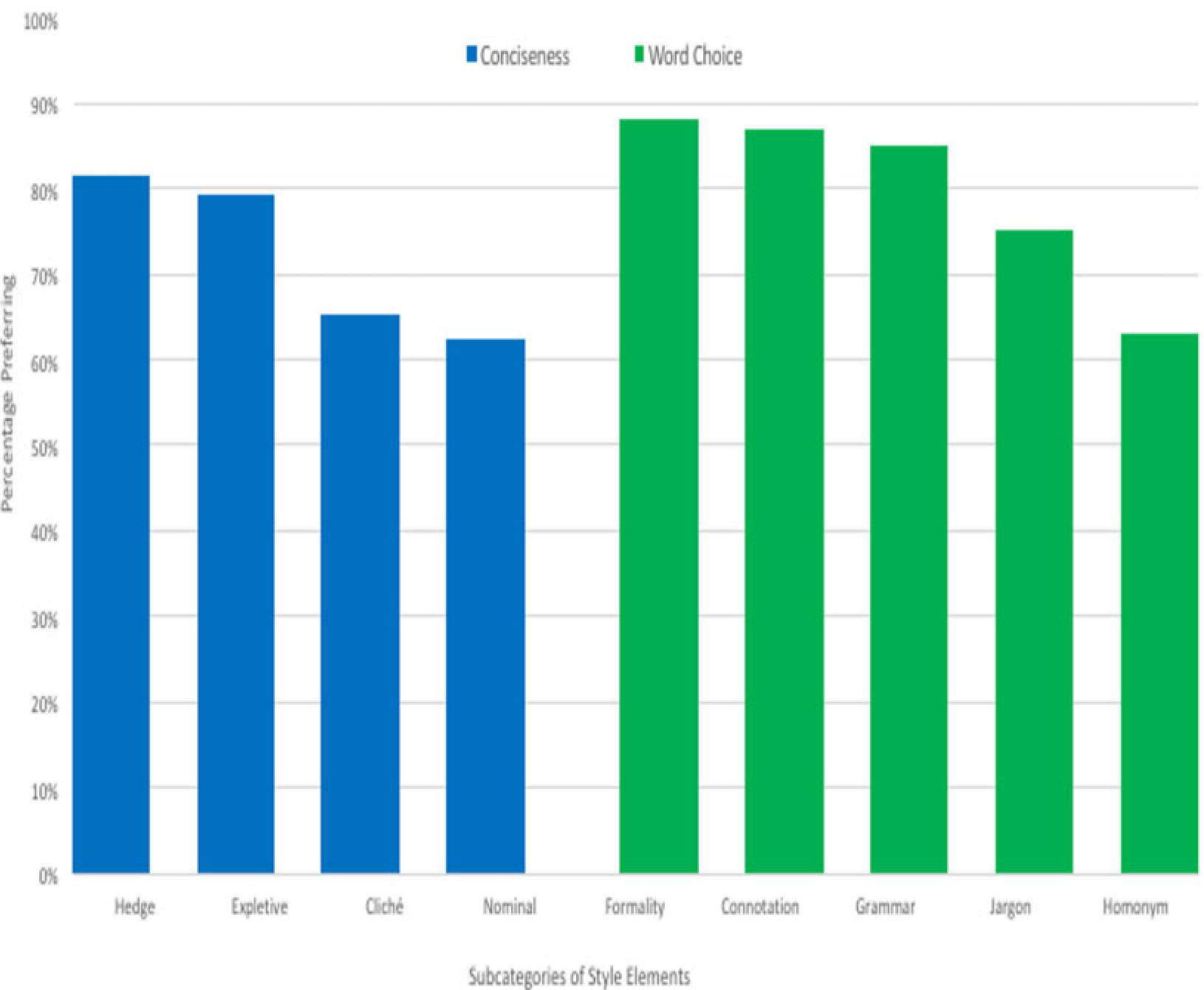 Figure 2: Preference levels for specific subcategories of style.
The Nuance: The "Education Gap"
One of the most provocative findings of the research involves socio-demographics.
While 77% of graduate degree holders preferred concise writing, only 53.3% of those with only a high school diploma felt the same way. This suggests that for readers with lower literacy or less formal training, extreme brevity might actually feel "abrupt" or less authoritative.
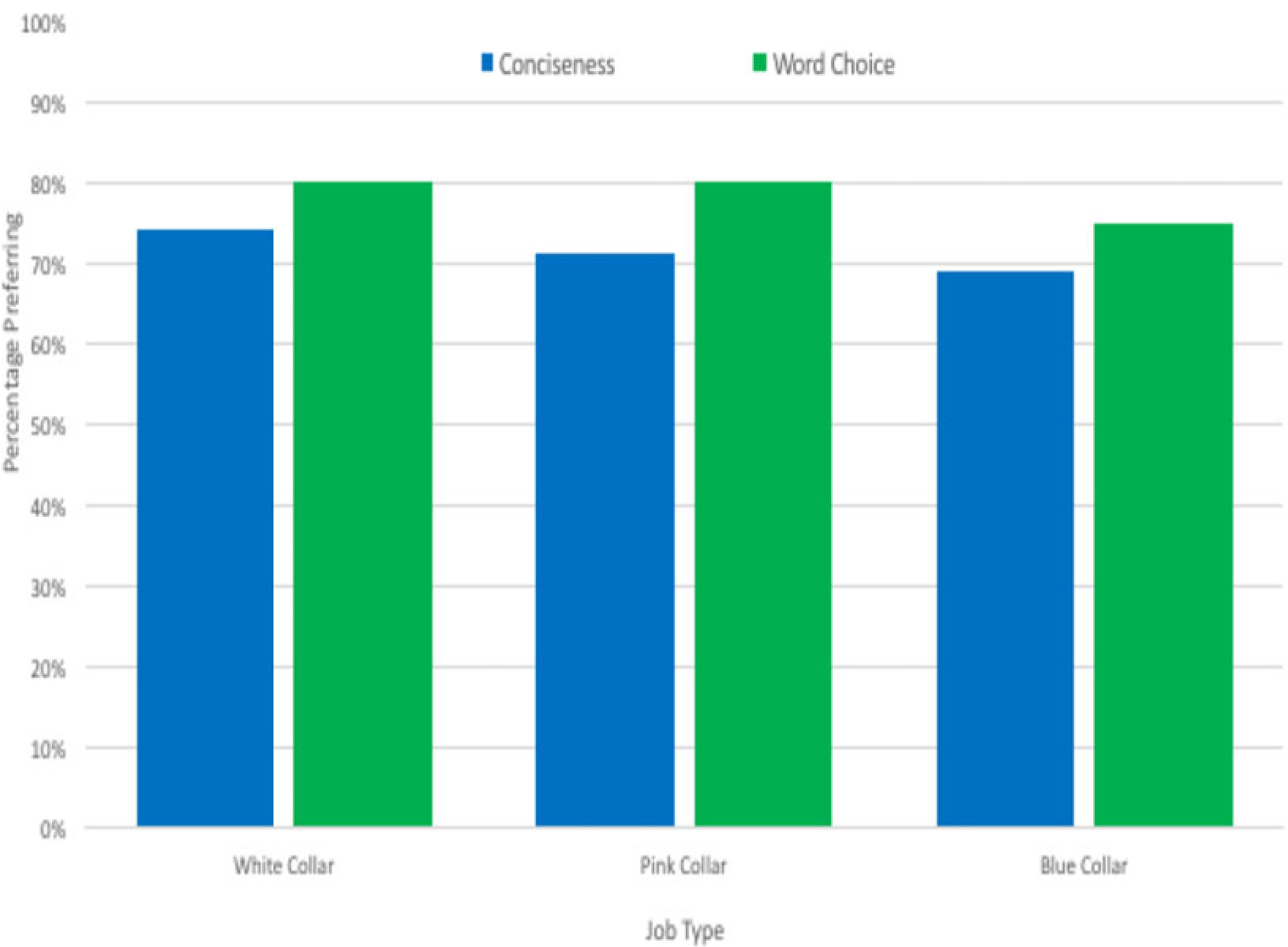 Figure 3: Blue-collar workers showed a noticeably lower preference for plain style compared to white-collar professionals.
Critical Insight: Why This Matters for the Workplace
This paper validates the "Plain Writing Act" and similar initiatives but adds a layer of caution. If you are writing for a highly educated, white-collar audience, cut the fluff aggressively.
However, if your audience includes blue-collar workers or those with less formal education:
- Don't over-edit for conciseness: They may see it as less professional.
- Focus on Formality: They still value proper word choice and grammar.
- Bridge the Gap: Use visuals or video to supplement text.
Conclusion: Write for the Reader, Not the Ego
The "Plain-Style Preferences" paper proves that the "showy" qualities of writing—long words and complex sentences—are largely rejected by the modern US professional. To improve your credibility and efficiency, focus your editing efforts on formality, grammar, and removing cowardly "hedges." Clear writing isn't just a courtesy; it is the professional standard.
Limitations to Consider: The study used isolated sentences rather than full documents, so the "flow" of a long text wasn't tested. Future research should look into how personality types (e.g., "Grammar Police") impact these results.