
The Gibberellin Masterclass: From the Green Revolution to Precision Crop Engineering
Plant Development and Crop Yield: The Role of Gibberellins
This review provides a comprehensive synthesis of the molecular biology and agricultural applications of Gibberellins (GAs), identifying their pivotal role in the "Green Revolution" and their extended functions in plant development. It highlights the GA-GID1-DELLA signaling axis and the GA/ABA balance as central regulators of stature, germination, and reproductive success across model and crop species.
Executive Summary
TL;DR: Gibberellins (GAs) are not just the "growth hormones" of the past; they are the central processors of modern plant development. This review explores how GAs integrate light, temperature, and hormonal crosstalk to govern everything from wood production (xylogenesis) to seed dormancy. By understanding the GA-GID1-DELLA signaling mechanism, researchers are now moving beyond simple height control to engineering crops with enhanced nitrogen efficiency and climate resilience.
Positioning: This work serves as a high-level technical map, bridging the gap between historical "Green Revolution" breakthroughs and future biotechnological applications like CRISPR-mediated hormone fine-tuning.
Problem & Motivation: Beyond the Dwarf Phenotype
The mid-20th century "Green Revolution" was built on GAs—specifically, mutations that reduced plant stature to prevent "lodging" (falling over) and increase harvest index. However, modern agriculture faces a more complex challenge: Environmental Volatility.
Previous research often viewed GAs in a vacuum. The "Foolish Seedling" (bakanae) disease in rice showed that too much GA causes spindly, weak stems, but the authors argue that the real "insight" lies in the GA/ABA Balance. The tension between growth-promoting GAs and growth-inhibiting Abscisic Acid (ABA) is the ultimate switch for a plant's survival strategy.
Methodology: The GA-GID1-DELLA Signaling Axis
The core of GA action is a "degrade-to-activate" system. When bioactive GAs (like GA1 or GA4) are perceived by the receptor GID1, it triggers the ubiquitination and subsequent degradation of DELLA proteins.
Because DELLAs act as the "brakes" on growth-related genes, their removal allows the plant to activate transcription factors like PIF4 (for elongation) or GAMYB (for pollen/seed development).
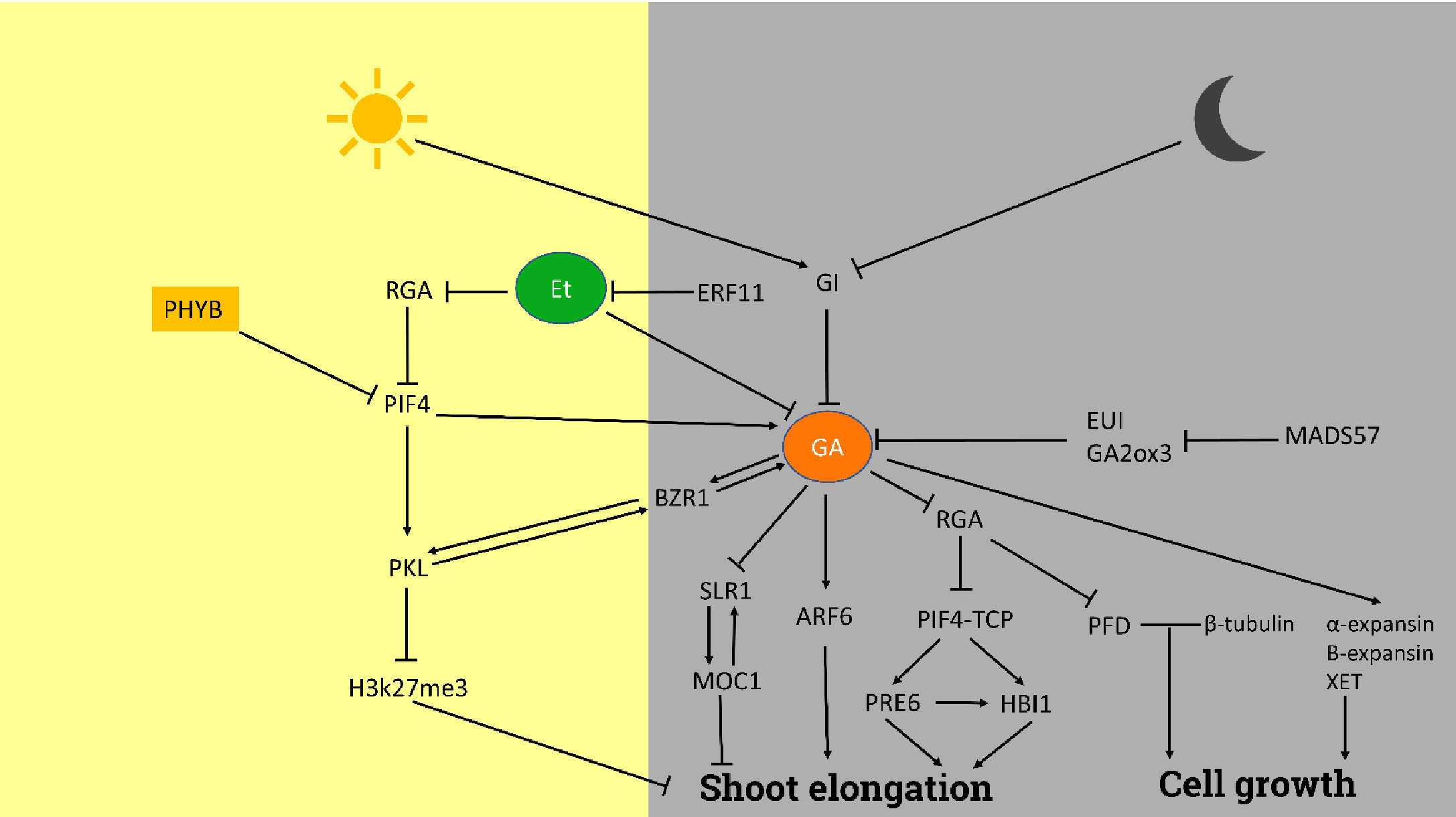 Figure 1: The integration of GA signaling with light and temperature cues.
The Homeostasis Loop
- Synthesis: Regulated by GA20-oxidase and GA3-oxidase.
- Deactivation: Regulated by GA2-oxidase.
- Strategic Targets: Modulating these enzymes via gene editing allows for localized control (e.g., increasing grain size without elongating the entire stem).
Key Results: Impact on Yield and Quality
The review highlights several "SOTA" breakthroughs in GA applications:
- Xylogenesis: In trees like Eucalyptus and Populus, GA treatment induces cellulose synthase (CESA) genes, directly increasing biomass and wood density.
- Fruit Development: GA application increases grapes size and weight in species like Vitis vinifera and reduces "bunch rot" by altering cluster density.
- Seed Germination: The review confirms that GAs activate -amylase, essential for breaking down starch during malting—a sector projected to grow at a CAGR of 10.7%.
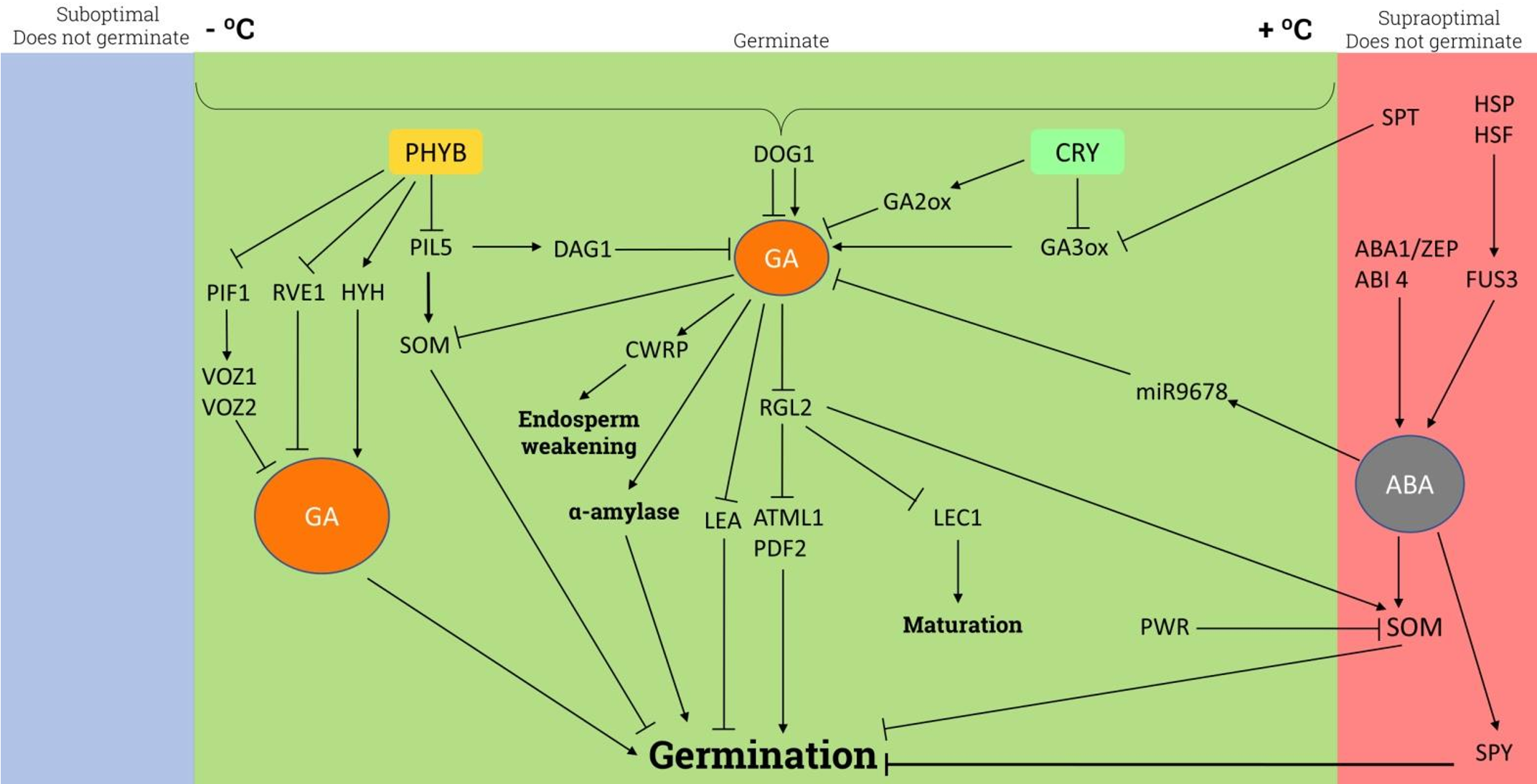 Figure 2: The ABA/GA antagonistic circuit in seed dormancy breaking.
Depth Insight: Why It Works (and Why It Varies)
One of the most striking insights is the species-specific divergence in GA responses. In Arabidopsis, GAs generally promote flowering; however, in many perennial fruit trees (citrus, apple), GAs act as flowering inhibitors. This suggests that GA doesn't just "promote growth"—it enforces a specific phase of the plant's life cycle depending on the ecological niche.
Critical Analysis & Future Outlook
Takeaway
GAs are the key to a "New Green Revolution." By targeting DELLA proteins to enhance nitrogen-use efficiency, we can maintain high yields with lower chemical inputs.
Limitations
The primary bottleneck remains the complexity of crosstalk. Because GAs interact with Jasmonates (defense) and Auxin (rooting), modifying GA levels to improve height might inadvertently weaken a plant's immune system or root stability.
Future Work
The next frontier is Rhizosphere Engineering. Instead of spraying synthetic GAs, future programs will likely use GA-producing soil bacteria to create a "living fertilizer" that provides sustained, low-level hormone delivery.