
Gibberellins: From the Green Revolution to Precision Breeding
Plant Development and Crop Yield: The Role of Gibberellins
This review provides a comprehensive synthesis of Gibberellins (GAs) molecular biology, highlighting their transition from "Green Revolution" stature regulators to versatile modulators of plant development. It identifies specific genes (e.g., GA20ox, GID1, and DELLA) across model and non-model species that achieve SOTA crop yield improvements through fine-tuned homeostasis.
TL;DR
Gibberellins (GAs), once famous for creating the dwarf wheat of the Green Revolution, are now recognized as the "Swiss Army Knife" of plant development. This review captures the shift from simple stature control to a complex regulatory network governing everything from xylogenesis to climate sensing. By manipulating the GA-GID1-DELLA signaling axis, researchers are unlocking new ways to increase biomass, control flowering, and optimize seed germination.
Background Positioning: This work acts as a high-level technical map, transitioning GA research from classical physiology to modern genomic and biotechnological applications (SOTA breeding).
The Problem: The "Dwarf" Simplified View
For decades, the agricultural industry viewed GAs primarily through the lens of lodging resistance—keeping plants short so they don't fall over. However, prior work often ignored the "metabolic cost" of GA inhibition. The bottleneck in current research is the species-specific inconsistency; for instance, GA promotes flowering in Arabidopsis but inhibits it in citrus. Understanding "Why" requires looking deeper into how GA acts as a signal integrator for the circadian clock and temperature fluctuations.
Methodology: The GA Homeostasis Engine
The core mechanism of GA activity isn't just about presence, but balance.
- Homeostasis: The pool of bioactive GAs is kept in check by a tug-of-war between synthesis enzymes (GA20ox, GA3ox) and deactivation enzymes (GA2ox).
- Perception: The GID1 receptor senses GA, triggering the degradation of DELLA proteins.
- The Master Repressors: DELLAs are the "brakes" of plant growth. When GA is high, the brakes are removed, allowing transcription factors like PIFs (Phytochrome-Interacting Factors) to trigger cell elongation.
 Figure 1: The Molecular Framework of GA Perception and Signaling.
Key Insights: Beyond Plant Height
1. Xylogenesis and Biomass
GAs are the secret drivers of "secondary growth." In trees like Eucalyptus and Populus, GA induces cellulose synthase genes (CESA), directly increasing wood density and fiber length. This makes GAs central to the future of biofuels.
2. The ABA/GA Seesaw
The paper emphasizes that almost no GA-related process happens in isolation. The ABA/GA ratio is the master switch for seed germination. While ABA maintains dormancy (the "Stop" signal), GA promotes endosperm weakening (the "Go" signal) via enzymes like α-amylase.
3. Climate Integration
One of the most profound insights is how GA integrates light quality. Under "Shade Avoidance," Low Red:Far-Red light ratios pulse GA levels, stabilizing PIFs to stretch the plant toward light—a process now being targeted to improve crop density.
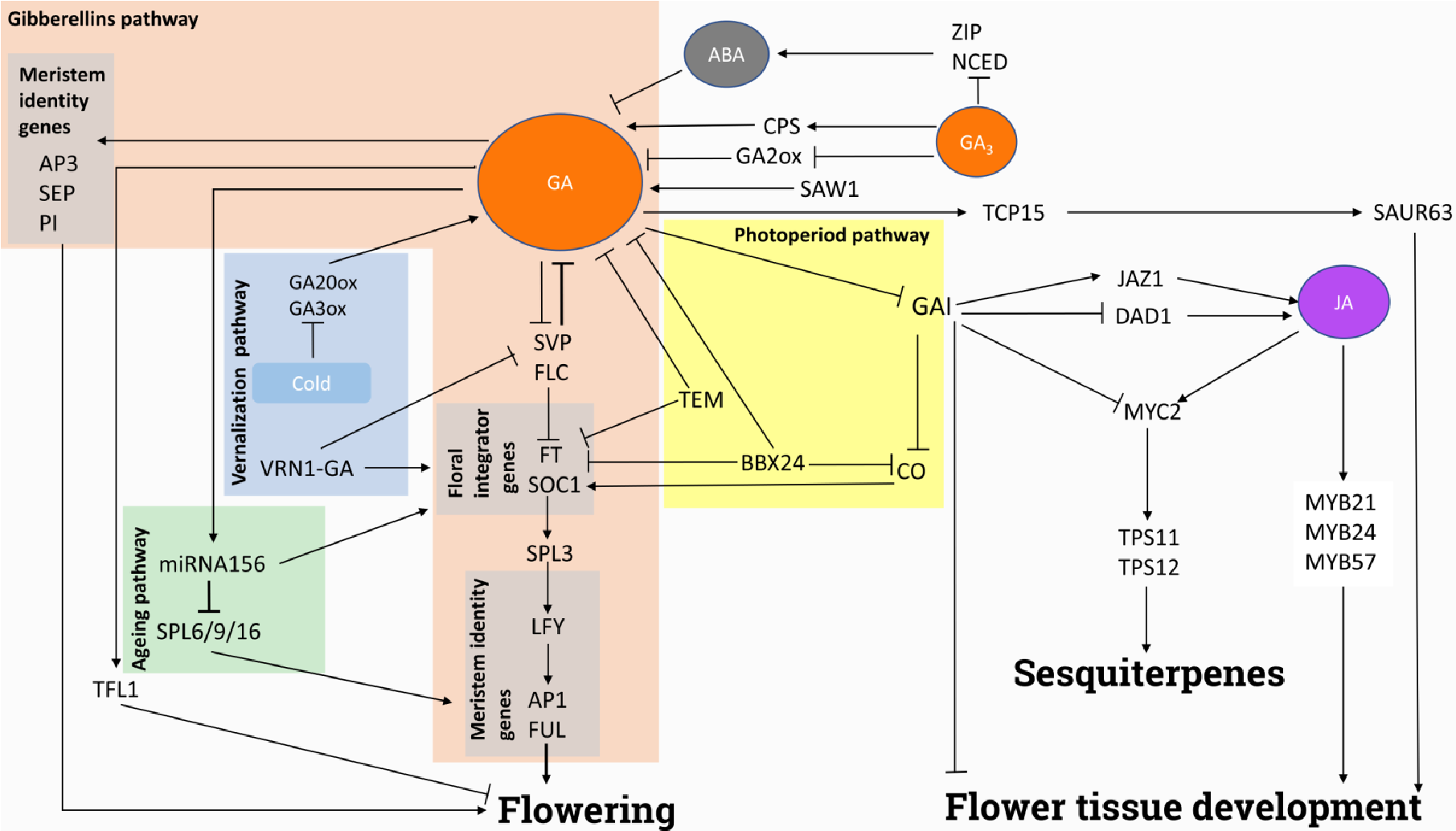 Figure 2: Integration of GA in Flowering Pathways and Floral Identity.
Results & Experimental Evidence
Recent CRISPR/Cas9 experiments have moved beyond chemical sprays (like Paclobutrazol) to permanent genetic hacks:
- Rice & Maize: Deletion or Passivation of GA20ox3 has created "Ideotype" plants—short, high-yielding, and nitrogen-efficient.
- Tomato: Mutating GA receptors has shown a dramatic reduction in water loss under drought conditions without sacrificing the harvest index.
- Market Impact: The GA market is set to hit $1.42 billion by 2027, showing a massive shift toward GA-based growth regulators in organic fruit production.
Critical Analysis & Conclusion
Takeaway
GAs are no longer just "growth hormones"; they are environmental sensors. The next "Green Revolution" will likely stem from Nitrogen-responsive chromatin modulation, where GA signaling is fine-tuned to allow high yields with significantly less fertilizer.
Limitations
The primary hurdle remains pleiotropy. Changing GA levels to improve wood quality might accidentally cause male sterility or premature seed sprouting.
Future Prospect
Precision editing of DELLA-interactor proteins (rather than GA levels themselves) will allow scientists to decouple growth from stress responses, leading to "designer crops" tailored for a warming planet.