
Plant Growth Regulators: The Physiological "Fine-Tuning" of Modern Agriculture
Plant Growth Regulators: Backgrounds and Uses in Plant Production
This comprehensive review details the classification, history, and agricultural applications of Plant Growth Regulators (PGRs), which act by modulating plant hormonal status. It highlights the transition from discovery in the 1930s to a $1.2 billion industry where compounds like Gibberellins, Auxins, and Ethylene-blockers serve as essential tools for "fine-tuning" crop physiology, such as preventing lodging in cereals and optimizing fruit quality in high-value horticulture.
TL;DR
While fertilizers provide the fuel and pesticides the protection, Plant Growth Regulators (PGRs) are the control logic of modern farming. This seminal review by Wilhelm Rademacher explores how these "bioregulators" allow farmers to manipulate plant hormones—optimizing shoot architecture, preventing crop collapse (lodging), and precisely timing harvests. With a global market of $1.2 billion, PGRs represent a sophisticated intersection of plant physiology and industrial chemistry.
Background: Beyond Simple Growth
The term "Plant Growth Regulator" is often a misnomer; Rademacher suggests "Plant Bioregulator" is more accurate. Why? Because these compounds do far more than just make plants taller or shorter. They handle the "logistics" of a plant:
- Architecture: Shortening stalks to withstand wind (Anti-lodging).
- Timing: Breaking dormancy or accelerating ripening.
- Quality: Improving fruit size, color, and shelf-life.
The "True" PGR Framework: How They Work
PGRs are categorized by their interaction with the "Big Five" classical plant hormones: Auxins, Gibberellins (GAs), Cytokinins, Abscisic Acid (ABA), and Ethylene.
1. Gibberellin (GA) Control: The Height Specialists
The most economically significant PGRs are growth retardants that inhibit GA biosynthesis. By blocking the enzymes responsible for stem elongation, farmers can grow shorter, "sturdier" versions of crops.
- The Problem: In high-intensity farming (high Nitrogen), crops like wheat and barley grow too tall and fall over (lodging), losing up to 40% of yield.
- The Solution: Chlormequat chloride and Trinexapac-ethyl "stiffen" the straw.
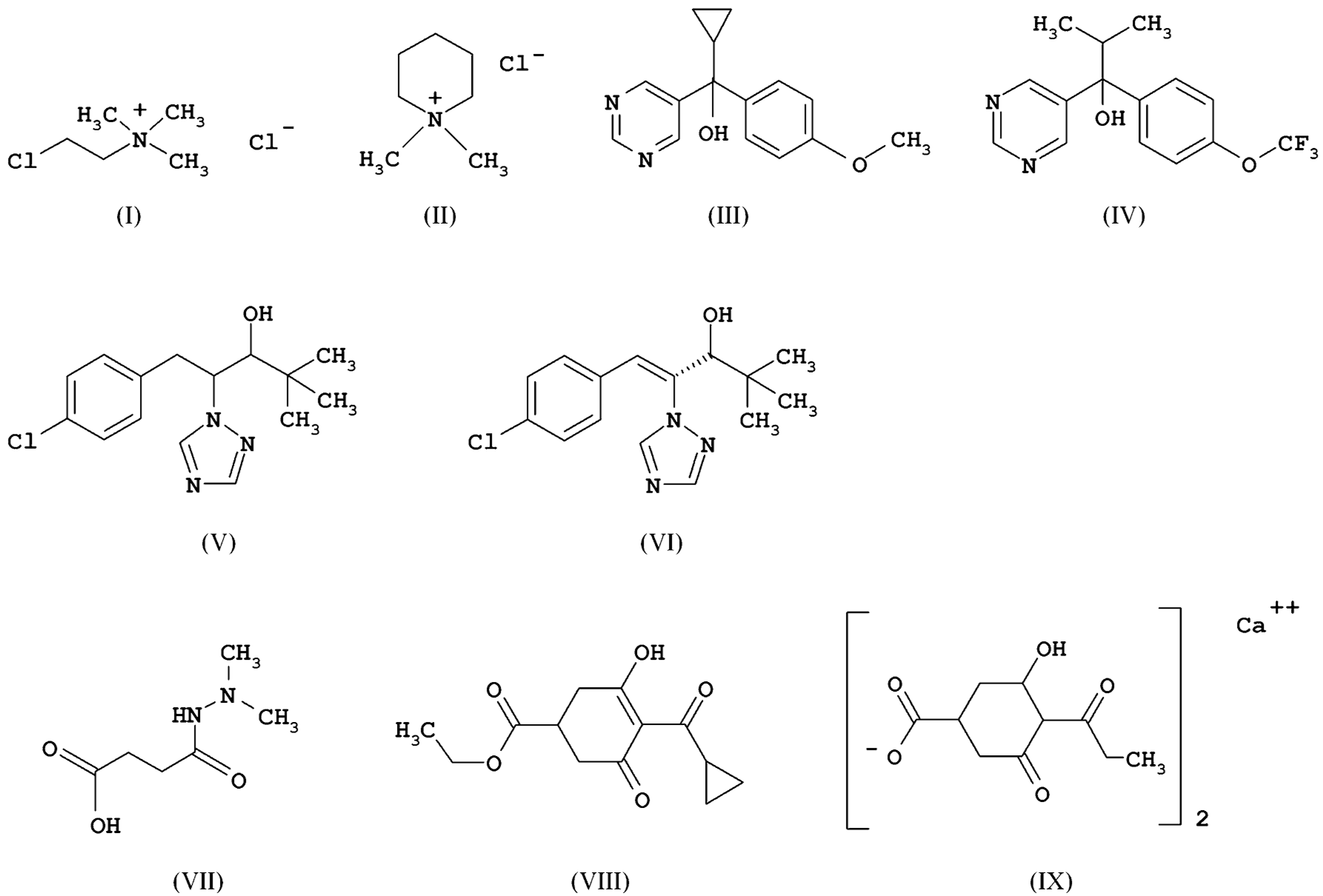 Figure 3 (Above): Chemical structures of primary growth retardants used in cereal production.
2. Ethylene: The Master of Senescence
Ethylene is the gaseous hormone responsible for ripening and leaf drop. Controlling it is the secret to year-round fruit availability.
- Ethephon: A "pro-drug" that releases ethylene to synchronize fruit ripening or open cotton bolls.
- 1-MCP: The "Anti-Ethylene" gas. It binds to receptors so the fruit "doesn't know" it's time to age, allowing apples to stay crisp for months in storage.
Specialized Applications: Fine-Tuning High-Value Crops
Cotton: The Engineered Annual
Cotton is naturally a perennial plant. PGRs like Mepiquat chloride are used to force it into an annual cycle, shifting energy from "lush foliage" to "boll production." This allows for early mechanical harvesting and uniform quality.
The Viticulture Miracle
In table grapes, Gibberellic Acid (GA3) is used to "stretch" the cluster. This provides more room for individual berries, preventing the cluster from becoming so tight that berries crush each other and rot—a standard practice for seedless varieties.
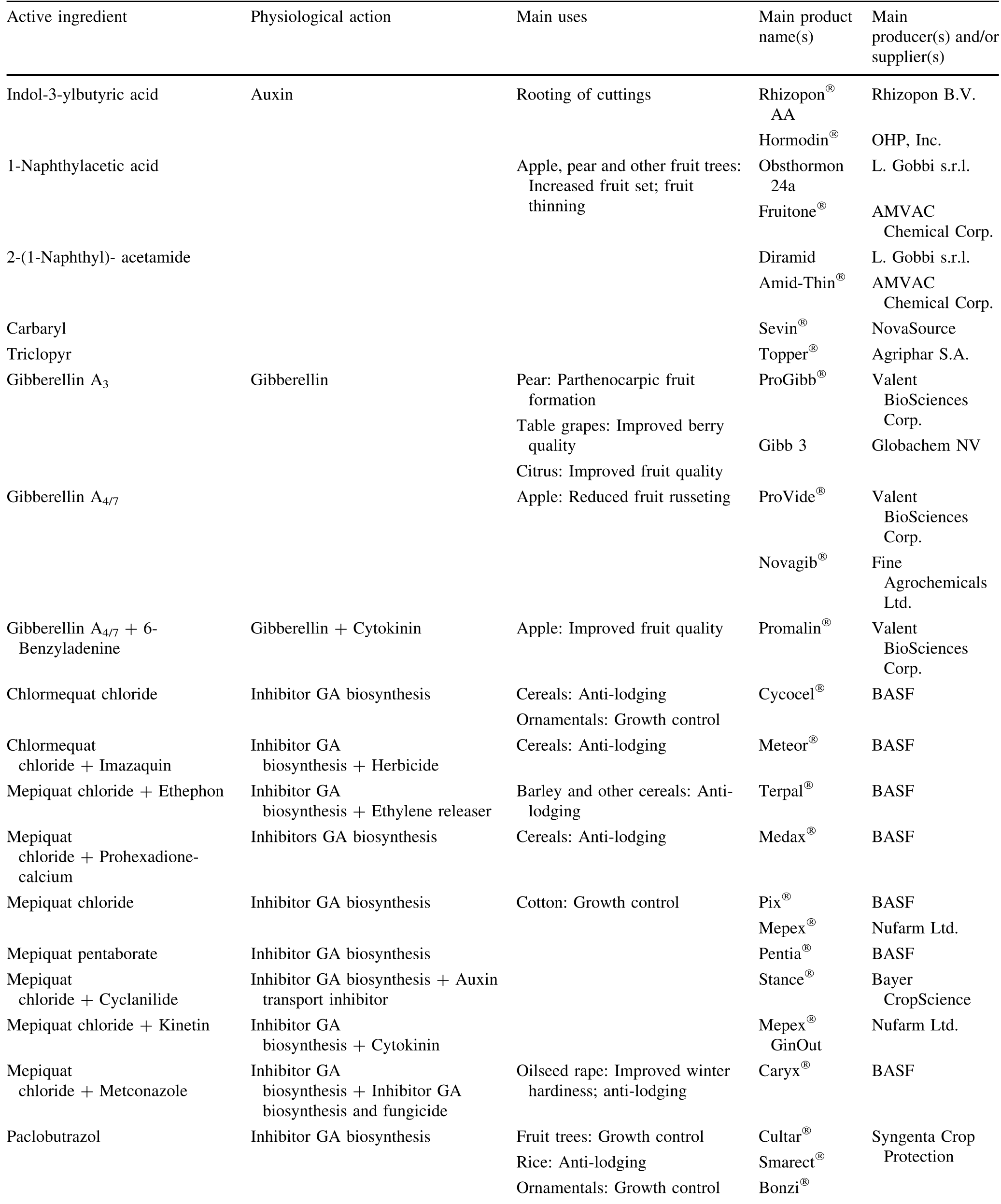 Table 1: Key PGR active ingredients and their commercial uses.
Critical Insight: The "Atypical" Regulators
Rademacher introduces the concept of Atypical PGRs, such as Hydrogen Cyanamide. These don't mimic hormones but rather induce a "transient toxic stress" (inhibiting respiration) to shock woody perennials like grapes into breaking dormancy in warm climates. It is a high-risk, high-reward "chemical wake-up call."
Deep Insight & Future Outlook
The review concludes with a sobering reality: despite their value, PGRs are "complex" and high-investment. Most agrochemical giants prioritize herbicides because they are "simpler" to market.
The Future?
- Biotech Origins: Moving away from complex chemical synthesis toward large-scale fermentation (as seen with GA and ABA production).
- Universal Application: The development of liquid, sprayable versions of 1-MCP to protect field crops from drought and heat stress.
Conclusion
PGRs are the unsung heroes of the supermarket. By bridging the gap between a plant's genetic potential and the unpredictable environment of the field, they ensure that the "hardware" of the plant runs on the most efficient "software" possible.