
The Zigzag Model: Decoding the Molecular Arms Race of Plant Immunity
The plant immune system
2006-11-01
Summary
Problem
Method
Results
Takeaways
Abstract
This foundational review presents the "Zigzag Model" of the plant immune system, categorizing defense into PAMP-triggered immunity (PTI) and Effector-triggered immunity (ETI). It establishes the molecular framework for how plants recognize pathogens and how pathogens evolve to suppress host defenses.
## TL;DR
In this seminal review, Jones and Dangl formalize the **"Zigzag Model"**, a four-phase evolutionary framework that explains how plants use a two-tiered innate immune system to combat pathogens. The paper clarifies the relationship between **PAMP-triggered immunity (PTI)** and **Effector-triggered immunity (ETI)**, establishing how pathogens evolve to suppress host defenses and how plants counter-evolve to regain resistance.
## The Evolutionary Motivation: Beyond "Lock and Key"
For decades, plant pathology relied on the "gene-for-gene" concept. However, this didn't fully capture the "Why" behind the massive diversity of resistance (R) genes. Jones and Dangl argue that plant immunity isn't just about stopping an invader; it's about a continuous struggle where:
1. **Pathogens** must suppress the plant's basal defenses (PTI) to survive.
2. **Plants** must detect the "damage" or the presence of these suppressors to trigger a secondary, more potent defense (ETI).
## Methodology: The Four Phases of the Zigzag Model
The authors break down the interaction into a quantifiable amplitude of defense.
### Phase 1: PTI (PAMP-Triggered Immunity)
Plants use Pattern Recognition Receptors (PRRs) to detect conserved microbial molecules (PAMPs/MAMPs), such as flagellin. This is the "common sense" defense that halts most non-adapted microbes.
### Phase 2: ETS (Effector-Triggered Susceptibility)
Successful pathogens deliver **Effectors** (virulence factors) into the host cell to dampen PTI. This "dampening" creates a state of susceptibility where the pathogen can thrive.
### Phase 3: ETI (Effector-Triggered Immunity)
The plant "guards" its own proteins. When an effector modifies a host target, intracellular **NB-LRR proteins** detect this "modified self" and trigger ETI. This is an explosive response, often leading to regulated cell death (the **Hypersensitive Response, HR**).
### Phase 4: The Co-evolutionary Loop
Pathogens lose or modify recognized effectors to escape ETI, prompting the plant to evolve new R-gene specificities.
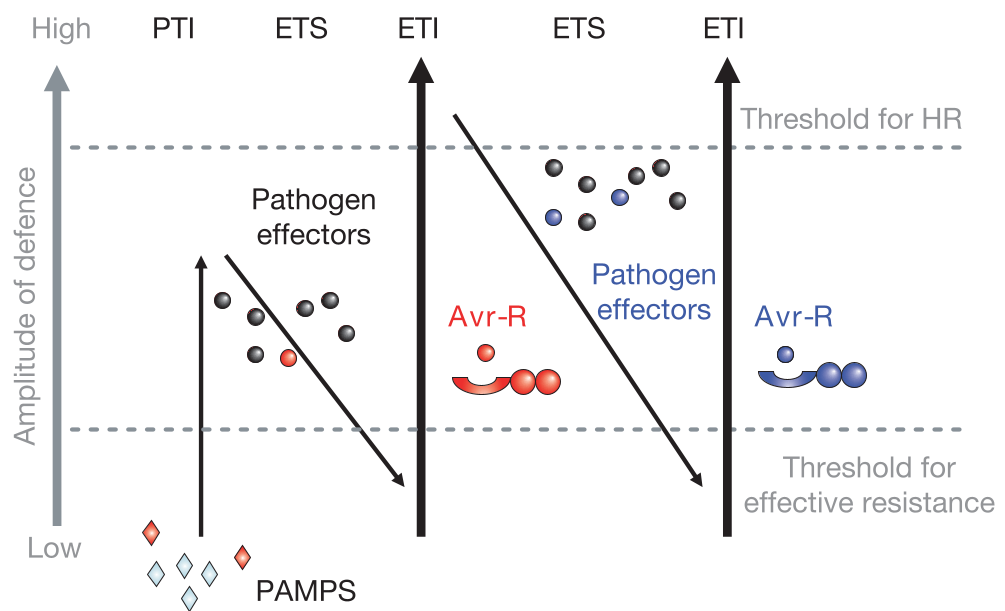
*Figure 1: The amplitude of disease resistance is proportional to [PTI – ETS + ETI].*
## The Guard Hypothesis: Detecting "Modified Self"
A brilliant insight in this paper is the refinement of the **Guard Hypothesis**. Instead of many R-proteins recognizing many effectors directly (which would require a massive genome), one R-protein (the "Guard") monitors a specific host protein (the "Guardee").
**Case Study: RIN4**
- **Effectors:** AvrRpm1, AvrB, and AvrRpt2 all target the plant protein **RIN4**.
- **Guards:** The NB-LRR proteins **RPM1** and **RPS2** monitor RIN4.
- **Result:** Whether the effector phosphorylates RIN4 or cleaves it, the "Guard" detects the change and triggers ETI. This mechanism makes it much harder for pathogens to "hide" their activity.
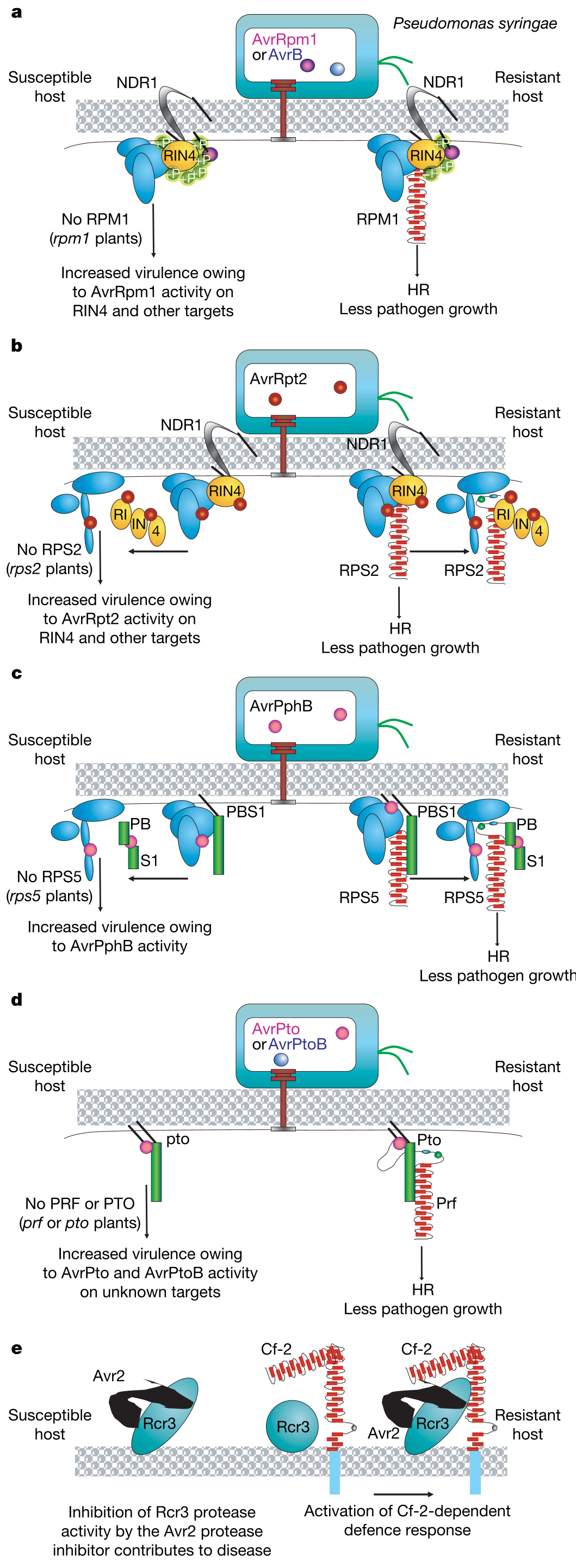
*Figure 2: Examples of how indirect recognition (guarding) allows plants to detect diverse pathogen effectors.*
## Experiments and Insights
The paper synthesizes decades of experimental data, particularly from *Arabidopsis thaliana*.
- **Convergence:** The authors show that different MAMPs (like flg22 and EF-Tu) trigger a nearly identical set of genes, suggesting PTI is a highly conserved, converged signaling pathway.
- **SOTA Comparison:** Unlike mammalian adaptive immunity, plant ETI is faster and "pre-programmed." It doesn't require mobile cells but relies on the autonomous decision-making of each individual plant cell.
## Critical Analysis & Future Outlook
While the Zigzag model is foundational, the authors acknowledge its limitations:
- **Biotrophs vs. Necrotrophs:** ETI is effective against biotrophs (who need a living host) but can actually *help* necrotrophs (who want to kill the tissue).
- **The Stop Mechanism:** We still don't fully understand exactly what stops the pathogen growth—is it the lack of nutrients, or the toxicity of the cell death area?
**Takeaway:** This work shifted the focus of agricultural research from simply identifying "resistance genes" to understanding the "pathogen effector repertoire." For future crop improvement, we must not only breed for R-genes but also identify the "Achilles' heels"—the conserved host targets that pathogens cannot help but modify.
---
*Jones, J. D. G., & Dangl, J. L. (2006). The plant immune system. Nature, 444(7117), 323-329.*