
ThePlantGame: Solving the Expert Gap in Large-Scale Crowdsourcing
ThePlantGame: Actively Training Human Annotators for Domain-specific Crowdsourcing
This paper introduces "ThePlantGame," an Active User Training framework designed for domain-specific crowdsourcing with thousands of classes. It integrates a Convolutional Neural Network (CNN) with a data-driven gaming interface to actively train human annotators and optimize label prediction through Bayesian inference.
TL;DR
Crowdsourcing thousands of specialized labels (like plant species) is nearly impossible for laypeople. ThePlantGame transforms the labeling process into a "serious game" that actively trains users on the fly. By combining CNN-based pre-filtering, active training quizzes, and Bayesian skill modeling, the system achieves a staggering 0.98 precision, far surpassing standalone AI models.
The "Expertise Bottleneck" in Crowdsourcing
Most crowdsourcing platforms assume tasks are simple (e.g., "Is there a dog in this photo?"). However, in citizen science projects like biodiversity monitoring, we deal with thousands of classes.
The authors identify two fatal flaws in prior work:
- The Confusion Matrix Explosion: Standard algorithms try to learn how likely a worker is to mistake Class A for Class B. With 1,000 classes, that's (a million) parameters per worker—impossible to fill.
- The Knowledge Gap: You cannot ask a beginner to identify a rare orchid. Without active training, the worker accuracy remains low, and the labels remain noisy.
Methodology: The Active User Training Framework
The core innovation is a closed-loop system that moves beyond just "collecting labels" to "building experts."
1. Active Training via Monte-Carlo Quizzes
Instead of random items, the system serves "Quizzes." It uses a CNN to identify which classes are most likely to be confused for a specific item. It then presents these specific classes to the user. This forces the human to learn the fine-grained nuances between similar species—exactly where the AI is most uncertain.
2. Skill-Aware Assignment
The system doesn't broadcast tasks to everyone. It treats task assignment as a constrained optimization problem. It calculates the likelihood that user will correctly identify item based on their past training performance and solves for maximum global accuracy:

3. Bayesian Inference
Once propositions are collected, a Bayesian network aggregates them. This model accounts for the global class distribution () and the estimated confusion matrices () of each worker, allowing the system to "weight" the opinions of highly-trained users more heavily.
Experimental Performance: Human + AI > AI
The project used the LifeCLEF 2015 dataset to test the framework. The results were clear: specialized tasks are impossible without human training.
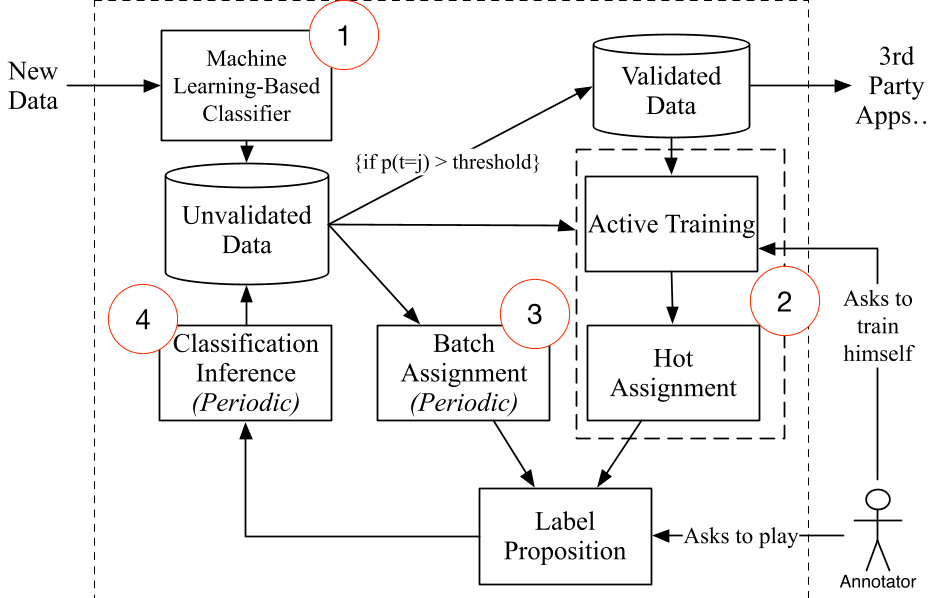 Figure 2: The synergy of Training + Assignment + Aggregation leads to the highest classification quality.
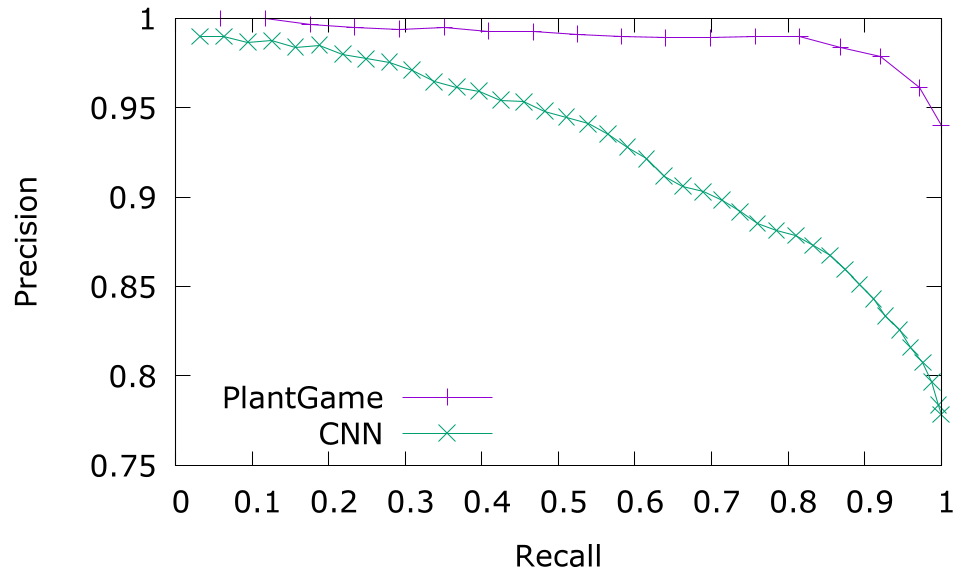
- Precision Leap: While a state-of-the-art CNN achieved 0.85 precision, ThePlantGame framework pushed this to 0.98.
- Training Necessity: As shown in the "Recall-Precision" curves, the "CNN only" approach drops off significantly compared to the "Active User" approach, proving that human intervention is vital for the "long tail" of rare or difficult species.
Critical Insight: The Shift to "Serious Games"
ThePlantGame represents a shift in the AI pipeline. We often treat human annotators as static data-entry clerks. This paper argues that in complex domains, the system must be a teacher. By gamifying the training process and using AI to curate the "curriculum," we can turn hobbyists into domain experts, creating a self-sustaining ecosystem of high-quality data.
Future Outlook: As we move toward more specialized AI applications (medical imaging, legal tech, niche biology), the "Active Training" paradigm will likely become the standard for building the massive, high-fidelity datasets these models require.