
Beyond the Screen: Leveraging Player Models to Optimize Crowdsourcing
On Utilizing Player Models to Predict Behavior in Crowdsourcing Tasks
This paper introduces Context Independent Player Models (CIPMs) to predict user traits—specifically Need for Cognition (NC)—based on in-game behavioral data. The authors demonstrate the utility of these models for crowsourcing, aiming to optimize task assignment by matching worker cognition profiles with appropriate microtasks.
TL;DR
Researchers are exploring Context Independent Player Models (CIPMs)—digital profiles built from how you play games—to predict how you will perform in real-world work environments. By analyzing "Need for Cognition" through game mechanics, this work aims to replace tedious surveys with stealthy, accurate task-matching in crowdsourcing platforms.
The Problem: The "Generic Worker" Fallacy
Most crowdsourcing platforms (like Amazon Mechanical Turk) treat workers as interchangeable units. This leads to two major issues:
- Mismatch: A highly creative person might be bored to death by repetitive data labeling, while a heuristic-driven worker might struggle with complex problem-solving.
- Profiling Friction: Current ways to measure worker traits rely on self-report questionnaires. These are not only "boring" but "gameable"—workers often provide the answers they think the requester wants to hear.
The Insight: Play is a Mirror of the Mind
The authors suggest that your behavior in a game—how you move units, whether you use shortcuts, and how you react to hints—is a fingerprint of your cognitive style. They focus on Need for Cognition (NC):
- High NC: Enjoys mental effort, evaluates situations deeply, and values the process.
- Low NC: Prefers mental shortcuts (heuristics) and focuses purely on the outcome.
Methodology: The "Hint" Mechanic
To measure NC without asking a single question, the researchers developed a game where players control unit movements.
Architecture of Behavior Inference
The core innovation is a non-optimal hint system.
- If a player is high in NC, they are likely to ignore a sub-optimal "fast" hint to find a better solution themselves.
- If a player is low in NC, they will likely take the hint to reach the goal faster with less mental strain.
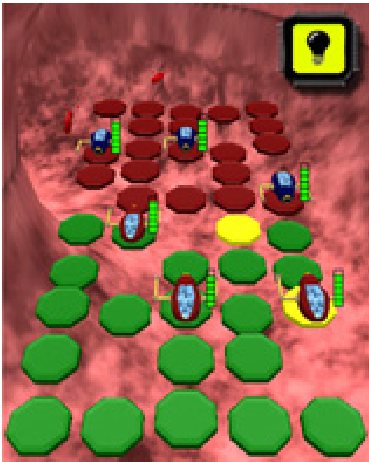
This behavior serves as a stealthy assessment. By correlating these game actions with the standard 18-item NC scale, the model creates a "portable" profile that follows the user from the game to the task platform.
Applications: Creative vs. Laborious Crowdsourcing
The researchers argue that once we know a worker’s NC via their CIPM, we can optimize the "human touch":
- Crowd Creativity: Assign High NC workers to tasks requiring deep reasoning, synthesis, and innovation.
- Crowd Labor: Assign Low NC workers to highly procedural, heuristic-based microtasks where speed and goal-orientation are paramount.
Critical Insight & Future Outlook
While the study is in its exploratory phase, the implications for unobtrusive profiling are massive. By moving away from "The Player" as a static entity within a game and toward "The Participant" as a dynamic agent across systems, we bridge the gap between entertainment and productivity.
Potential Challenges:
- Privacy: Using gameplay data to profile personality for employment raises significant ethical questions.
- Generalizability: Does a "high NC" behavior in a strategy game translate to high NC in data entry?
Conclusion
This work represents a shift toward Behavioral Bioinformatics. By turning game mechanics into diagnostic tools, the authors provide a roadmap for a future where our digital leisure activities help us find the work we are most naturally suited for.