
POI-Ontology: Unleashing Social Data Synergy through Semantic Storage
Point of interest data storage using ontology
This paper proposes a novel Point of Interest (POI) data storage approach using Ontology to unify heterogeneous social network data. By implementing an OWL-based formal structure, the authors enable efficient integration of location data from diverse sources like Facebook and Google, utilizing SPARQL for standardized querying.
TL;DR
As urbanization accelerates, social networks generate an explosion of Point of Interest (POI) data. However, the lack of a unified structure leads to massive redundancy. This paper introduces an Ontology-based storage approach, moving away from rigid relational databases to a flexible, semantic OWL (Web Ontology Language) framework that simplifies data sharing and accelerates retrieval speed.
The "Data Silo" Problem in Social Navigation
When you check into a restaurant on Foursquare or tag a landmark on Twitter, you are creating POI data. The problem? Every platform describes the same physical location differently. Traditional databases struggle with:
- Inflexible Schemas: Hard to adapt to new types of user-generated content.
- Redundancy Overhead: Merging data from Google, Facebook, and Twitter requires a costly "Read-Compare-Update" workflow.
- Query Complexity: Finding a "bar that is also a restaurant" across platforms is computationally expensive without a shared conceptual framework.
Methodology: The POI Ontology Architecture
The authors propose a formal model that defines the "DNA" of a location. Unlike a flat table, this ontology creates a hierarchy of generalizations and specializations.
1. Model Design
The model is structured around a central POI Class linked to attributes like coordinates, contact info, and opening hours through specific functional properties.
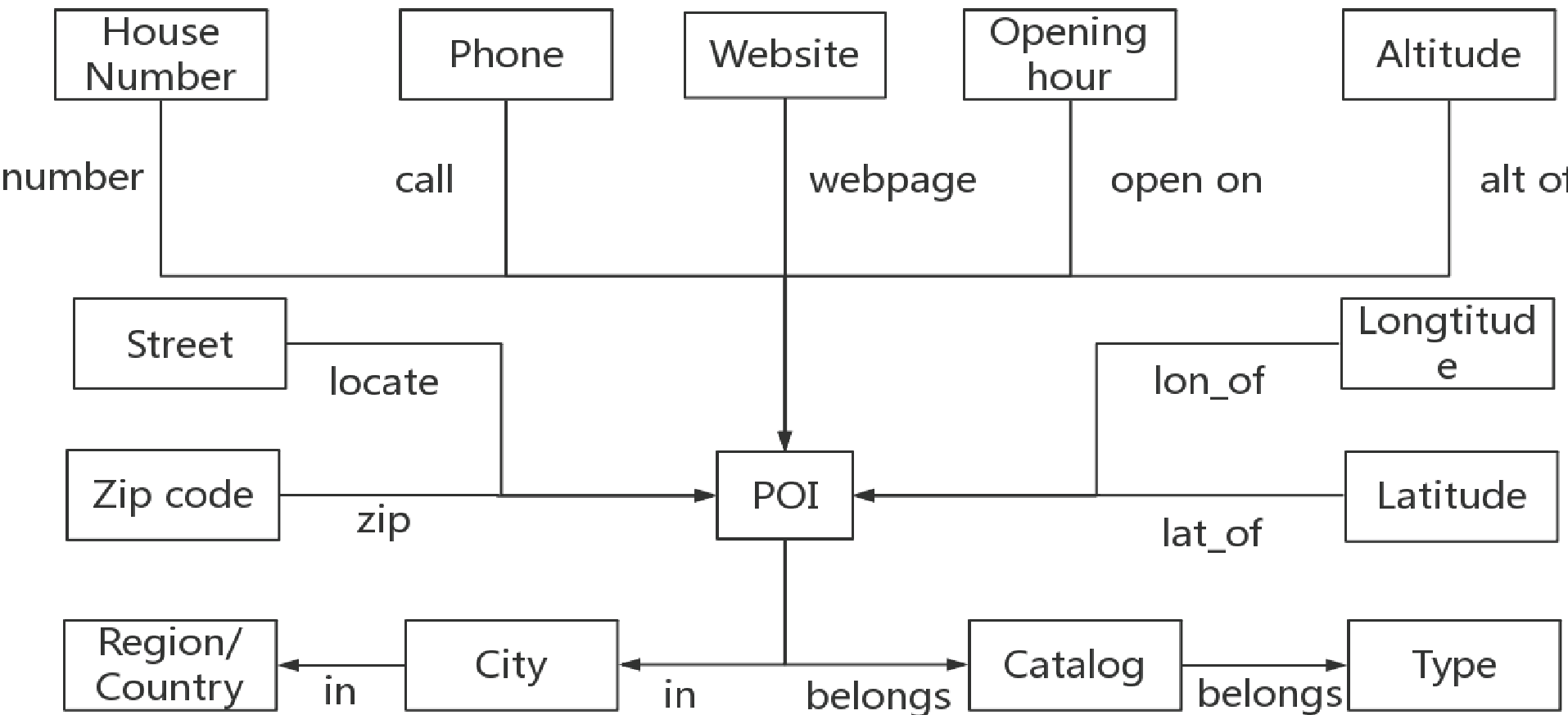 Figure 1: The structural relationship between POI instances and their semantic attributes.
2. Semantic Mapping
The core innovation lies in the Conversion Layer. Instead of forcing data into a fixed column, raw strings (like "568, Broadway, New York") are semantically segmented and mapped to the ontology as unique individuals.
Key Mapping Logic:
- Direct Matching: Simple attributes like Phone and Category.
- Complex Segmentation: Breaking down address strings into
House Number,Street, andCityindividuals. - Handling Replicas: instead of deleting duplicates, the system adds a "source description tag," allowing SPARQL queries to filter or aggregate results dynamically.
Performance & Experiments
The researchers benchmarked the prototype against traditional database systems. The findings were clear:
- Efficiency: The ontology system bypasses the need for conflict resolution during storage. It simply stores the data and resolves conflicts at the query stage.
- Standardized Access: By using SPARQL, external smart city systems can retrieve complex cross-referenced data without needing to understand the underlying storage quirks of different social networks.
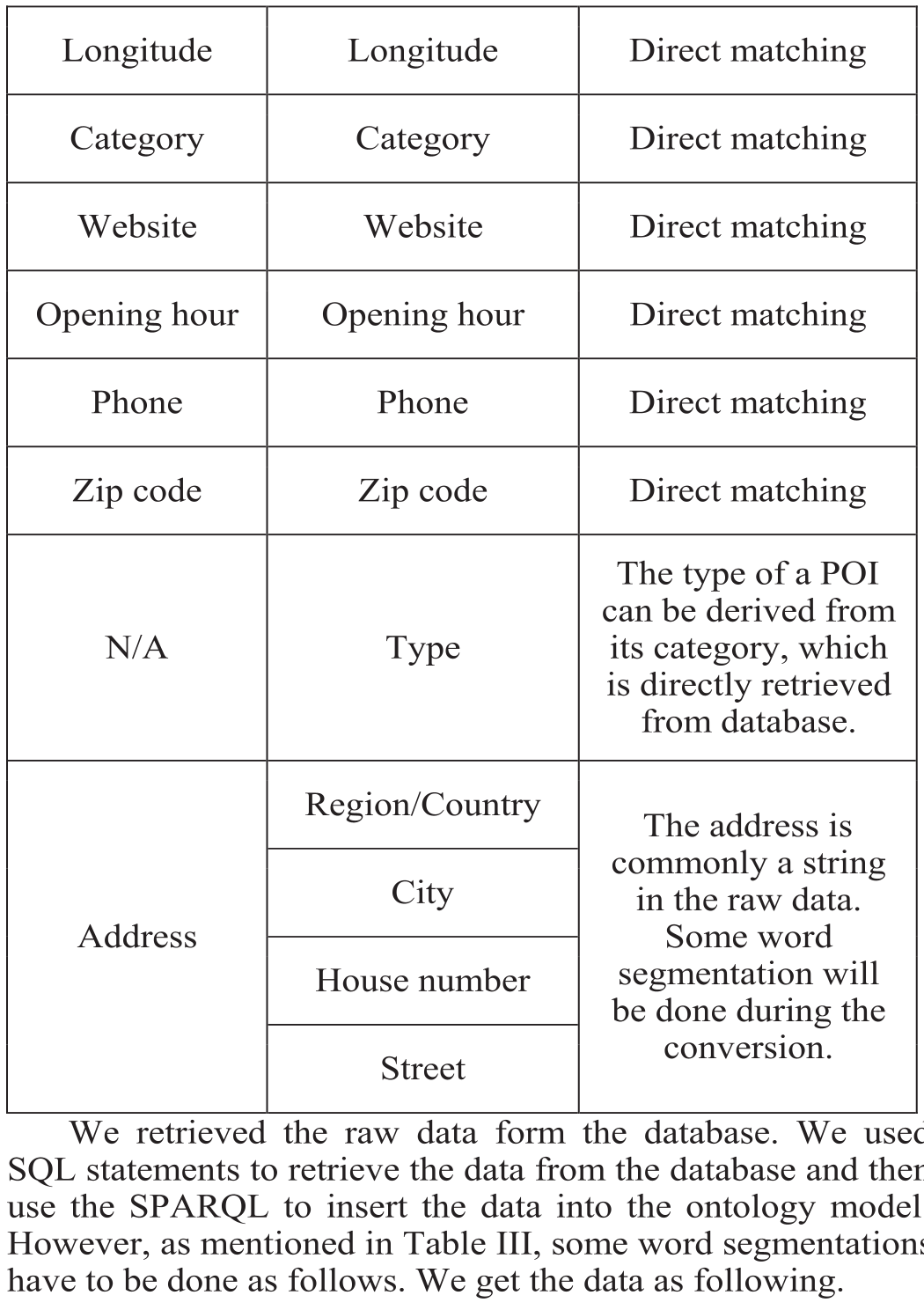 Table III: The logic used to transform unstructured raw data into semantic individuals.
Critical Insight & Future Outlook
The true value of this work is not just in "storing" data, but in creating interoperability. By treating a location as a semantic entity rather than a row in a table, we enable machines to "understand" the relationship between a landmark and its urban context.
Limitations: While the paper proves the efficiency of OWL storage, it touches only lightly on the computational cost of reasoning (inference) as the ontology scales to billions of POIs, which usually becomes a bottleneck in semantic systems.
Conclusion: This research provides a robust blueprint for the next generation of Smart City infrastructures, where data from disparate social silos can finally speak a common language.