
Pokémon GO in Melbourne: Decoding the Cyber-Physical Symbiotic Social Network
Pokémon GO in Melbourne CBD: A case study of the cyber-physical symbiotic social networks
This paper explores "Cyber-Physical Symbiotic Social Networks" created by the Location-based Mobile Augmented Reality (LMAR) game Pokémon GO in Melbourne. Using multi-source data including player surveys and urban pedestrian sensors, the authors model how virtual interactions (avatars) and physical proximity (players) form intertwined networks.
TL;DR
This study investigates the symbiotic relationship between our physical world and the virtual "cyber" world created by Pokémon GO. By analyzing player behavior in Melbourne CBD, the research reveals that while virtual and physical interactions are mathematically distinct, virtual assets (like Pokéstops) have the power to physically shift a city's social hotspots, creating a new type of hybrid social structure.
Background: The Symbiosis of Two Worlds
For decades, social scientists studied "Online Social Networks" (OSNs) and "Physical Communities" separately. The emergence of Location-based Mobile Augmented Reality (LMAR) broke this boundary. In Pokémon GO, an avatar’s interaction at a virtual "Gym" requires the human player to be physically present at a landmark. This creates a Cyber-Physical Symbiotic Social Network, where the evolution of one world directly influences the other.
Problem & Motivation: Beyond the Screen
The authors identified a critical gap: we don't truly understand the "coupling" between these two layers.
- Physical Social Network: Formed by face-to-face greetings or staying in the same area.
- Cyber Social Network: Formed by avatar interactions during battles or team activities.
The motivation was to quantify how much "virtual" incentives (catching a rare Pokémon) can disrupt "natural" human movement patterns in a metropolitan environment like Melbourne.
Methodology: Mapping Melbourne’s Data
The research utilized two primary data sources:
- Survey Data: 104 players in Melbourne CBD provided their master levels, interaction preferences, and marked their usual playing areas on mesh-grid maps.
- IoT Sensor Data: 43 pedestrian sensors across Melbourne were used to establish a baseline of "normal" human distribution using Support Vector Regression (SVR) to fill data gaps in areas without sensors.
The Interaction Model
The authors modeled the probability of a physical meeting () based on spatial distance and temporal intervals (), assuming human activity follows a Poisson distribution.
 Figure 1: Conceptual bridge between the Cyber and Physical Social Networks.
Key Insights and Results
1. The Virtual Magnet Effect
One of the most striking findings is the correlation between player density and virtual content. While "Gyms" had low correlation with player location, Pokéstops and Pokémon density were significant drivers of where people gathered.
2. Hotspot Shifting
The study compared the "natural" hotspots of Melbourne (derived from years of sensor data) with the hotspots of Pokémon GO players.
- Normal Pedestrians: Clustered around the CBD's traditional commercial hubs.
- Pokémon Players: Shifted significantly toward the South Bank and specific streets where Pokéstops are densely packed.
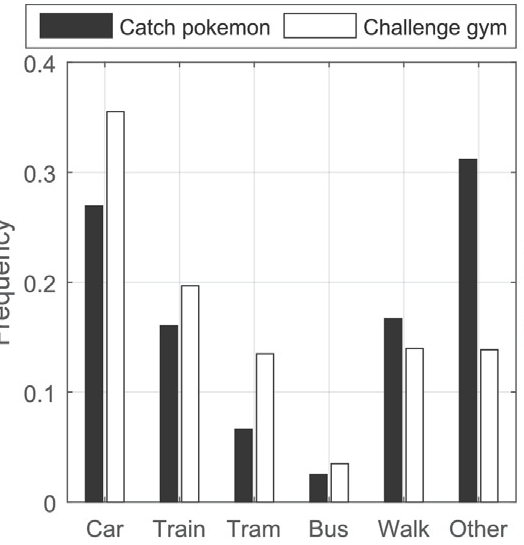 Figure 2: Performance of the SVR model used to predict urban pedestrian density.
3. Topological Divergence
The degree distribution of the Cyber Social Network follows the classic Power-Law Distribution (typical of OSNs like Twitter), where a few nodes have many connections. However, when the networks are combined (Joint Network), the distribution deviates, indicating that physical constraints (the inability to be in two places at once) limit the "rich-get-richer" effect seen in purely digital networks.
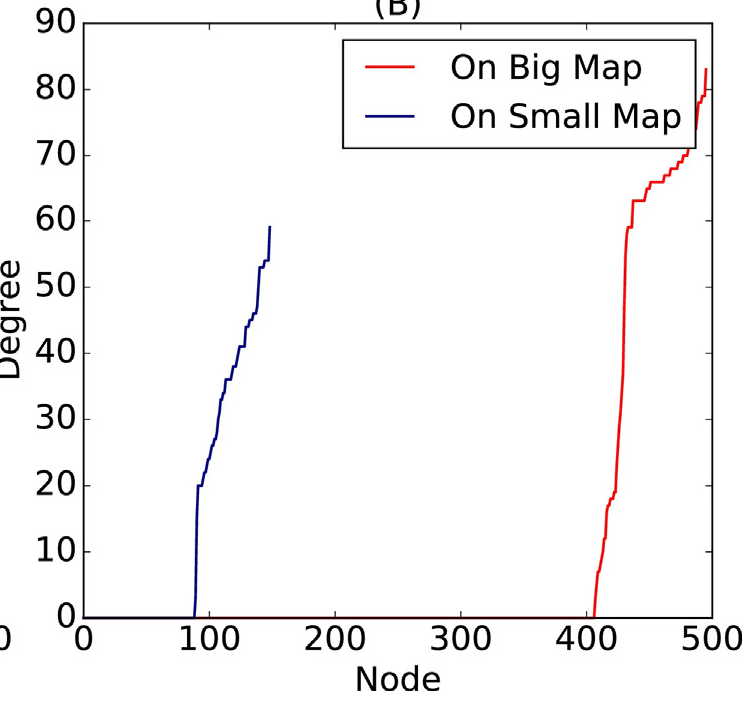 Figure 3: Comparison of degree distributions showing the shift from power-law behavior.
Critical Analysis & Conclusion
This work serves as a foundational "case study" for how LMAR technology acts as an urban intervention tool.
Takeaways:
- Urban Planning: City designers can use virtual "nudges" to redistribute foot traffic, reducing congestion in overloaded areas.
- Social Capital: LMAR creates "weak ties" (greetings) that can potentially combat social isolation in urban environments.
Limitations: The study acknowledges that the sample size (104) is relatively small and relies on self-reported location data, which introduces human error. Furthermore, privacy concerns prevented the collection of explicit social graph data (who is friends with whom).
Future Outlook: In a world of "Metaverses" and "Smart Cities," this paper proves that the virtual world is no longer just a reflection of the physical—it is an active driver of it.