
Deciphering the Digital Divide: How News Media Language Polarizes the Public
“On the left side, there’s nothing right. On the right side, there’s nothing left:” Polarization of Political Opinion by News Media
This study investigates the linguistic markers of political polarization in U.S. news media on Twitter by analyzing 831,013 tweets focused on the "Trump" administration. Using LIWC analysis and logistic regression, the researchers successfully differentiated right-wing from left-wing media styles based on cognitive loads, analytical thinking, and political sentiment profiles.
TL;DR
Researchers have identified that political polarization isn't just about what is said, but how it is written. By analyzing thousands of news tweets, this study proves that specific linguistic markers—cognitive load, analytical depth, and temporal focus—can computationally differentiate right-wing media from left-wing media with statistical significance.
The Erosion of Objectivity: Why This Matters
The traditional "Gold Standard" of journalism was objectivity. However, in the age of social media, facts are often colored by opinionated "frames." The authors of this study argue that this manipulation creates a feedback loop of confusion and chaos. The core problem is that previously objective agencies are now using specific "language-action cues" that trigger polarized reactions in the populace.
The researchers asked a fundamental question: Can we computationally identify a news media’s political stance based solely on the language of their tweets?
Methodology: The Science of Sentiment
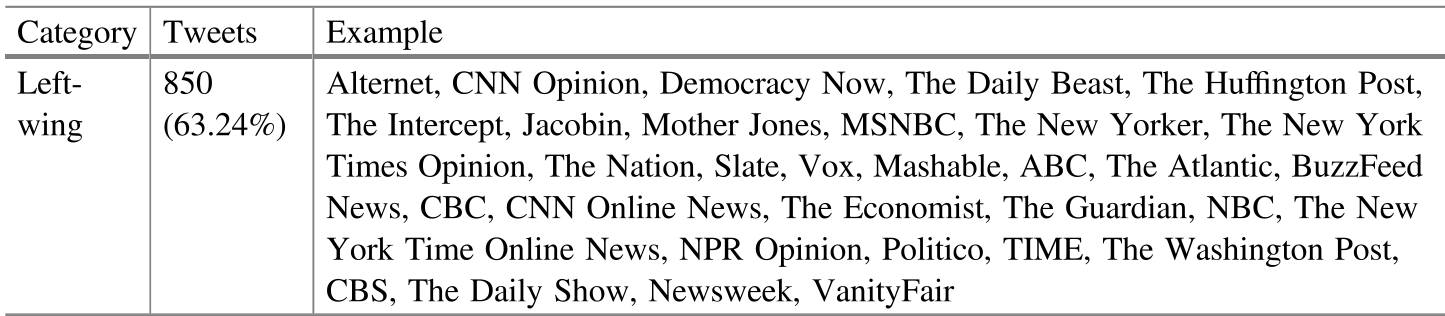
The study utilized a dataset of over 800,000 tweets from September 2019, specifically filtering for original tweets from 49 major news outlets categorized as Left, Right, or Center.
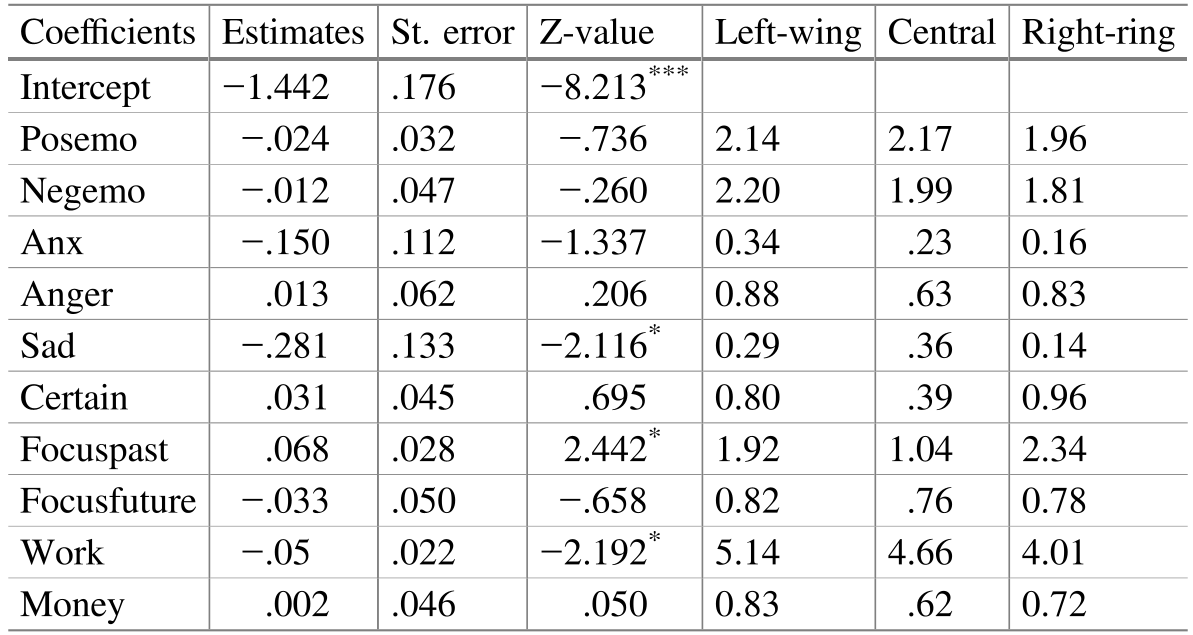
To analyze the text, the team used LIWC (Linguistic Inquiry and Word Count), a gold-standard tool in psycholinguistics, to map words to psychological categories. They then applied Logistic Regression where the right-wing was the dependent variable (1) and left-wing was the baseline (0).
Key Findings: The Anatomy of a Tweet
The study broke down these linguistic markers into four categories:
1. Cognitive Loads (How they explain "Why")
Left-wing media tended to use higher cognitive load words overall (e.g., words related to discrepancy and differentiation). However, both polarized sides used significantly more of these "heavy" cognitive words than neutral media.
- Statistically Significant Cues: Cause, Discrepancy, Differentiation.
2. Analytical Thinking Styles (The Structure)
The study found that the use of "articles" (the, a) and "verbs" could differentiate the two sides. Right-wing media often used more verbs, while left-wing media used more articles, reflecting a difference in how they formalize information.
3. Political Sentiment Profiles
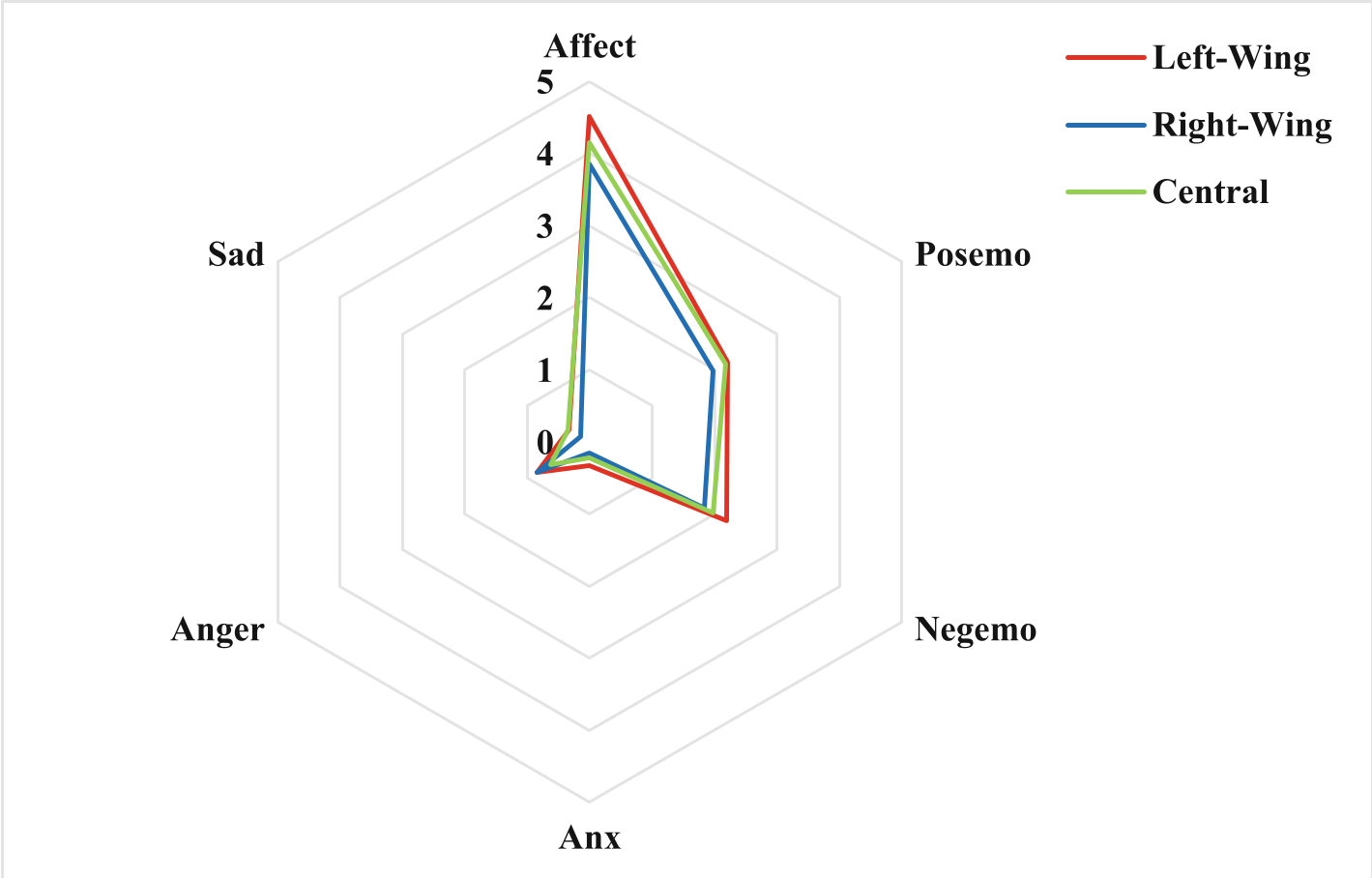
Interestingly, "Affective Processes" (pure emotion) were not statistically significant in differentiating the two sides—meaning both sides use similar amounts of emotional language. Instead, the temporal focus was the key:
- Right-wing media: Focused more on the past and used more certainty (words like "always," "never").
- Left-wing media: Showed higher associations with "work-related" vocabulary.
Critical Insight: The "Nothing Right, Nothing Left" Phenomenon
The title of the paper—"On the left side, there’s nothing right. On the right side, there’s nothing left"—captured the study’s most haunting conclusion. Central media agencies (like AP and Reuters) serve as a baseline for "neutral" writing. Both the left and right have deviated from this baseline toward "extreme" styles.
These extreme styles—characterized by higher cognitive tension and specific structural biases—are what fuel the polarization of the populace.
Conclusion & Future Outlook
This work demonstrates that political bias is an identifiable linguistic "fingerprint." While the 2019 data centered on the Trump administration, the methodology provides a roadmap for future AI tools that could "neutralize" incoming news feeds or alert readers to the psychological triggers being used in their news diet.
Limitations: The study warns that while statistical differences exist, the overall patterns across all media are still somewhat similar, suggesting that the "media ecosystem" as a whole has moved toward a more opinionated norm.