
Political Blend: Dismantling Echo Chambers Through the "Magic" of Face-to-Face Coffee
Political blend: an application designed to bring people together based on political differences
This paper presents Political Blend, a mobile application designed to mitigate the "echo chamber" effect by matching individuals with opposing political views for face-to-face meetings. Published at C&T '13, it facilitates real-world social interactions over coffee to foster human connection and empathy across ideological divides.
TL;DR
In an era of deepening political polarization, Political Blend is an experimental mobile app that does the unthinkable: it intentionally matches you with people you disagree with. By moving the interaction from the toxic comments sections of the internet to a local coffee shop, the research demonstrates that face-to-face contact can humanize ideological opponents and bridge the "echo chamber" gap.
Background: The Rise of the Echo Chamber
Technologists have spent decades building systems that connect us based on homophily—the tendency to associate with those similar to ourselves. While great for finding a date or a niche hobby group, this has created a "Filter Bubble" in the political sphere. We are increasingly isolated in digital silos where our views are echoed and amplified, leading to extreme polarization.
The authors of this paper argue that the internet, once promised as a tool for cross-cultural communication, has instead become a tool for segmentation. Their solution? An "orthogonal" approach that uses technology to bring people together based on differences rather than similarities.
Methodology: Engineering the Encounter
The researchers didn't just want to create a chat room; they wanted to foster a "human level" connection. The design of Political Blend relies on three core pillars:
- Implicit Political Profiling: Instead of long, annoying surveys, users select two political figures they agree with (ranging from Rachel Maddow to Sarah Palin). The system assigns a 1-7 score (Liberal to Conservative) behind the scenes.
- The Collaborative Coupon: To ensure participants actually met and interacted, the app employed a clever UX trick. Each user received only half of a coupon. To redeem a free pastry, they had to place their phones side-by-side to complete the image of George Washington.
- The "Third Place": By choosing a public coffee shop, the system leveraged the "social pressure" of a public space to maintain civility and the "physical warmth" of a hot beverage to prime participants for interpersonal warmth.
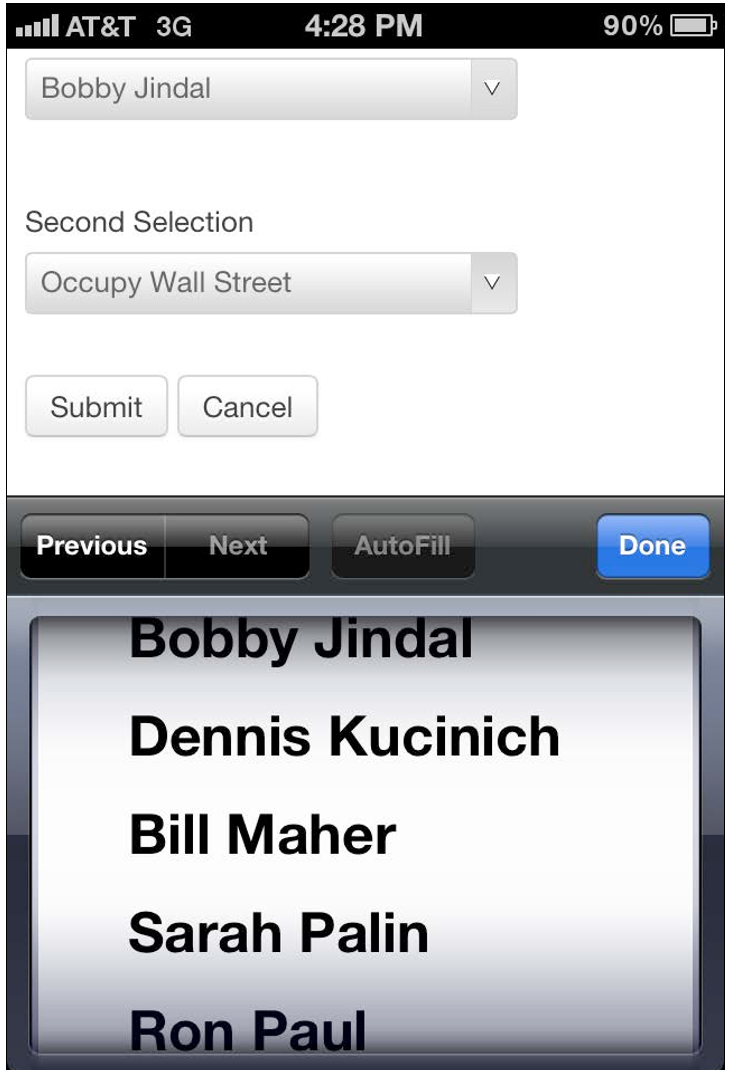 Figure 1: UI for selecting political figures to establish a general ideological baseline.
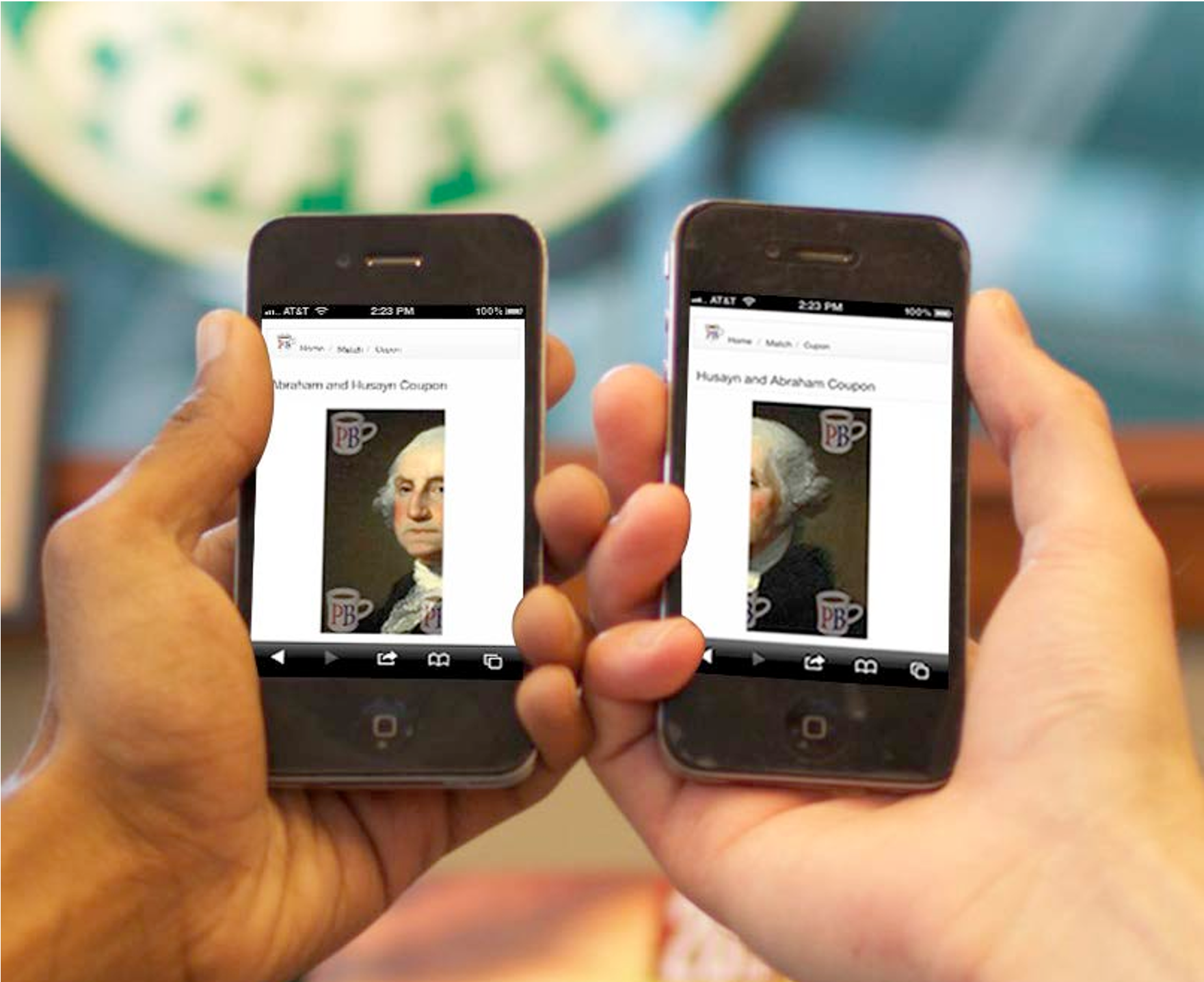 Figure 2: The collaborative coupon requires physical proximity and cooperation to work.
Experimental Results: It’s Harder to Hate Up Close
The deployment at a large university revealed several fascinating insights:
- Openness to Dissent: Contrary to the "challenge-adverse" behavior seen online, participants were remarkably open to meeting opponents in person.
- Humanization over Persuasion: The goal wasn't to change minds, but to build empathy. As participant P1 noted, "Even if you don't agree 100%, you can at least empathize with their position."
- Conversation Length: While the researchers expected quick 5-minute coffee grabs, most meetings stretched to 20-30 minutes, suggesting a deep-seated hunger for authentic discourse that current social media fails to satisfy.
Critical Analysis & Conclusion
Political Blend acts as a vital existence proof. It proves that technology can be a bridge-builder if it prioritizes physical-world interaction and humanizes the "other."
Limitations
- Self-Selection Bias: The participants were university-affiliated individuals who were already somewhat willing to engage. Whether this works for extreme partisans remains to be seen.
- Scalability: Coordinating physical meetings is high-friction compared to scrolling a feed.
Future Outlook
The authors suggest that this logic could be integrated into massive platforms like Facebook or Amazon (e.g., "Book clubs for people who disagree"). As AI-driven personalization becomes even more pervasive, the need for "noble" algorithms like Political Blend—those that intentionally inject diversity into our lives—will become a critical requirement for a functioning democratic society.
Takeaway: We don't need to change our minds to work together; we just need to see that the person on the other side isn't a "machine" or a "robot," but another human with a cup of coffee.