
The Power of the Ping: How SNS Friends Recruit New Voters
Political mobilization through social network sites: The mobilizing power of political messages received from SNS friends
This study investigates the mobilization effect of Social Network Sites (SNSs) on electoral participation using representative survey data from the 2012 South Korean general election. It identifies that the power of SNSs to increase voting intention is specifically tied to receiving political messages from friends, particularly among habitual nonvoters.
TL;DR
Does browsing Facebook or Twitter actually make you more likely to vote? While past research has been divided, Young Min Baek’s study reveals a surgical truth: SNSs don't just "activate" everyone. Instead, they act as a powerful recruitment mechanism specifically for habitual nonvoters—provided they are receiving political messages from friends rather than just broadcasting their own views.
Beyond the Echo Chamber: Why Context Matters
For years, political scientists debated whether social media was a "democratic savior" or a "slacktivism" trap. The author argues that the confusion exists because we treat all "SNS use" as equal. In reality, the mobilization effect is contingent on three critical dimensions:
- Content Type: Political vs. Nonpolitical.
- User History: Past Voters vs. Habitual Nonvoters.
- Directionality: Receiving influence vs. Expressing it.
Methodology: Decoding the Interaction
Using data from the 2012 South Korean general election, the study moves beyond simple correlations. It uses regression models to isolate how different behaviors affect "Voting Intention."
The most profound insight is the Directionality Flow. In traditional media, influence flows from a central source to an audience. In SNS, you are both receiver and sender. Baek posits that sending a message implies you are already convinced, but receiving one serves as a point of persuasion.
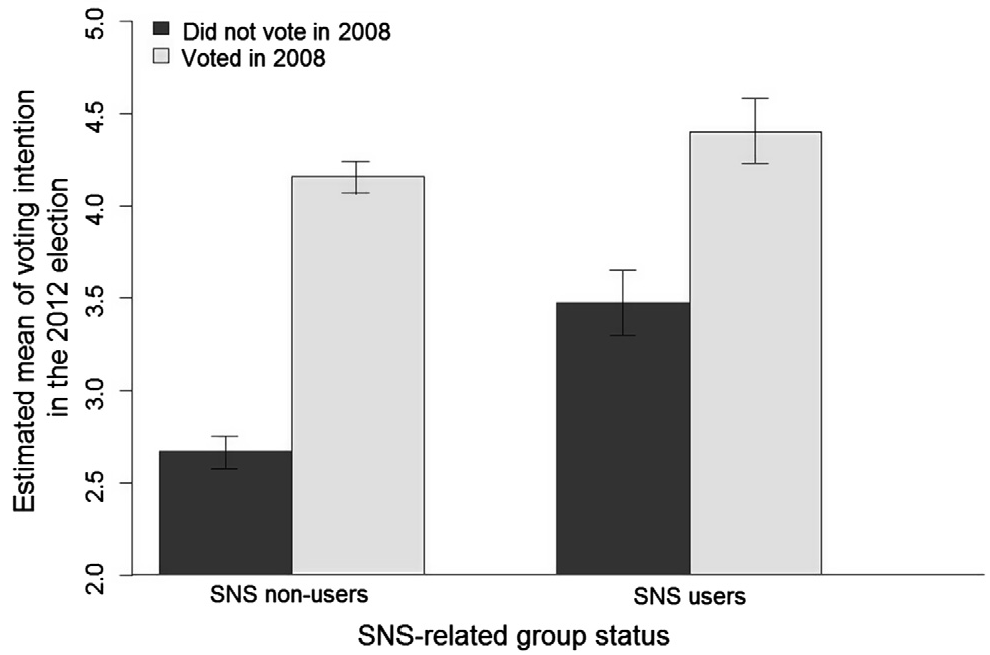 Figure 1: Comparison of SNS mobilization between past voters and nonvoters.
Key Findings: The "Recruitment Effect"
The study discovered four potential effects, but only one showed a significant shift in behavior:
- The Ceiling Effect: For habitual voters, SNS messages do little. Their intention is already at a maximum; they were going to vote anyway.
- The Recruitment Miracle: For those who skipped previous elections, the influx of political messages from friends acted as a catalyst. These messages provided the necessary social pressure or information to move them from "nonvoting" to "voting."
- The Directional Pivot: Interestingly, only receiving messages mattered. High-frequency "posters" (senders) did not show a subsequent increase in voting intention—they were likely already engaged.
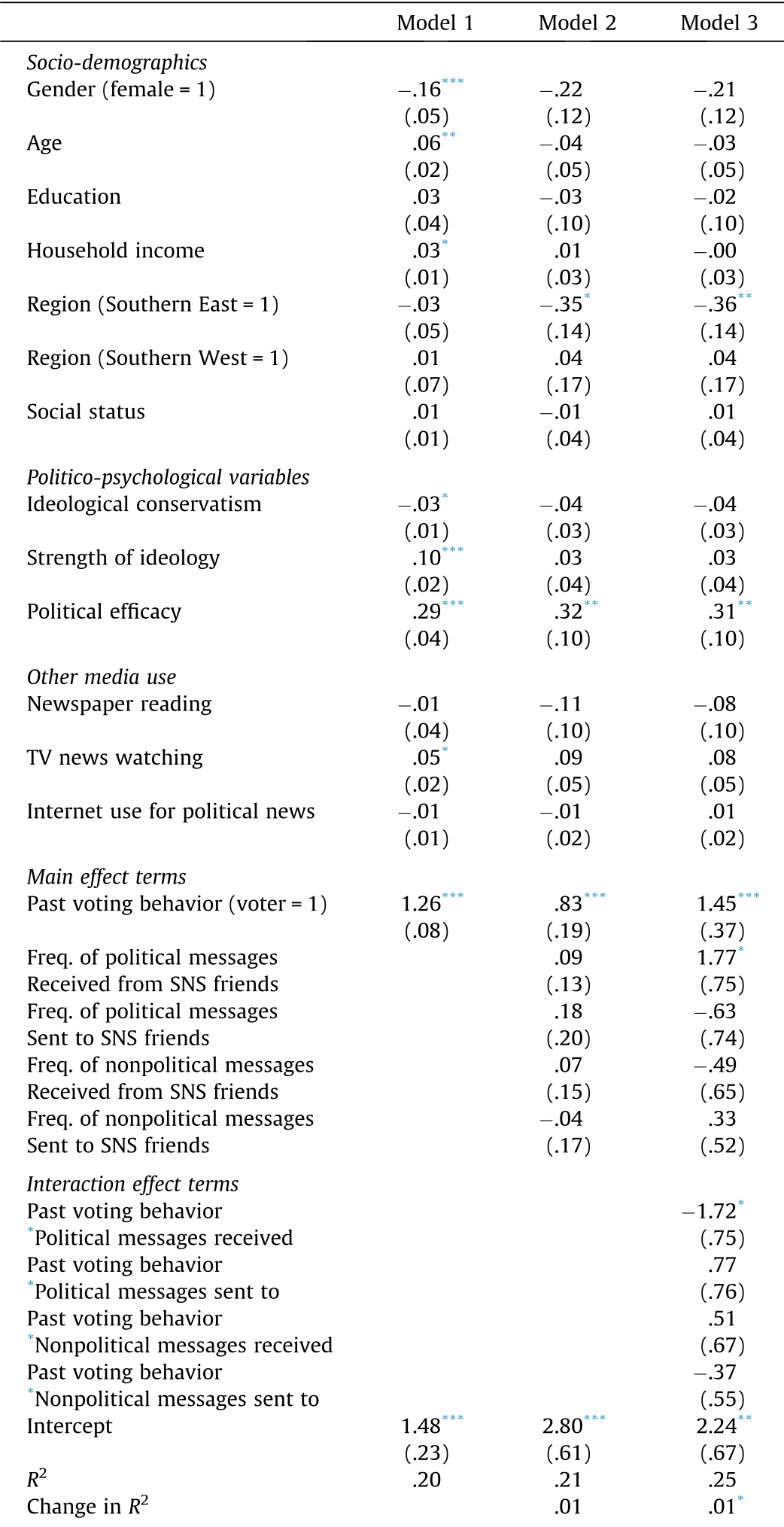 Table 1: Regression Analysis showcasing the interaction between message frequency and voting status.
Critical Insight: The 2% Margin
At first glance, the study notes that only about 2% of the voting population was newly recruited via SNS. In academic terms, this might seem small. However, in the context of modern "razor-thin" elections—where presidents are often decided by 1% or less—this 2% recruitment is a kingmaker.
Conclusion & Future Outlook
Baek’s work shifts the focus from what we do on social media to who we are connected to. It suggests that the true democratic value of SNS lies in its ability to puncture the apathy of the nonvoter through the "weak ties" of social networks.
Limitations to Consider:
- Social Desirability Bias: Survey respondents often over-report their intention to vote to look like "good citizens."
- Echo Chambers: While SNS recruits, it may also polarize, as messages are often shared within homogeneous ideological groups.
Ultimately, this study serves as a roadmap for digital campaign managers: Stop preaching to the choir (the voters) and start figuring out how to get your supporters to message their "apathetic" friends.