
The Social Media Mirror: How Digital Habits Warp Our Perception of "Us vs. Them"
Political Opinions of Us and Them and the Influence of Digital Media Usage
This study investigates the link between digital media usage and the perception of political polarization in Germany, specifically examining topics like immigration and the AfD party. Utilizing a survey-based empirical approach (), researchers identified that high-frequency social media usage—regardless of intentional political seeking—significantly correlates with an increased perception of "us vs. them" societal divisions as measured through a novel perceived polarization scale.
TL;DR
Is society actually more polarized, or do we just think it is because of our phones? This study by RWTH Aachen University researchers reveals that the more you use Facebook and other social media, the wider the "perception gap" becomes between your friends and the rest of the country. Crucially, this happens even if you aren't looking for politics—the mere frequency of use is enough to trigger a cognitive bias that makes the world look more divided than your dinner table.
Background: The Invisible Wedge
In the late 2010s, the rise of right-wing populism (like the AfD in Germany) raised a critical question: How are people convinced of these beliefs? While many blame "Fake News," this paper dives deeper into the Perception of Polarization. Polarization isn't just about different opinions; it’s about the feeling that there is no middle ground. The authors position this work at the intersection of psychology and HCI, investigating if digital media acts as an "availability heuristic" that biases our social estimates.
Methodology: Measuring the "Perception Gap"
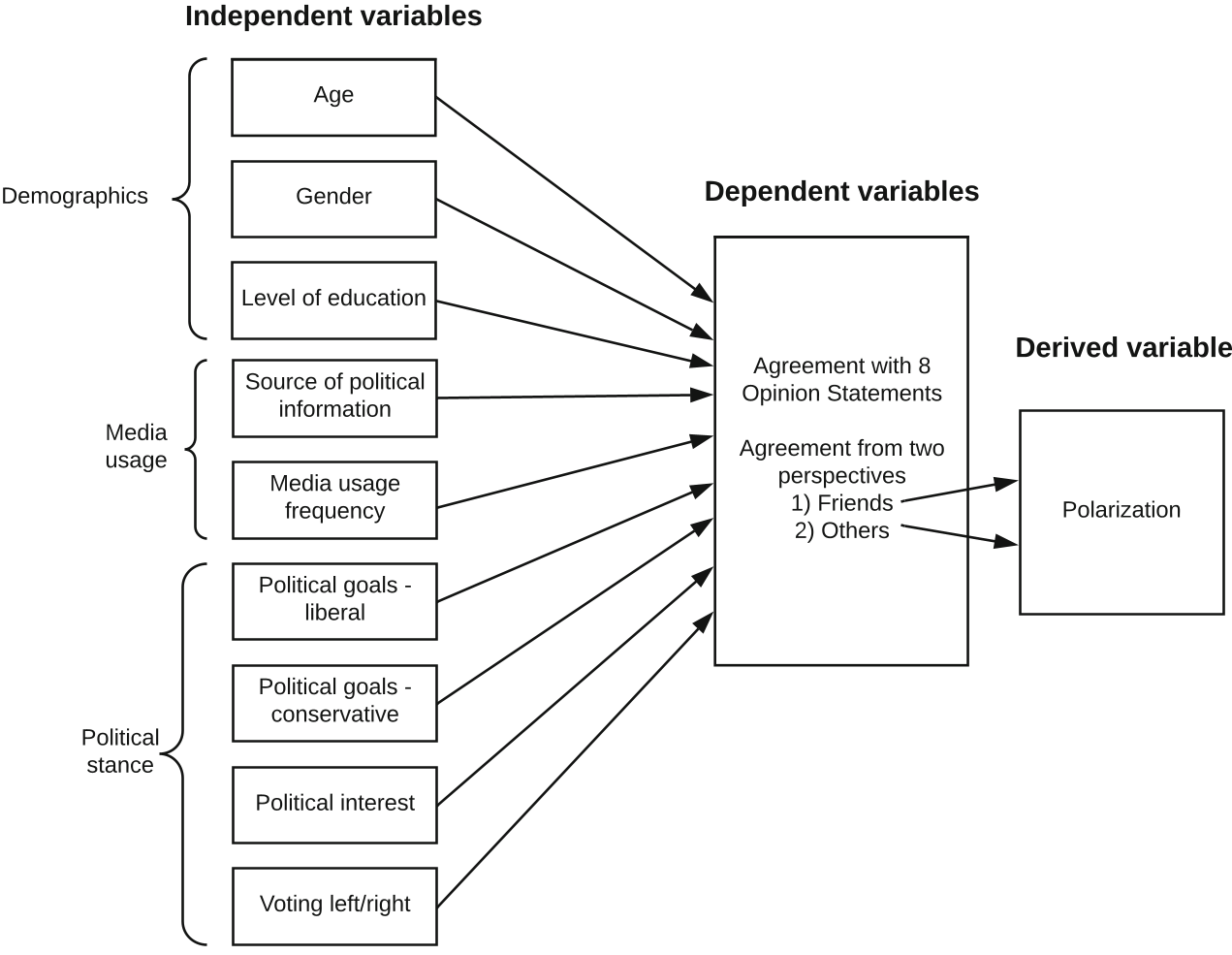
The researchers conducted a survey () in Germany, focusing on high-tension topics like immigration and the AfD.
The "Forged Post" Experiment
Participants were shown simulated Facebook comments and asked two critical questions:
- Peer Agreement: What percentage of your friends would agree with this?
- Societal Agreement: What percentage of the general population would agree with this?
The "Perceived Polarization Score" was defined as the statistical difference between these two values.
Key Insights: Why Your Feed is Lying to You
The authors identified several "breakthrough" findings that challenge common assumptions about media influence:
1. The Perceptual Bias is Topic-Specific
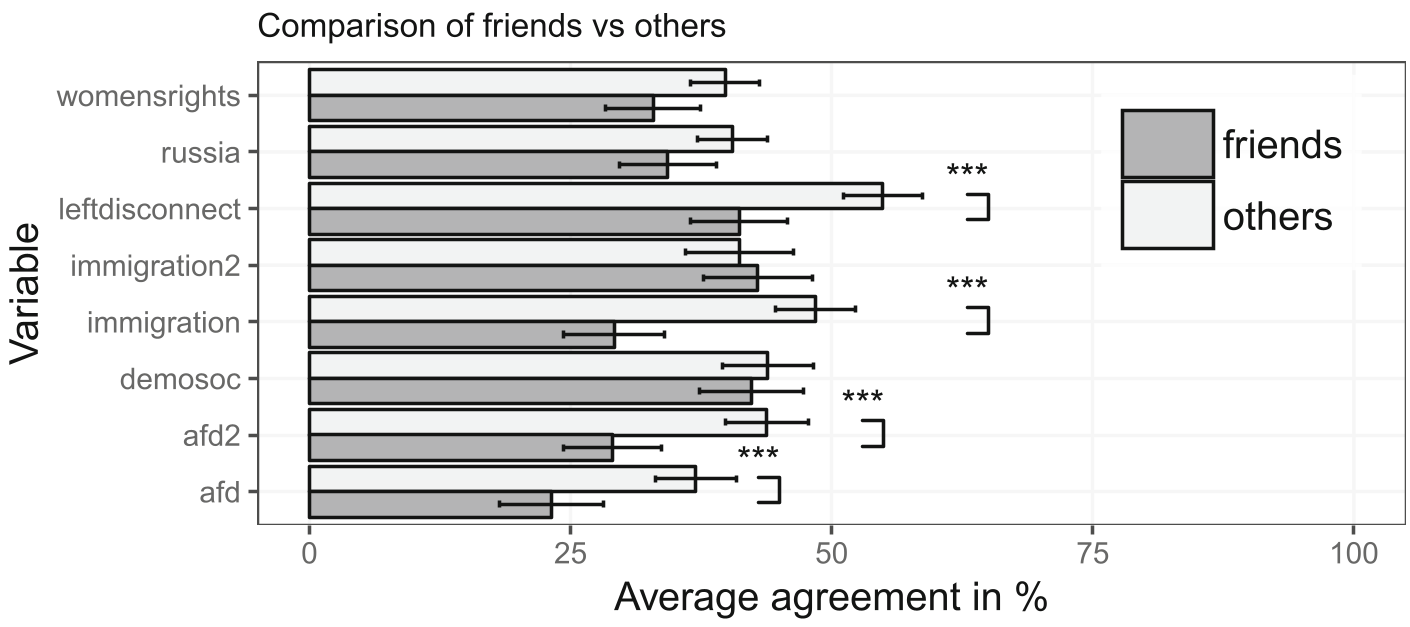
The study found that polarization isn't felt equally across all subjects. The gap between "my friends" and "society" was largest for topics involving immigration and the AfD. For general social justice or children's poverty (the "demosoc" variable), the gap was significantly smaller.
2. Frequency vs. Intent
Perhaps the most striking finding: Intentional political seeking didn't matter, but usage frequency did.
- If you actively search for political news, your perception of polarization doesn't necessarily increase.
- If you simply spend more time on Facebook, your perception of polarization does increase ().
This suggests a "subconscious exposure effect." Because moderate voices rarely "rally" or post heated comments, the algorithmic frequency of polarized content makes those views seem more pervasive in the "outside world" than they are in our personal circles.
Critical Analysis & Conclusion
The Takeaway
The study proves that social media usage acts as a psychological "funhouse mirror." It leverages our ancestral Availability Heuristic—the mental shortcut where we estimate the frequency of an event based on how easily examples come to mind. In the digital age, if you see 10 angry comments about immigration every day, your brain assumes 50% of the country feels that way, creating a "Spiral of Silence" for moderate views.
Limitations
- Sample Bias: The study used convenience sampling, over-representing educated young women.
- Ground Truth: The study measures perceived agreement, not actual agreement, so we cannot definitively say if the participants are "wrong" or if their friends are just an outlier bubble.
Future Outlook
This work calls for a redesign of social media presentation. Instead of showing "top comments" (which are usually the most polarized), platforms could benefit from "diversity indicators" that visualize the actual spectrum of public opinion, helping to deflate the artificial perception of a society at war with itself.