
Who Are Political Users of the Internet? Unmasking the Democratic Divide
Who are political users of the Internet?: an empirical study of the democratic divide
This study investigates the "Democratic Divide" by analyzing the 2008 Pew Internet & American Life Project survey to distinguish demographic patterns between general and political Internet users. Using binary logistic regression and Chi-square tests, the research maps how socioeconomic status (SES) and age influence various tiers of online political engagement.
TL;DR
Is the Internet a digital town square that equalizes voices, or a megaphone for those who already have power? Analyzing 2008 post-election data, Taewoo Nam's study reveals that while the gap in access might be closing, a Democratic Divide persists. The research finds that "light" political use (reading news) follows general tech-savviness, but "thick" political engagement (campaigning) remains gatekept by high educational attainment, proving the Web is not yet a universal democratic equalizer.
Problem & Motivation: The Janus-Faced Internet
Since the inception of the World Wide Web, two camps have argued over its impact on democracy: Cyber-Utopians (who believe the Web cures political apathy) and Cyber-Skeptics (who fear it amplifies social unevenness).
The author argues that we have moved past the "First-Level Divide" (Physical Access) and "Second-Level Divide" (Skills). We are now in the era of the Usage Divide. The core question shifted from "Can you get online?" to "What do you actually do when you're there?" Specifically, does the Internet mobilize the "inactive citizen," or does it merely provide a faster lane for the "political elite"?
Methodology: Tiering Online Activities
The study categorizes digital citizenship into several distinct groups to see where the demographic "plunge" occurs:
- General Users: Standard daily Internet usage.
- Light Political Users: Casual info-seeking and communication.
- Campaign-Engaged Users: Active participation (donating, volunteering, organizing).
- SNS Users: General social media usage vs. those using it for political connections.
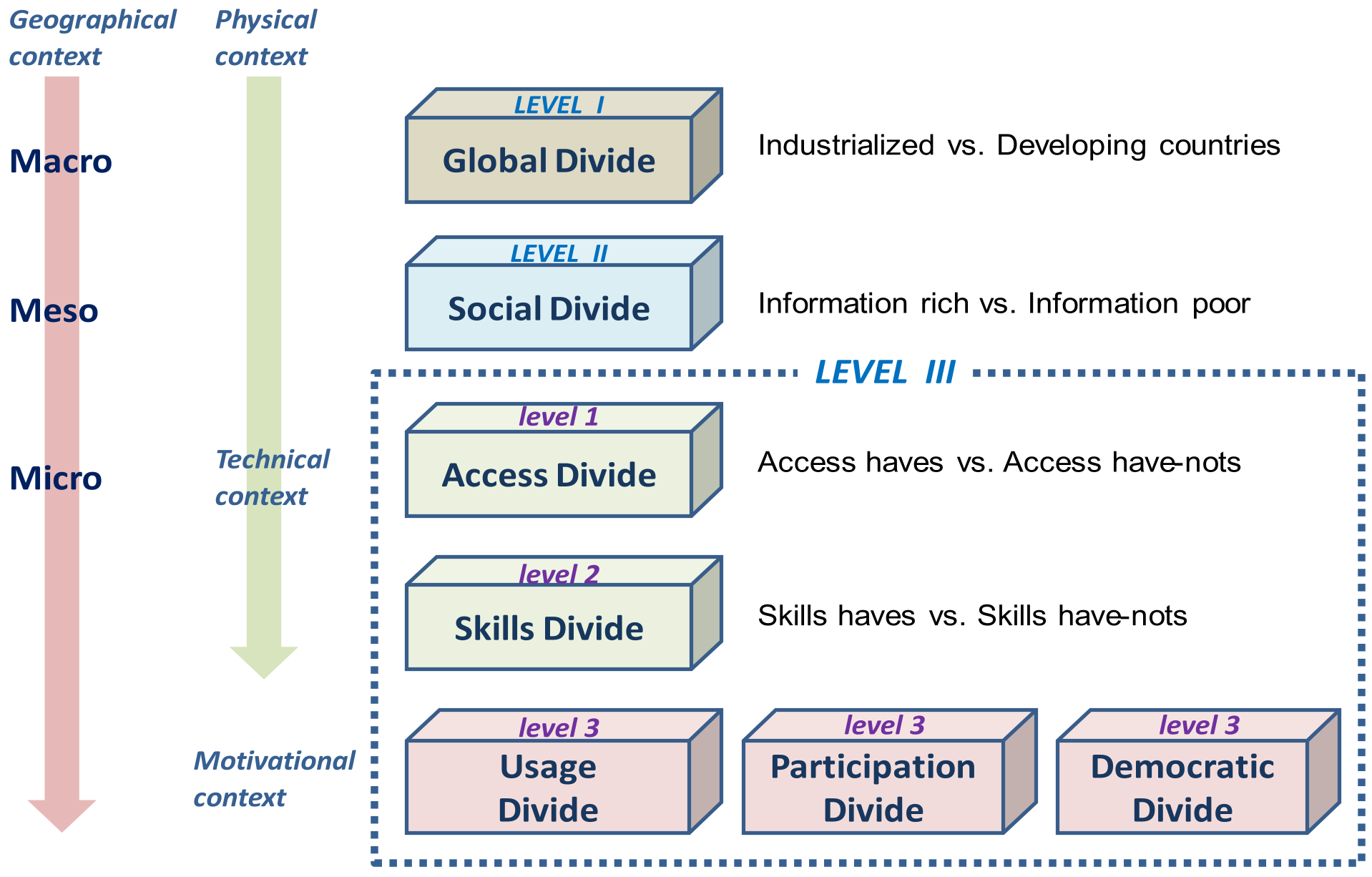 The study builds upon the frameworks of van Dijk and Norris to move from material access to democratic participation.
The Core Insight: Why the Divide Persists
Using binary logistic regression, Nam found that Age is a massive predictor for general and SNS use (favoring the young), but its influence wanes when it comes to serious political commitment.
1. The Paradox of Youth
Younger generations dominate the "fun" side of the Internet and SNS. However, this "digital native" status does not automatically translate to "thick democracy." The study shows that the higher probability of young people being online is offset by their general tendency toward lower civic engagement compared to seniors.
2. Education as the Ultimate Gatekeeper
While income impacts whether you have a computer, Education predicts whether you participate in a campaign. For every additional year of schooling, the probability of online campaign engagement rises by 3.1%. This suggests that the Internet requires a baseline of "information literacy" that is still largely tied to traditional schooling.
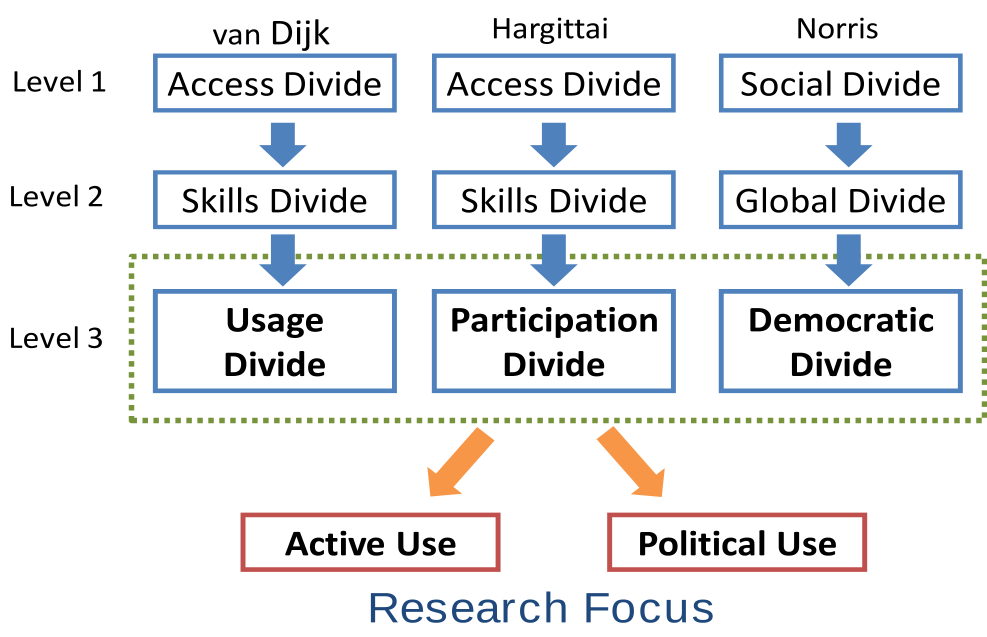 Table 1 illustrates the disproportionate concentration of college-educated and high-income individuals among 'Political Users'.
Experimental Analysis: General vs. Political
The study's most striking visualization (Figure 3 in the paper) shows that the "slope" for daily Internet use and light political use are almost identical. This indicates that if you are a daily user, you likely consume some political news.
However, when examining Social Networking Sites (SNS), a massive generational gap appears. In 2008, SNS was a youth playground. Even though 60% of Y-generation SNS users engaged politically on those platforms, the sheer lack of older cohorts on these sites at the time meant that SNS could not serve as a "predominant medium" for the wider electorate.
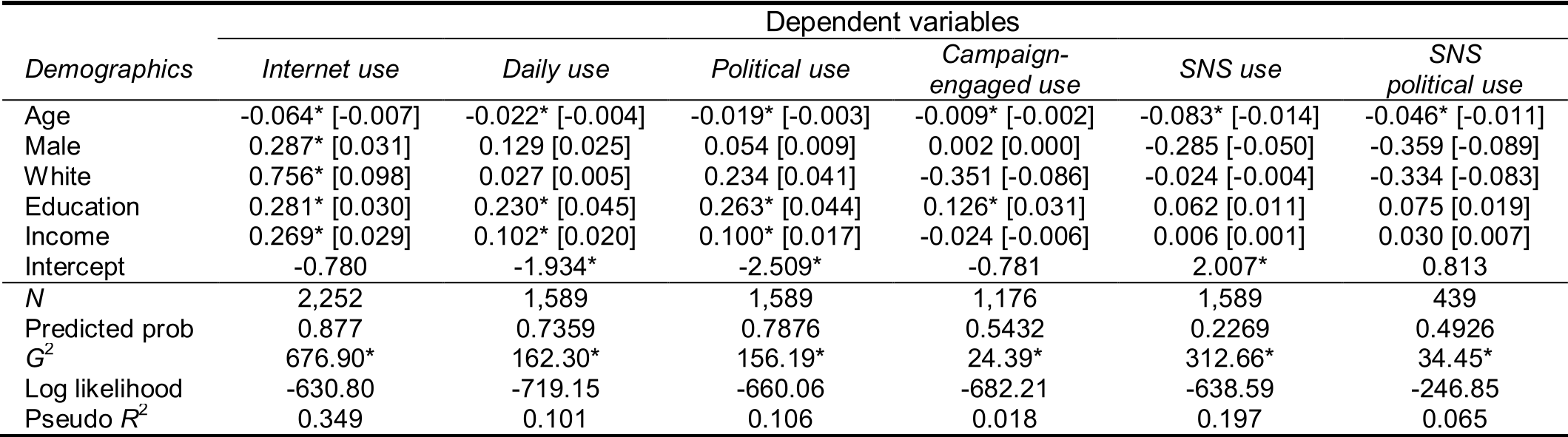 The regression analysis proves that Age and Education are the most consistent predictors across all types of digital usage.
Deep Insight & Conclusion
The study concludes that the digital world is essentially a mirror of the physical world. The Democratic Divide isn't just about technology; it's about the traditional barriers to entry for political life—education and social capital—being ported into a digital environment.
Limitations & Future Outlook
- 2008 Context: The study was conducted during the "Obama 2008" era, where SNS (Facebook/MySpace) was still nascent as a political tool. Today, the SNS divide by age has shifted significantly.
- Causality: The study shows correlation (Education leads to Participation) but doesn't fully explore if the Internet could be designed to lower the cognitive load for those with less education.
Final Takeaway: To bridge the Democratic Divide, we must look beyond providing "laptops for all" and focus on "digital civic literacy." Without it, the Internet remains a tool that empowers the already-empowered.