
The Pollicina Project: Reimagining Cultural Heritage Through Flipped Social Learning
The Pollicina Project: A Social Learning Management System to Create Personalized Cultural Itineraries
The Pollicina project introduces an Educational Social Network (EduSN) designed to facilitate cultural heritage learning through the Flipped Learning paradigm. The core service, ArtTour, enables students to collaboratively build personalized cultural itineraries by connecting disparate artworks across various institutions, effectively transforming them from passive observers into active content creators.
TL;DR
The Pollicina project addresses the stagnation in traditional cultural education by introducing EduSN, a Social Learning Management System. By adopting the Flipped Learning paradigm, it empowers students to move beyond the classroom and collaboratively design unique, thematic cultural itineraries. Through its ArtTour service, students connect artworks from diverse museums, churches, and sites into a cohesive narrative, supported by peer feedback and expert supervision.
The Shift from Passive Listening to Active Creation
Historically, cultural education has suffered from a "top-down" approach where experts dictate the narrative, often leading to student boredom and information dispersion. The Pollicina project identifies a critical gap: the lack of tools that allow students to synthesize their own meanings from cultural artifacts.
The project leverages the Flipped Learning model—an emerging educational strategy where traditional lectures occur outside the classroom (via digital platforms), while classroom time is reserved for active peer-to-peer discussion and moderation. The core insight is that by making students the "creators" of their instruction, their cognitive and relational proficiency significantly improves.
Methodology: The ArtTour Workflow
The heartbeat of Pollicina is the ArtTour service, which decomposes the creation of cultural paths into four distinct logical phases:
- Setting the Stage: Teachers define a theme (e.g., "Urban Change in Milan") and assign student roles, including a "student supervisor" to act as a primary peer moderator.
- Conceptual Mapping & Social Wall: Students build a visual knowledge organizer. Using a "social wall," they post-it ideas that become nodes in a conceptual map, fostering a shared cognitive space.
- Dynamic Selection: Using advanced search engines and clustering algorithms, students pick relevant artworks from the project's repository and—crucially—enrich them with their own multimedia content and personal perspectives.
- Territorial Logistics: Finally, the system helps students organize the physical visit, planning the order of institutions based on geographical distance and thematic density.
 Figure 1: The three dimensions of the platform: Territory, Scholastic Environment, and User Experience.
Data-Driven Insights: User Experience Evaluations
The project involved 900 users and 26 cultural institutions. The evaluation process focused on Quality, Usability, and Satisfaction.
- The Visualization Advantage: The Conceptual Map emerged as the most popular feature, proving that students value visual tools for connecting abstract concepts to physical artworks.
- Gender and Role Discrepancies: While students (digital natives) found the platform highly usable, teachers initially faced more hurdles but reported higher final satisfaction, recognizing the platform's impact on educational outcomes.
- Collaboration Paradox: Students showed less interest in integrated chat functions, suggesting they prefer leveraging existing social tools (like WhatsApp or Instagram) alongside the specialized learning platform.
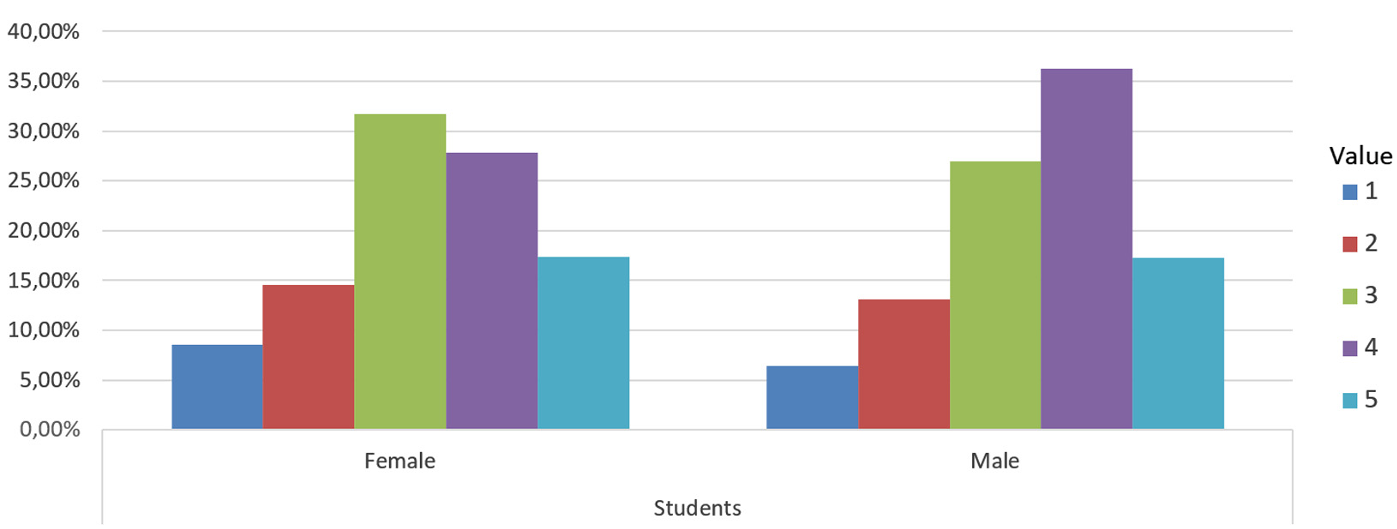 Figure 2: Survey distribution showing skewed positive results for platform usability.
Critical Analysis and The Road Ahead
Pollicina stands as a robust example of how Inductive Bias—the preference for student-led discovery—can be codified into a software architecture. However, the reliance on manual data filling for new institutions remains a scalability bottleneck.
Future Outlook: The development of a dedicated mobile app featuring Augmented Reality (AR) will be the next frontier. By overlaying student-created narratives directly onto physical artworks during site visits, Pollicina will bridge the final gap between the digital planning phase and the tangible cultural experience. For the wider EdTech industry, Pollicina serves as a blueprint: stop building digital textbooks, and start building digital ateliers.