
Decoding the Digital Macropolylogue: How Social Media Reflects Social Deprivation
Polybasic Attribution of Social Network Discourse
The paper presents a "Polybasic Attribution" framework for analyzing Social Network Discourse (SND) in Russian, focusing on the link between relative deprivation and emotional expression. Using 287 videos from YouTube, Skype, and ok.ru, the authors develop a knowledge database for computer-aided analysis of verbal, paraverbal, and non-verbal determinants of destructive social behavior.
TL;DR
Researchers Rodmonga Potapova and Vsevolod Potapov have introduced a comprehensive framework to analyze Social Network Discourse (SND) as a "polybasic" phenomenon. By analyzing hundreds of Russian-language videos across YouTube and Skype, the study establishes a direct link between Relative Deprivation (RD)—the gap between what people want and what they can get—and specific verbal/non-verbal cues. The goal? To build a decision-making system capable of identifying destructive social behaviors before they escalate into conflict.
Background: The Social Network as a Macropolylogue
In the digital age, communication is no longer just a simple exchange between two people. The authors position SND as a macropolylogue: an open, dynamic, and often chaotic set of interactions including "likes," "reposts," and "fakes." This environment creates the "electronic personality," a digital avatar of human frustration and expectation. The study specifically targets the Russian digital landscape between 2011 and 2015, a period marked by significant geopolitical and socio-economic shifts.
The Problem: Why Simple Text Analysis Isn't Enough
Most sentiment analysis tools look at what is said (lexis). However, the authors argue that the "How" is just as important.
- Verbal: The chosen words and themes.
- Paraverbal: The prosody, rhythm, tempo, and loudness of speech.
- Non-verbal: Facial expressions and physical gestures.
The core challenge lies in the fact that social network users often operate under conditions of Relative Deprivation. When value expectations (hopes for the future) diverge from value opportunities (the reality of the economy or politics), the resulting "Relative Deprivation" triggers aggression. Detecting this requires a multidisciplinary approach—combining biology, psychology, and linguistics.
Methodology: The Polybasic Attribution Framework
The researchers built a database of 287 videos, classifying them by deprivation types: internal politics, geopolitics, and socio-economic relations (e.g., ruble devaluation, sanctions).
1. Classification Architecture
The SND is categorized by:
- Form: Distant vs. Mediated; Real-time (On-line) vs. Postponed (Off-line).
- Content: Monothematic vs. Polythematic; High context vs. Low context.
- Function: Informative, Influencing, or Provoking (specifically destructive "stimulus-reaction" loops).
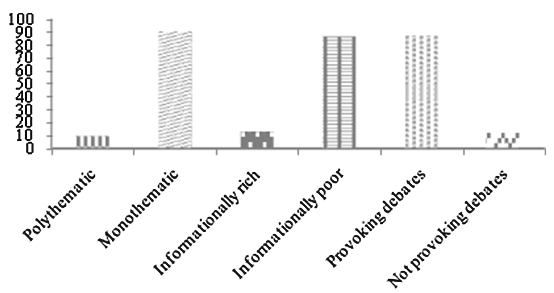 Figure 3: Comparison of SND forms (On-line vs. Off-line) and their vector characteristics.
2. Perceptual and Acoustic Analysis
A group of 60 listeners and visual recipients analyzed the phonograms and videograms. They tracked features like:
- Prosodic Markers: Melodic range, unexpanded pauses, and "harsh" timbres.
- Kinetic Markers: Hands crossed on the chest, movements synchronized with speech tempo.
Insights from the Data
The results provide a sobering look at digital discourse:
- Negative Hegemony: The dominant emotional states identified were anxiety, depression, and sorrow. These were classified as "strong" or "weak" negative markers of deprivation.
- Gender Gap: Research showed a significant prevalence of males in all speech activity types (monologues, dialogues, and polylogues) within the analyzed sample of Russian SND.
- Political Saturation: Internal Russian politics and socio-economic relations accounted for the vast majority of social discourse during the 2014-2015 period.
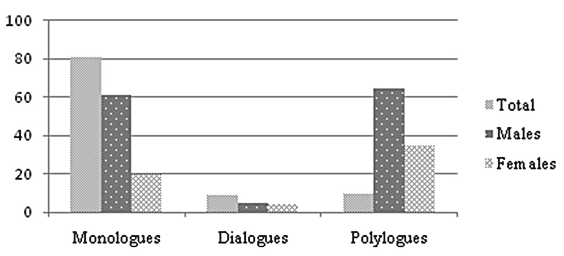 Figure 5: Participation rates of males vs. females in various SND types.
Critical Analysis & Future Outlook
The "Polybasic Attribution" model moves beyond simple keyword matching. It acknowledges that digital communication is a material product of psychophysical activity.
Takeaway: The study suggests that "pseudo-dialogues" (reposts, likes, gossip) are becoming a dominant force in increasing the "self-worth" of the electronic personality. While this paper provides a robust taxonomy, the next step in this research lineage is the automated detection of extremism and hatred incitement using these prosodic and kinetic indicators.
Limitations: The study relies heavily on manual perceptual-auditory analysis by human observers. To scale this for modern "Big Data" social monitoring, these verbal and paraverbal markers must be integrated into deep-learning-based multimodal transformers.
Conclusion: By mapping the linguistic and paralinguistic fallout of social deprivation, Potapova and Potapov provide a blueprint for understanding the "destructively oriented" discourse that shapes our modern geopolitical reality.