
Social Particles: How Scale and Speed Shape Cooperation in 3D Environments
The effects of population size and information update rates on the emergent patterns of cooperative clusters in a large-scale social particle swarm model
The paper introduces an enhanced 3D Social Particle Swarm (SPS) model to simulate cooperative behavior in large-scale social networks (up to 100,000 agents). By combining kinematic movement with a Prisoner’s Dilemma (PD) strategy, the study demonstrates how population size and information update rates drive the emergence and collapse of cooperative clusters.
TL;DR
This study bridges the gap between biological swarm logic and social game theory. By simulating 100,000 agents in a 3D "social space," the researchers found that information update speed is the toggle between a diverse, "explosive" social ecosystem and a rigid one dominated by a few giant clusters. Surprisingly, larger networks are better at sustaining cooperation, even when agents are slow to perceive changes.
Context: Why Static Networks Aren't Enough
Classic game theory usually puts agents in a fixed grid or a static graph. But in the age of SNS, our relationships are fluid and continuous. We gravitate toward those who benefit us and flee from "toxic" or defective actors. This paper uses the Social Particle Swarm (SPS) model to treat social closeness as physical proximity in a 3D world.
Methodology: The Mechanics of Social Attraction
The model operates on a simple but powerful loop:
- Interaction: Agents play a Prisoner's Dilemma with neighbors within range .
- Strategy Update: Using a Generalized Tit-for-Tat (GTFT), agents decide to cooperate if their estimated ratio of cooperative neighbors exceeds a threshold.
- Kinematics: If an agent gets a high payoff (cooperation), it moves toward the center of its neighbors. If it gets a low payoff (defection), it steers away.
The "secret sauce" is the Information Update Rate (). If is high, agents are "socially alert." If is low, they are "socially sluggish," relying on outdated perceptions of their peers.
 Fig 1: Schematic of the steering behavior based on social payoff.
Explosive Dynamics: The Birth and Death of Clusters
In a high-alert population (), we see Explosive Dynamics:
- Cooperators huddle together, forming dense spherical clusters.
- Inevitably, a "mutation" occurs—a cooperator turns into a defector.
- Because neighbors are alert, they quickly realize they are being exploited and flee.
- The cluster "explodes," scattering particles until they reform into new, smaller groups.
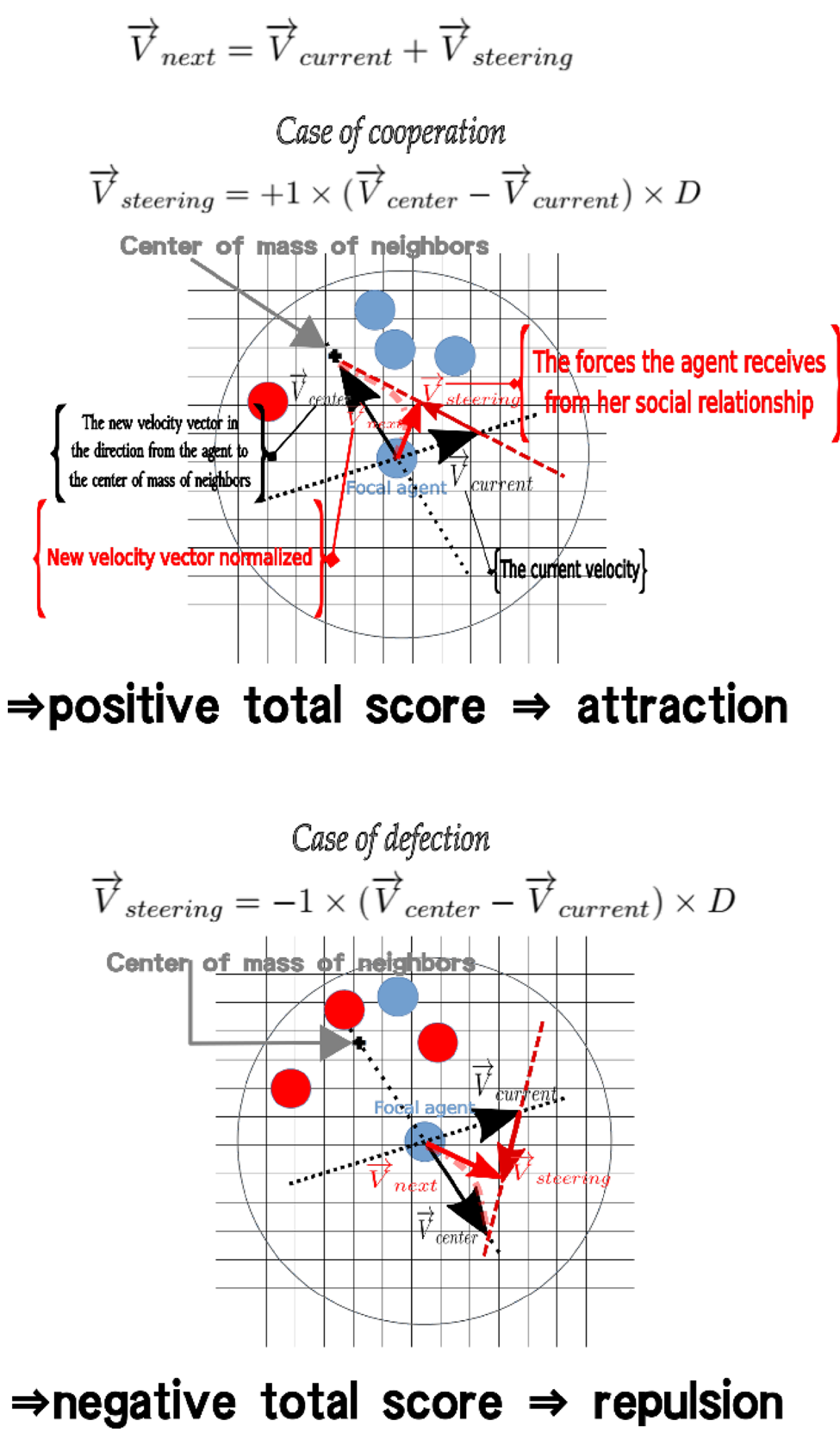 Fig 2: The lifecycle of a cluster: Formation (a), Mutation (b), and Explosion (c-d).
Results: Scale Matters
The researchers leveraged FLAME GPU to push the population to 100,000 agents. They discovered a fascinating phase transition:
- Small Populations (): Cooperation is fragile. If update rates are low, the system often collapses into a chaotic state of defectors.
- Large Populations (): Even with slow update rates, a "Giant Cluster" often emerges. This massive group is resilient enough to absorb defectors without exploding, acting as a stable reservoir for cooperation.
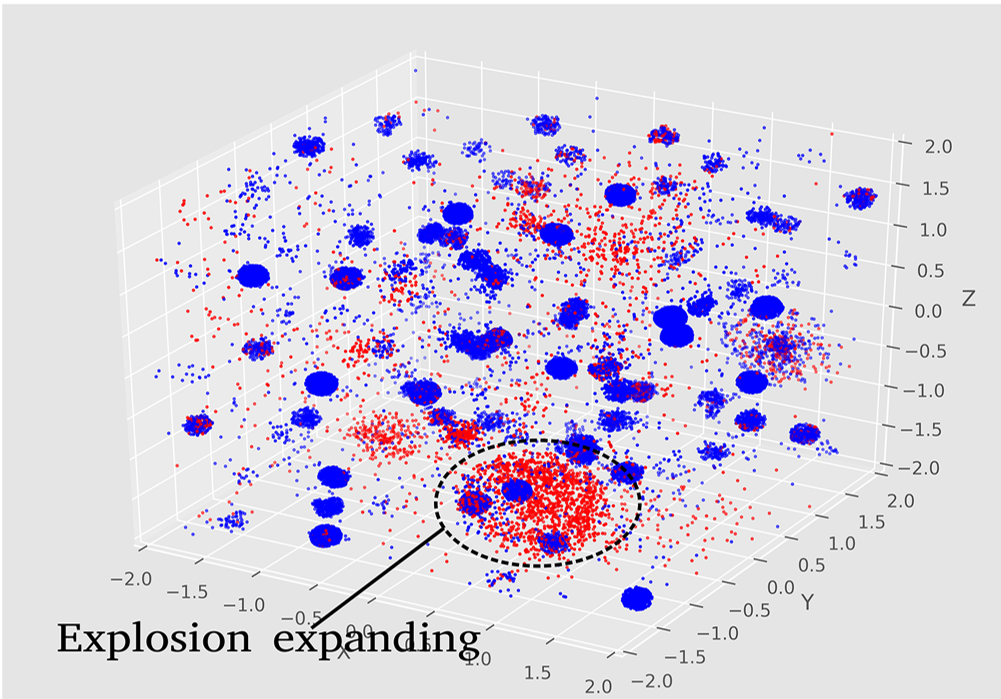 Fig 3: Contrast between low update rates (top) and high update rates (bottom) across different population sizes.
Key Quantitative Takeaways:
- Cooperation Rate: Higher with rapid information updates.
- Movement Speed: Agents within clusters move slower (stable); wandering defectors move much faster (searching for prey).
- Diversity: High update rates create a "community" feel with many types of clusters; low rates lead to a "monolithic" structure.
Critical Insight: The "Social Sluggishness" Paradox
Ordinarily, we assume that being slow to react to defectors is a weakness. However, this paper shows that in massive populations, this perceptual lag actually prevents the "explosive" destruction of groups. It allows for the formation of "Giant Clusters" that are incredibly stable, even if they aren't as diverse as high-speed systems.
Conclusion & Future Work
The study proves that our ability to maintain cooperation in massive digital societies depends on the balance between how fast we learn and how many of us there are. While the authors mapped this to a 3D space, they acknowledge that real social "dimensions" (topics, interests, backgrounds) are far more complex. Future research into higher-dimensional manifolds may reveal even more intricate social patterns.