
Beyond Friendship: Decoding Social Enmity through Sentiment-Driven Link Prediction
Positive and Negative Link Prediction Algorithm Based on Sentiment Analysis in Large Social Networks
This paper introduces a novel framework for predicting positive and negative links in large social networks by integrating sentiment analysis with social psychology theories. It utilizes a 5-level sentiment classification (from Highly Positive to Highly Negative) and develops an "Extended Structural Balance Theory" (ESBT) to refine link prediction accuracy in signed networks.
TL;DR
Most social network analysis treats interactions as purely positive or binary. This paper breaks that mold by introducing a framework that uses Sentiment Analysis to classify user interactions into five distinct emotional levels. By applying an Extended Structural Balance Theory, the research predicts negative links with high reliability, offering a powerful tool for improving recommendation systems and identifying malicious actors.
The "Negative" Gap in Social Networks
In the digital landscape of Facebook or Twitter, "Liking" or "Following" is explicit, but "Disliking" is often hidden within the text of a comment. This lack of explicit negative signaling creates a blind spot for:
- Recommendation Systems: Suggesting a user follow someone they actually despise.
- Information Security: Failing to detect malicious nodes that coordinate without formal "friend" links.
The author argues that human relationships aren't just or ; they are a spectrum. Existing SOTA methods often fail because they ignore the intensity of the emotion and the social context of the "triad" (the relationship between three people).
Methodology: From Sentiment to Structure
The proposed pipeline transforms unstructured social data into a structured, signed graph through a multi-stage process:
1. Fine-Grained Sentiment Classification
Instead of a simple positive/negative split, the paper employs a Support Vector Machine (SVM) to categorize comments into:
- Highly Positive (s+)
- Positive (w+)
- Neutral (o)
- Negative (w-)
- Highly Negative (s-)
2. Extended Structural Balance Theory (ESBT)
The core innovation lies in adapting the classic social psychology mantra—"My friend's friend is my friend"—to a 5-level spectrum. This "Extended Structural Balance Theory" defines Tolerance Ranges. If a predicted link falls outside the range allowed by its neighbors in a triad, it is considered "unbalanced" and discarded.
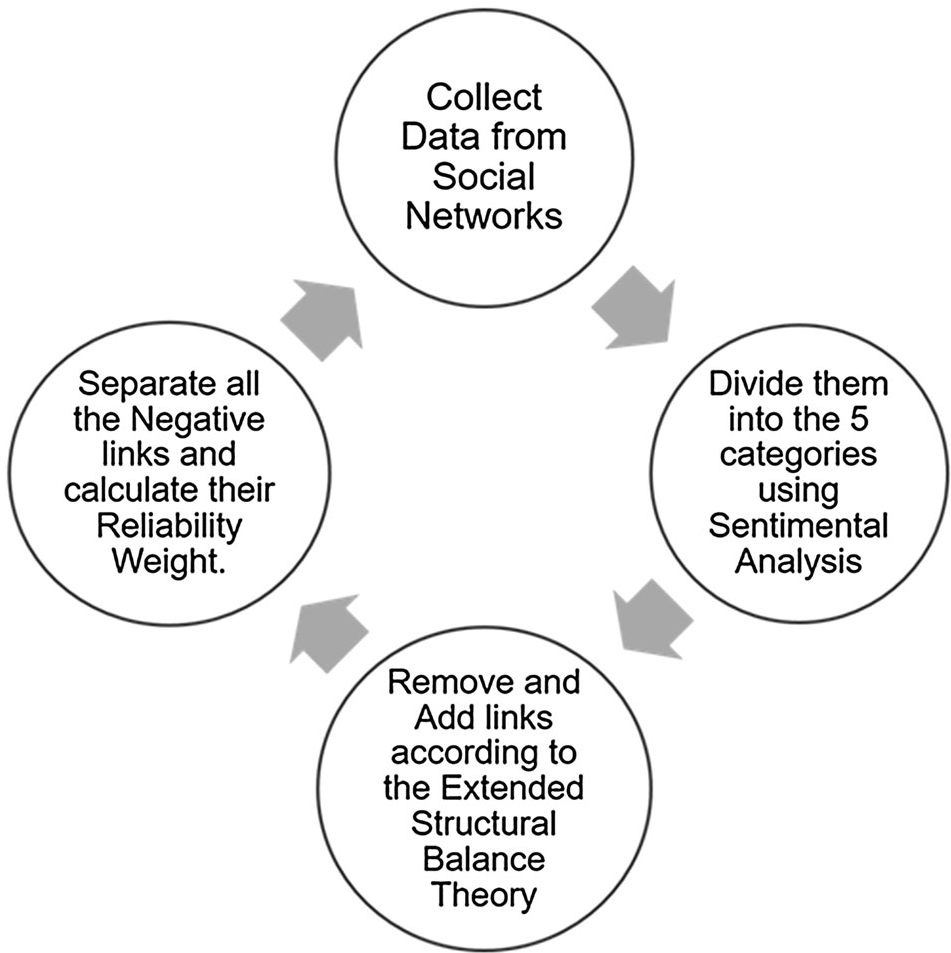 Figure 1: Comparison of Balanced Triads in traditional theory vs. the intensity-based spectrum.
3. Reliability Weighting
Not all predicted links are equal. The author introduces a Weight Matrix () calculated as: This ensures that links supported by frequent negative interactions and strong emotional intensity are prioritized as "highly reliable."
Experimental Insights
By testing on a dataset of Twitter interactions, the author compared his "Proposed Scheme" (PS) against common network traversal and clustering algorithms.
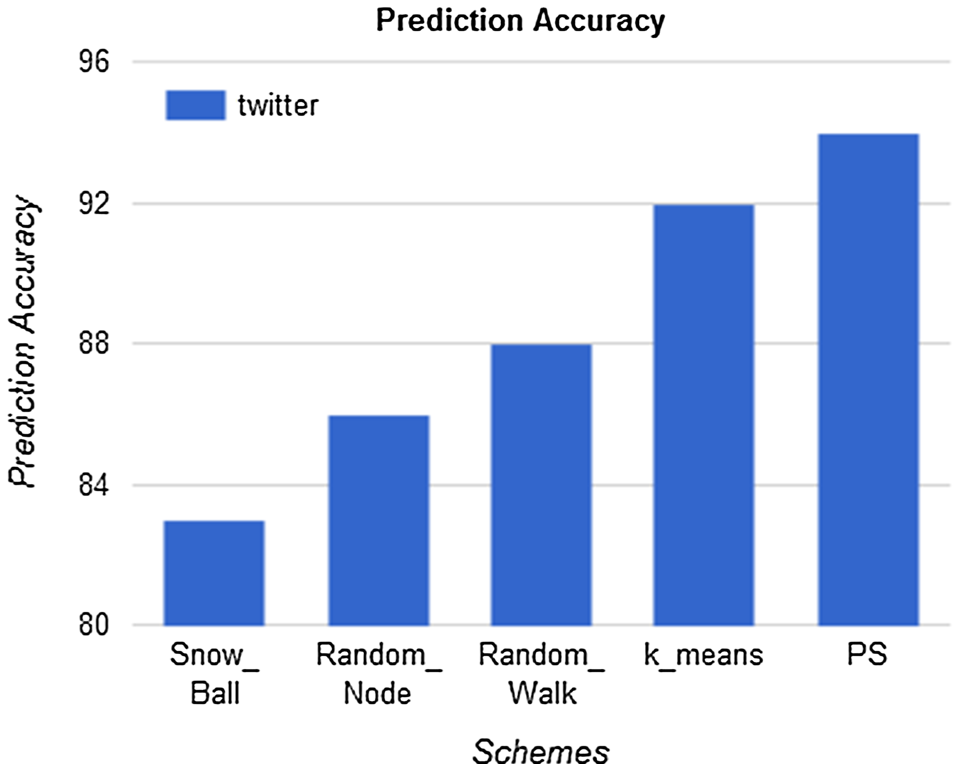 Figure 2: Accuracy performance of the Proposed Scheme vs. traditional baselines.
Key Findings:
- Higher Accuracy: The PS consistently outperformed Snowball and K-means because it leverages content (what people say) rather than just topology (who they are connected to).
- Malicious Detection: The framework successfully identified "aberrations"—nodes performing actions together despite having no formal link, a classic sign of botnets or malicious coordination.
Critical Analysis & Future Outlook
While the paper successfully integrates social theory with NLP, a few limitations persist:
- Sarcasm: While the author mentions sarcasm (e.g., "My flight got delayed, Wonderful!"), current SVM-based models often struggle with complex linguistic nuances compared to modern Transformers (like BERT or Llama).
- Scalability: Calculating tolerance for every potential triad in a massive network like Twitter requires significant computational overhead.
Conclusion: This research marks a significant step toward "socially aware" AI. By treating negative links as valuable data points rather than noise, we can build networks that are not only more accurate but also more secure. Future work likely lies in replacing SVMs with LLM-based sentiment extraction to capture the subtle "mentality" of users even more effectively.