
Beyond Displacement: Designing AI Systems Through a Socioeconomic Lens
Identifying Positive Socioeconomic Factors of Worker Roles
This study investigates the socioeconomic factors that influence worker adoption and performance in environments disrupted by AI and automation. Using a socioeconomic framework and "Levels of Automation" analysis, it identifies how specific attributes like job metrics, agency, and satisfaction can be integrated into training solutions to mitigate workforce displacement.
TL;DR
As AI and automation reshape the global workforce, the conversation often stays stuck on job loss versus productivity gains. This study shifts the focus to the worker as an asset, identifying that the success of AI integration depends on specific socioeconomic factors—namely agency, job metrics, and satisfaction. By analyzing 14 diverse roles, the research demonstrates that high automation without human agency often leads to "hardcore" environments and lower job satisfaction, while "Medium" agency systems provide the best balance for reskilling.
The Human Agency Gap: Why SOTA Automation Fails Workers
The core tension in modern industry lies in the "Cybernetic" drive for efficiency. While labor productivity in manufacturing has increased by over 130% since 1979, employment has plummeted. The study argues that the pain point isn't just the loss of jobs, but the nature of the remaining jobs.
When technology developers build systems, they often optimize for "Action Implementation" (high automation) where the machine ignores the human. This creates a "worker’s plight" where employees feel their only purpose is to ensure the robot succeeds, leading to physical exhaustion and skill degradation.
Methodology: Mapping the Socioeconomic Profile
The author utilizes a robust qualitative framework to decode what makes a "good" technology-driven role. The analysis evaluates roles through:
- Socioeconomic Framework: Assessing job attributes (human capital), organizational structure (training), and satisfaction.
- Levels of Automation: Categorizing systems from Level 1 (Low/Human-driven) to Level 10 (High/Autonomous).
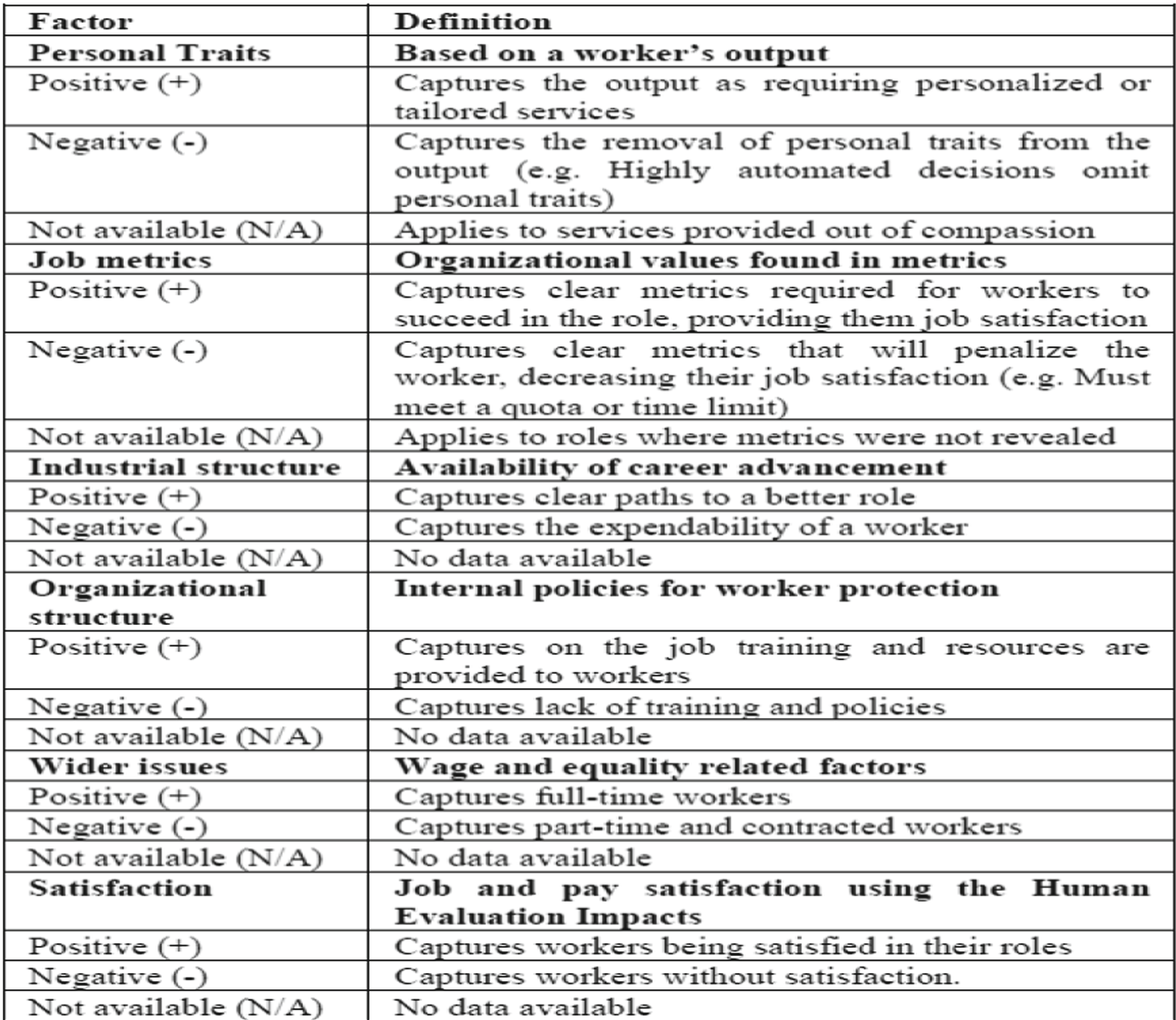 Table 1: The Socioeconomic Factor Definitions used to evaluate worker roles.
Key Insights: Metrics vs. Agency
The results provide a stark contrast between different organizational cultures:
- The Amazon vs. Safeway Paradox: In the Safeway warehouse, the worker (Sam) used a "robot picker" (High Automation) but was satisfied because the metrics prioritized 100% accuracy (Quality) over speed. In contrast, Amazon’s speed-centric metrics led to "hardcore" conditions where workers were treated as part of the machine's cooling system—fatigued and dehydrated.
- The "Sweet Spot" of Automation: The highest "Positive Instance" counts were found in roles with Medium automation (e.g., Banking Analyst, Commercial Driver). These roles used software to aid decisions but allowed the human to retain final "Action Selection" agency.
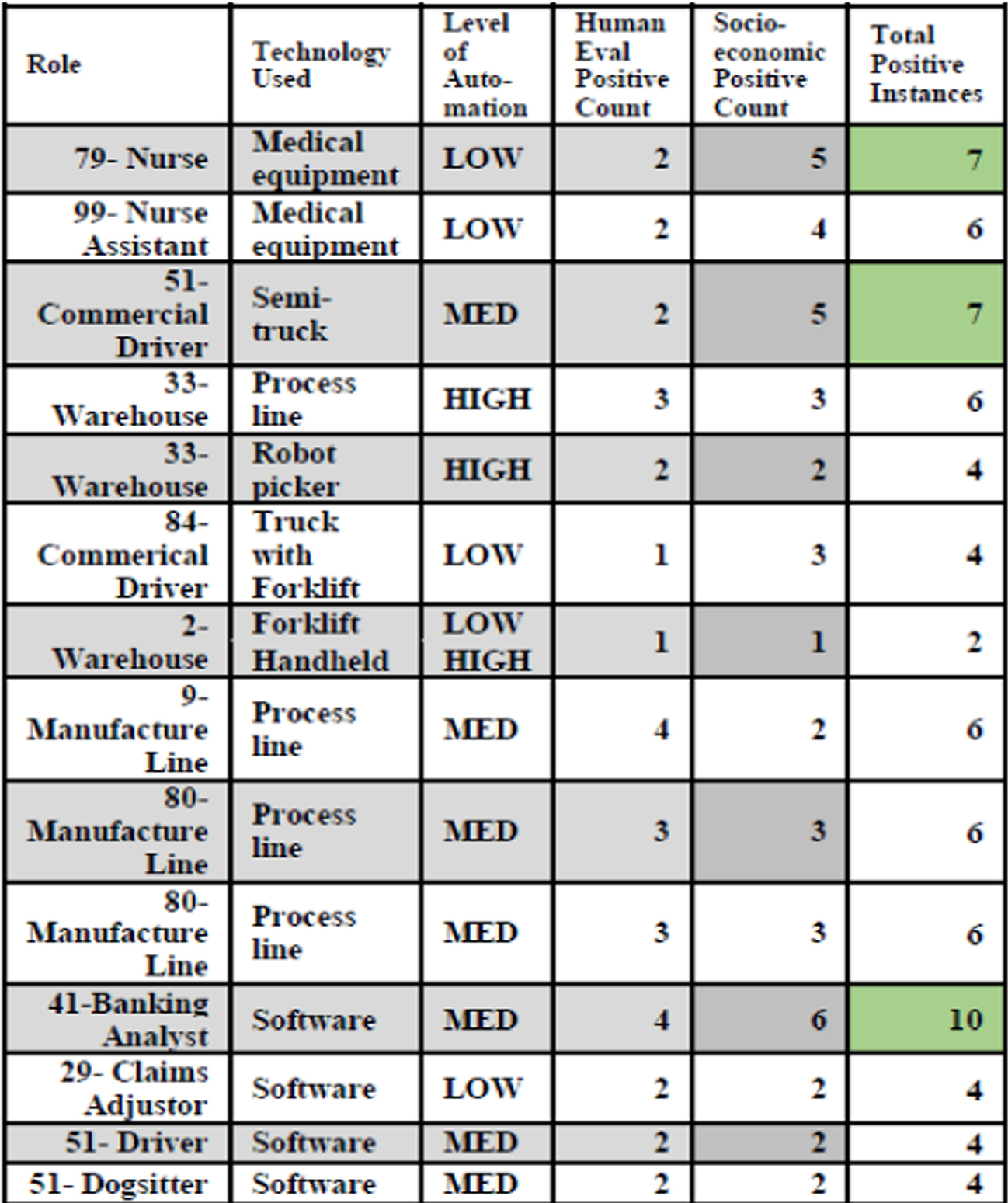 Table 6: Correlation between Technology Agency (Level of Automation) and Socioeconomic Positive Instances.
Critical Analysis: The Developer’s New Mandate
The paper posits that if we want to solve the "reskilling challenge," technology developers must treat socioeconomic factors as data points for the software itself:
- Gauging Human Capital: Training systems should dynamically adjust based on a worker's initial skill level and education.
- Redefining Productivity: Metrics must move beyond "time-per-task" to include quality and worker "Mental Workload" to prevent burnout.
- Empowering via AI: Instead of using AI to replace the worker, it should be used to provide "Information Analysis" (Level 2-4) that assists the worker in making higher-value decisions.
Future Outlook and Limitations
While the study is limited by its small sample size (14 roles), it serves as a crucial pilot for Responsible Innovation. The future of work isn't just about whether a robot can do a task—it's about whether the human-robot team is designed to be socioeconomically sustainable.
Takeaway for the Industry: To achieve true "AI-fication" that sticks, developers must build for the worker's manual, cognitive, and social wellbeing. If the worker doesn't "buy in" to the system, the technology becomes a liability rather than an asset.