
Digital Immortality: How MySpace Profiles Transformed into Living Memorials
We will never forget you [online]’’: An empirical investigation of post-mortem MySpace comments
This paper presents a mixed-methods empirical study of 205,068 comments on 1,369 post-mortem MySpace profiles to analyze how social network sites (SNS) are repurposed as memorial spaces. It identifies key patterns in "post-mortem social networking," where survivors maintain "continuing bonds" with the deceased through digital persistence.
TL;DR
Long before "Memorialized" status was a standard feature on Facebook, MySpace profiles became accidental shrines for the digital afterlife. This seminal CSCW study analyzes over 200,000 comments to reveal how survivors use social networks to maintain relationships with the dead, blending the mundane act of "status updates" with the profound rituals of grief.
The "Ghost" in the Network: Motivation
In the mid-2000s, technology design was largely "life-centric." Designers assumed users were active, living participants. But as the first generation of social media users began to pass away, their profiles didn't disappear—they became persistent digital identities.
The authors argue that existing research on "web memorials" (like online obituaries) was insufficient because those sites were built for the dead. MySpace profiles, however, were built by the living for social interaction. When the owner dies, a tension arises between the living network and the stationary account. The research asks: How do we talk to someone who can no longer log in?
Methodology: High-Volume Grieving
The researchers used a dataset from MyDeathSpace.com to find 1,369 profiles of users who had been deceased for at least three years. This longitudinal approach allowed them to see beyond the initial shock of death and observe how "digital mourning" settles into a routine over years.
1. The Temporal Pulse of Grief
The study quantified the "rhythm" of mourning. As expected, there is a massive spike in activity immediately following death.
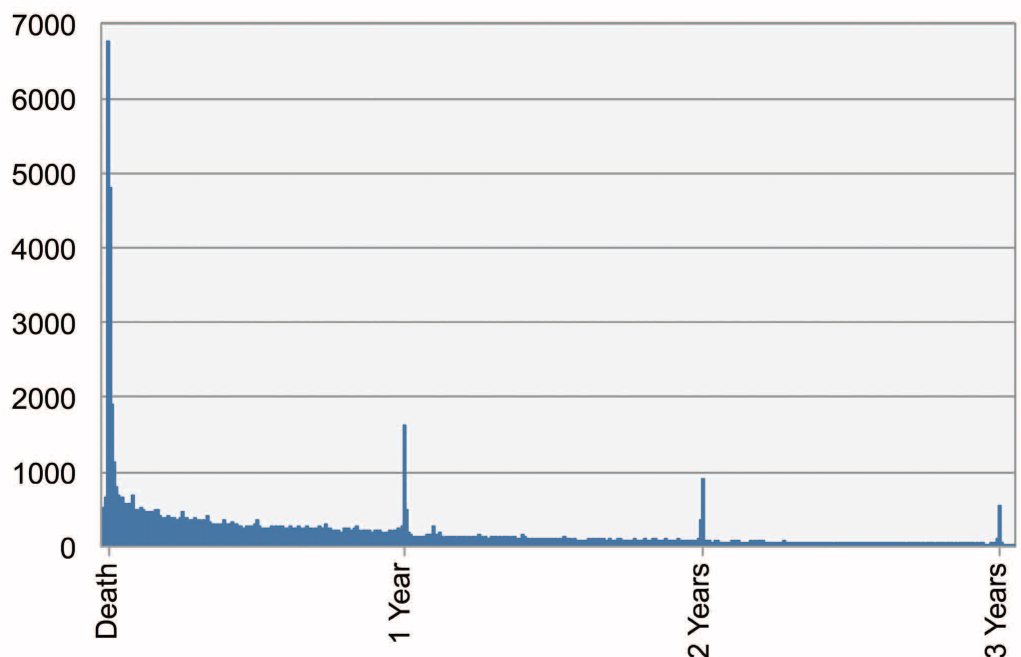 Figure 1: The "Grief Spike" — Activity surges for 10 days post-death before a long-tail decline.
However, death isn't a one-time event in social media. The data showed "periodic pulses" on:
- Anniversaries of Death: A recurring localized spike.
- Birthdays: Often triggered by automated system notifications—the "ghost" of the platform's algorithm reminding friends to post.
- Holidays: Particularly Christmas and Valentine's Day.
2. Authorship and the "Absent" Audience
Perhaps the most striking finding is the directionality of the comments. One might expect people to talk to each other about the deceased. Instead, the overwhelming majority (over 99%) wrote in the second person: "I miss you, man," or "Happy Birthday, hope you're watching down on us."
The profile acts as a symbolic proxy. Even when users explicitly state, "I know you'll never read this," they continue to use the comment box as a medium for "Continuing Bonds"—a psychological theory where bereavement is not about "moving on" but about integrating the deceased into one's ongoing life.
Key Insights: Post-Mortem Social Networking
The study identifies three main behaviors that keep the digital identity of the deceased "active" in the community:
- Sharing Memories: Validating the identity of the deceased by recounting shared history (e.g., "Remember Mrs. DeWerff's class?").
- Personal Updates: Using the profile as a diary. Users post about their own weddings, children, and graduations as if "updating" the deceased on the progress of the world they left behind.
- Ambiguous Ownership: The profile becomes a contested space. If a friend posts something inappropriate or "too personal," others in the network often act as self-appointed "guardians of the memory," reprimanding the intruder to maintain the sanctity of the digital grave.
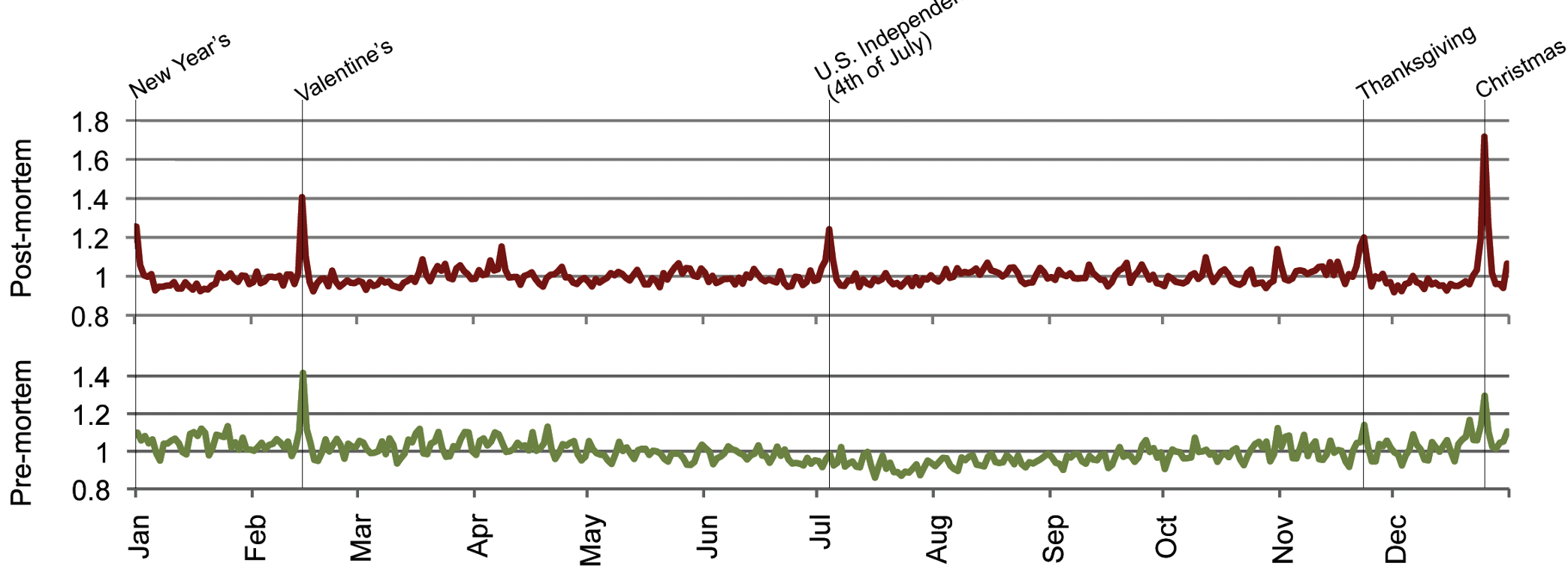 Figure 2: Relative proportion of comments showing seasonal surges on Christmas and New Year.
Critical Analysis & Conclusion
The Takeaway
This paper was a wake-up call for the HCI (Human-Computer Interaction) community. It proved that information stays, but users leave. When a social platform doesn't design for death, users will "hack" the existing features (like comments and birthday reminders) to facilitate their grief.
Limitations & Future Work
The study focused on a primarily Western, English-speaking demographic on MySpace. Mourning practices vary wildly across cultures. Furthermore, as platforms like MySpace faded and "moved" to Facebook or Instagram, the digital ephemeralness of the platforms themselves creates a "double death"—where the memorial itself eventually disappears due to server shutdowns or company bankruptcy.
Conclusion
As we move into an era of AI and "Large Language Model" clones of the deceased, Brubaker and Hayes' work remains the foundational text reminded us of the core truth: Social media is not just about the network of the living; it is a repository of our collective memory, where the "dead" continue to play a role in the social fabric of the "living."