
Beyond Real-Life Ties: Enhancing Friend Recommendations via Multi-Dimensional Interest Modeling
Potential Friend Recommendation in Online Social Network
The paper proposes a general friend recommendation framework for online social networks that leverages interest-based features across two dimensions: context (location, time) and content. It introduces the Generalized Cosine-Similarity Measure (GCSM) to incorporate hierarchical domain knowledge, such as Gene Ontology, achieving high precision in a real-world biological social network (MICE).
TL;DR
In modern online social networks, users seek connections based on shared interests rather than just existing real-world relationships. This paper introduces a framework that models user interests through context (where and when) and content (what), enhanced by hierarchical domain knowledge. By applying this to a biological research network, the authors demonstrate that structured interest analysis can achieve high-precision social discovery.
Problem & Motivation: The Limits of Graph-Based Socializing
Most social networks suggest friends based on "friends of friends" or shared physical institutions. However, for specialized communities—like soccer fans or molecular biologists—finding a "potential friend" requires understanding intent and expertise.
The authors argue that existing "Link Prediction" methods often neglect the rich, hierarchical nature of interests. A biologist studying heart disease and another studying general vascular functions are related, even if they haven't interacted. Capturing this "semantic proximity" is the key challenge.
Methodology: The Three-Layer Framework
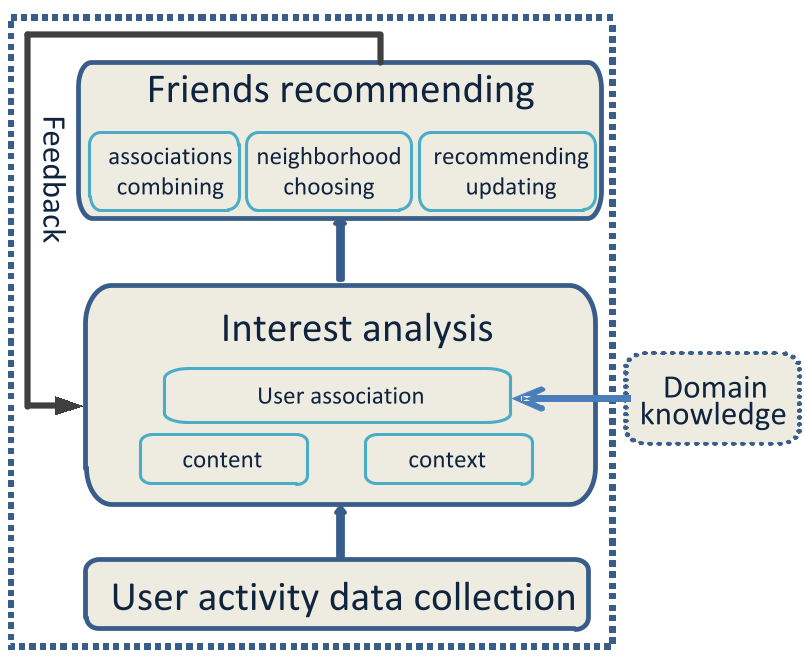
The proposed framework moves interest analysis from a simple "overlap" calculation to a structured, three-layered process.
1. Interest Analysis & GCSM
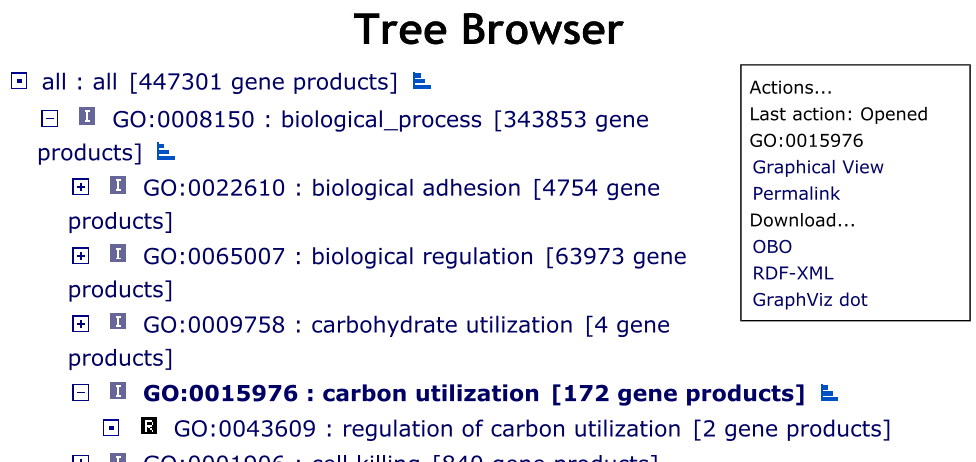
The most critical innovation is the Generalized Cosine-Similarity Measure (GCSM). Traditional Vector Space Models (VSM) assume search terms or items are independent. In GCSM, the similarity between two items depends on their position in a hierarchy (e.g., a tree structure).
The similarity between two items and is defined by their Lowest Common Ancestor (LCA):
2. Multi-Dimensional Characterization
The system doesn't just look at what you read; it looks at where you are (context) and how your interests align with domain standards (Gene Ontology).
- Context: Location (IP-based) and Time.
- Content: Activity logs filtered for specific items (e.g., gene detail pages).
Experiments: Validation in the MICE Platform
The authors tested their system on MICE (Mutagenesis Information CEnter), a platform for biologists. By analyzing nearly 1 million requests from 1,030 users, they matched researchers based on their gene-searching histories and the Gene Ontology hierarchy.
Key Results:
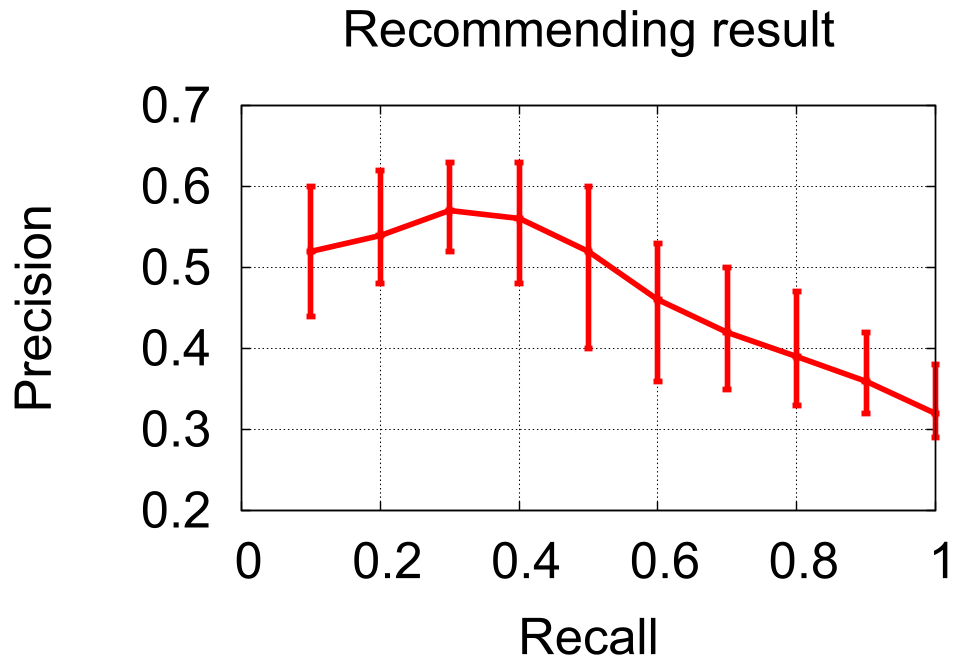
- Precision: Reached 50% at 60% recall.
- User Satisfaction: A study with 8 researchers confirmed that the recommended "potential friends" were highly relevant to their actual research needs.
Critical Analysis & Conclusion
By integrating domain knowledge, the framework effectively bridges the gap between raw activity logs and semantic interest.
Takeaways:
- Hierarchy Matters: Simple similarity measures (like Jaccard) lose the "near-miss" information that hierarchical structures (like GCSM) capture.
- Adaptive Rules: The recommendation layer's ability to adjust weights between context and content based on user feedback is a crucial step toward personalization.
Limitations: The current approach relies on static ontologies. In rapidly evolving fields, the hierarchy itself may shift, suggesting that a future integration with dynamic Knowledge Graphs or LLM-based embeddings could further refine the "interest" definition.
Overall, this work provides a solid blueprint for social platforms that want to move beyond the "people you may know" paradigm toward a "people you should know" intelligence.