
Power-Aware Graph Job Allocation: Solving the Sub-Graph Isomorphism Puzzle in Geo-Distributed Clouds
Power-Aware Allocation of Graph Jobs in Geo-Distributed Cloud Networks
This paper introduces a comprehensive framework for allocating "graph jobs" (complex tasks with interdependent sub-tasks) in geo-distributed cloud networks (GDCNs). It proposes hierarchical solutions—Centralized, Distributed (CDGA), and Cloud Crawling—to minimize operational costs and power consumption across varying network scales.
TL;DR
Modern big-data applications like Apache Storm or GraphLab are not just bunches of tasks; they are complex graphs where nodes represent sub-tasks and edges define communication needs. This paper tackles the high-complexity challenge of mapping these "graph jobs" onto geo-distributed cloud networks (GDCNs). By introducing Cloud Crawlers and Consensus-based Distributed Algorithms, the authors bridge the gap between theoretical sub-graph isomorphism and practical, power-efficient cloud management.
Context: Why "Graph Jobs" Change Everything
In the traditional cloud model, a scheduler looks for empty slots and fills them. However, if Task A needs to talk to Task B constantly, placing them on opposite sides of the country wastes bandwidth and spikes power consumption.
The authors argue that current SOTA methods fail because:
- They ignore topology constraints (the "shape" of the job).
- They don't account for the NP-complete nature of sub-graph isomorphism—the math-heavy process of finding a matching "shape" within the massive graph of a global cloud network.
- They neglect the dynamic power usage effectiveness (PUE) of geographically dispersed datacenters.
Methodology: A Multi-Scale Attack
The paper doesn't offer a one-size-fits-all solution. Instead, it adapts its mathematical rigor to the scale of the cloud.
1. Small to Medium Scale: Convex Relaxation & CDGA
For smaller networks, the problem is formulated as a nonlinear integer programming task. By relaxing the discrete constraints into a continuous space, the authors use Lagrangian dual decomposition.
In medium-scale networks, they introduce the Consensus-based Distributed Graph Job Allocation (CDGA). Here, each datacenter works in parallel, updating local variables and reaching a "consensus" on global variables (like network-wide pricing) without needing a single master controller.
2. Large Scale: Cloud Crawlers and Online Learning
In a network of 200+ datacenters, the search space for sub-graph isomorphism becomes astronomical. To solve this, the authors propose Cloud Crawlers (CCR).
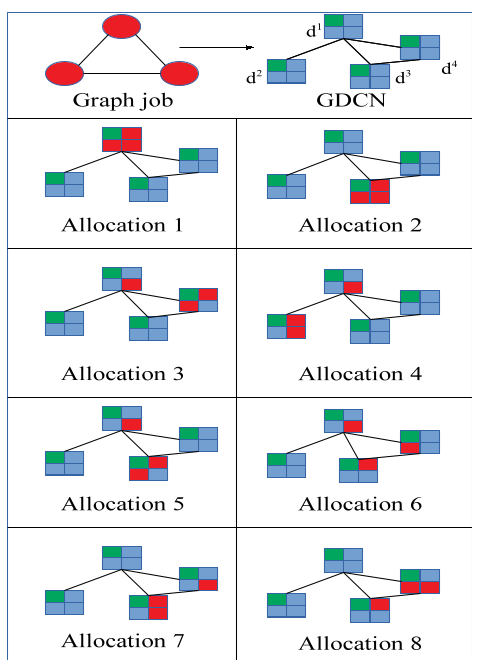 Fig 1: The system architecture showing Proxy Agents, Cloud Crawlers, and the interaction between regional datacenters.
A CCR is an agent that "walks" the network. Instead of solving for the whole world, it extracts "potentially good" local mappings as it traverses the graph. To choose the best strategy from these suggestions, the paper introduces:
- BRMA (Boosted Regret Minimization Assignment): Uses k-means clustering and a similarity index to help Proxy Agents learn which datacenters offer the best bang-for-buck under fixed pricing.
- RMBA (Regret Matching-Based Assignment): A game-theoretic approach that reaches a Correlated Equilibrium when pricing is adaptive and multi-player competition exists.
Experimental Validation
The authors tested their framework using parameters modeled after real IBM BladeCenter servers.
Performance in Medium Scale
The CDGA algorithm showed remarkable convergence, effectively balancing the load across DCs while minimizing the "incurred power"—the delta in consumption caused by the new job.
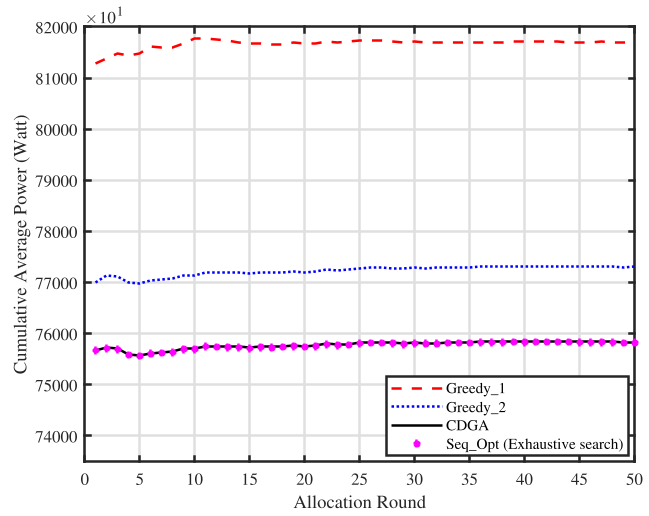 Fig 2: Convergence of local and global variables (Λ, γ) across multiple datacenters. Note how disparate initial values reach a unified consensus.
Results in Large Scale
In a 200-DC scale-free network, the BRMA algorithm outperformed random selection by over 20% in utility. More importantly, the use of a "similarity index" allowed the agent to learn from successful allocations and apply that knowledge to similar clusters of datacenters, drastically speeding up convergence.
Critical Insight: The Logic of the "Crawler"
The most profound contribution here is the Decentralized Sub-graph Extraction. By proving that a sequence of neighborhoods can satisfy isomorphism (Theorem 1), the authors reduced an NP-complete search to a complexity of O(D), where D is the diameter of the job graph. This effectively "democratizes" the allocation process, allowing the network to self-organize without a God-view controller.
Conclusion & Limitations
This framework is a major step toward "Green Cloud" computing. However, it currently assumes nodes are executed all at once. Future work needs to address heterogeneous execution orders (e.g., pipeline stages) and the reality of link outages, which could break the carefully mapped topology.
Key Takeaway: To optimize global clouds, stop looking at tasks as points; look at them as structures.