
Practical Lessons from Synthetic Healthcare Data: Why Bayesian Networks Trump GANs for Trust
Practical Lessons from Generating Synthetic Healthcare Data with Bayesian Networks
2020-01-01
Summary
Problem
Method
Results
Takeaways
Abstract
This paper investigates the use of Bayesian Networks (BNs) and Dynamic Bayesian Networks (DBNs) to generate synthetic healthcare data from MIMIC-III and CPRD datasets. The study achieves high-fidelity data synthesis that preserves realistic statistical distributions and longitudinal temporal relationships while maintaining strong privacy protections.
## TL;DR
Generating synthetic medical records is a "balancing act" between data utility and patient privacy. This paper demonstrates that **Bayesian Networks (BNs)** and their temporal extension, **Dynamic Bayesian Networks (DBNs)**, provide a transparent and reliable framework for creating high-fidelity synthetic clones of complex healthcare datasets like MIMIC-III and CPRD. The result? Data that looks real to a researcher but hides the identity of the patient, with a re-identification risk as low as 0.7%.
## Problem & Motivation: The Transparency Gap
In the era of GDPR and strict medical confidentiality, sharing primary care data is nearly impossible. While Generative Adversarial Networks (GANs) are popular for generating synthetic data, they are often criticized in the medical field for being "black boxes."
If a GAN creates a correlation between two diseases, *why* did it do so? Was it a genuine clinical insight or a training bias? The authors argue that for synthetic data to be trusted by regulators and clinicians, the underlying model must be **transparent**. They propose probabilistic graphical models as the solution because they allow for the integration of expert knowledge and the explicit mapping of clinical dependencies.
## Methodology: Capturing Logic and Time
The researchers employed a two-pronged approach to tackle both static and longitudinal data.
### 1. Structure Learning with SEM
Using the **Structural Expectation Maximization (SEM)** algorithm, the authors inferred the structure of the Bayesian Network from the MIMIC-III dataset. Unlike pure machine learning approaches, they manually "clamped" known clinical relationships (e.g., the link between age and circulatory conditions) into the model. This hybrid approach ensures the synthetic data adheres to known biological truths.
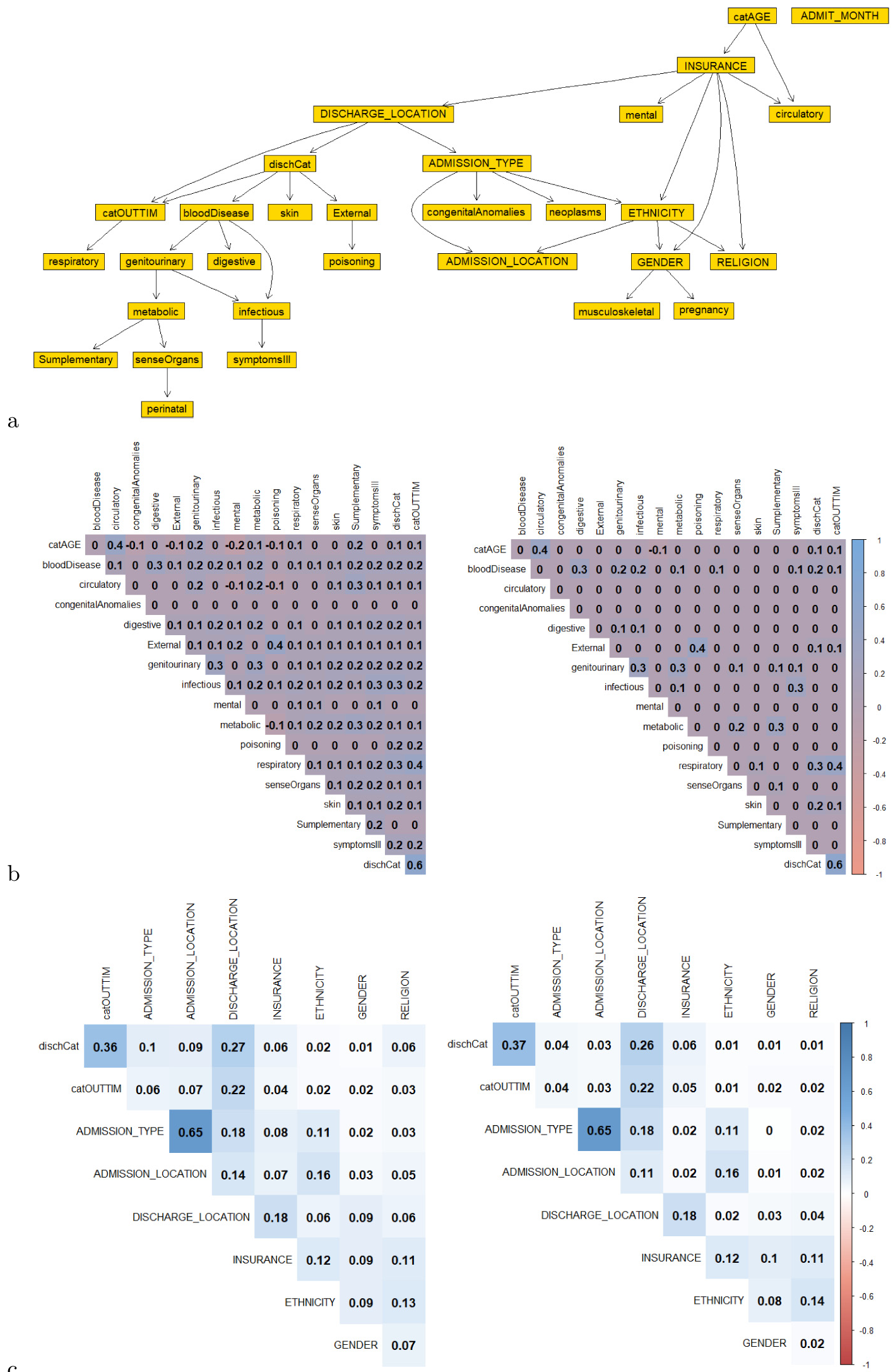
*Fig 1: The learned BN structure for MIMIC data (left) and the resulting correlation fidelity (right).*
### 2. Modeling Time Series with DBNs
Healthcare is rarely a snapshot; it's a sequence. To handle the **CPRD Aurum** database (temporal records), they used DBNs. By introducing a **Hidden Markov Model (HMM)** component—a single hidden variable that represents an unobserved underlying health state—they successfully captured the trajectory of Systolic and Diastolic Blood Pressure over time.
## Experiments & Results: Realism vs. Risk
The technical validation focused on two questions: Is the data useful? And is it safe?
### Fidelity Analysis
The synthetic outputs were subjected to Kullback-Leibler (KL) divergence tests. The results showed that the marginal distributions of the synthetic data were statistically indistinguishable from the Ground Truth (GT).
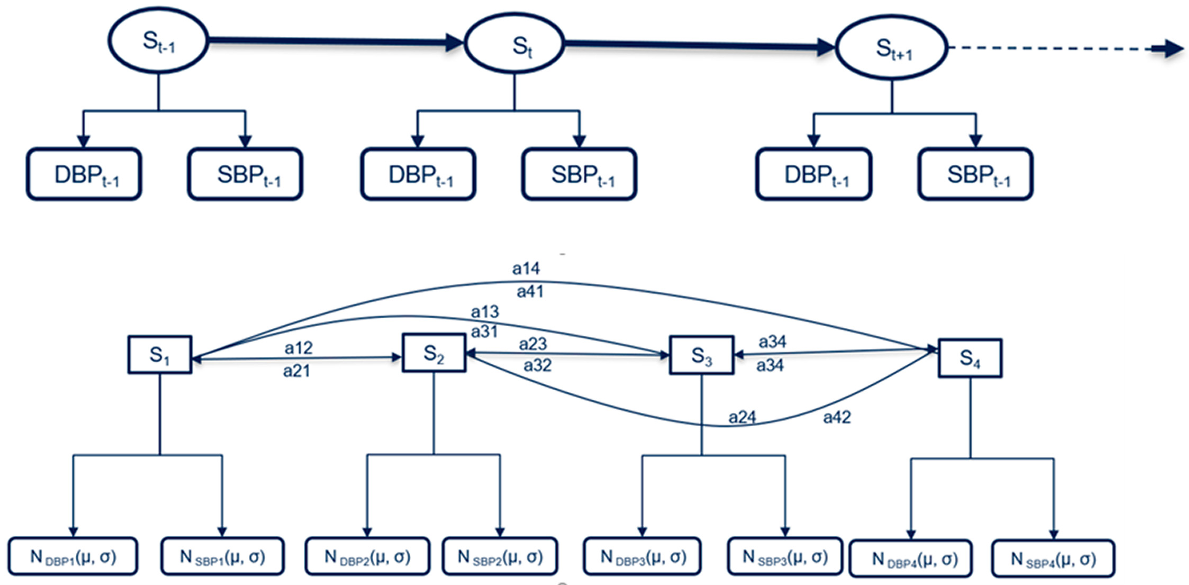
*Fig 2: DBN state transitions and comparison of Auto-Correlation Functions (ACF) showing high temporal fidelity.*
### The "Privacy Stress Test"
To measure privacy, the authors simulated an "attack" where an adversary tries to match a real patient (an outlier) to a synthetic record.
* With 6 known attributes, the risk of a unique match was **1.82%**.
* With 12 attributes, the risk dropped further to **0.70%**.
Crucially, even when a match occurred, the synthetic record often differed in sensitive fields (e.g., the synthetic "twin" might not have the same disease status), providing a secondary layer of protection through semantic noise.
| Known Attributes | GT Outliers | Single Synth Match % |
| :--- | :--- | :--- |
| Demographic (6) | 396.3 | 1.82% |
| Clinical (12) | 363.4 | 0.70% |
## Critical Analysis & Conclusion
The core contribution of this work is the validation of **Graphical Models** as a "white-box" alternative to deep learning in highly regulated sectors.
**Takeaway:** Transparency fosters trust. By using BNs, researchers can audit the relationships the model has learned, ensuring no "hallucinated" correlations or biases are baked into the synthetic dataset.
**Limitations & Future Work:**
While BNs are excellent for 10-50 variables, scaling them to datasets with thousands of features remains a computational challenge. Future research must address how to maintain this level of transparency in "wide" data (e.g., genomics) where the search space for graph structures becomes astronomical.