
You Are Probably Not the Weakest Link: Reclaiming the Human Element in Cyber-Defense
You Are Probably Not the Weakest Link: Towards Practical Prediction of Susceptibility to Semantic Social Engineering Attacks
The paper explores the feasibility of predicting user susceptibility to semantic social engineering attacks using measurable, real-time, and ethical predictors. Through two large-scale experiments involving over 4,600 users, the authors developed Logistic Regression and Random Forest models that achieved detection accuracy rates of 0.68 and 0.71, respectively.
TL;DR
The "human factor" is often dismissed as the unfixable vulnerability in cybersecurity. This paper challenges that trope by proving we can mathematically predict human susceptibility to social engineering. By analyzing over 4,600 users, researchers built machine learning models that use ethical, real-time data—like training history and platform familiarity—to identify at-risk users before they click the link.
Beyond "Standard" Phishing: The Motivation
Most security systems are "platform-specific"—an email filter won't catch a malicious QR code or a spoofed WiFi portal. Semantic social engineering attacks bypass technical firewalls by targeting the user's perception (the "semantic" layer).
The researchers realized that while we can't (and shouldn't) profile a user's personality or DNA, we can measure their digital experience. The goal was to find a way to quantify "Deception Susceptibility" using data that a system can collect automatically and ethically.
Methodology: Mining for Vulnerability
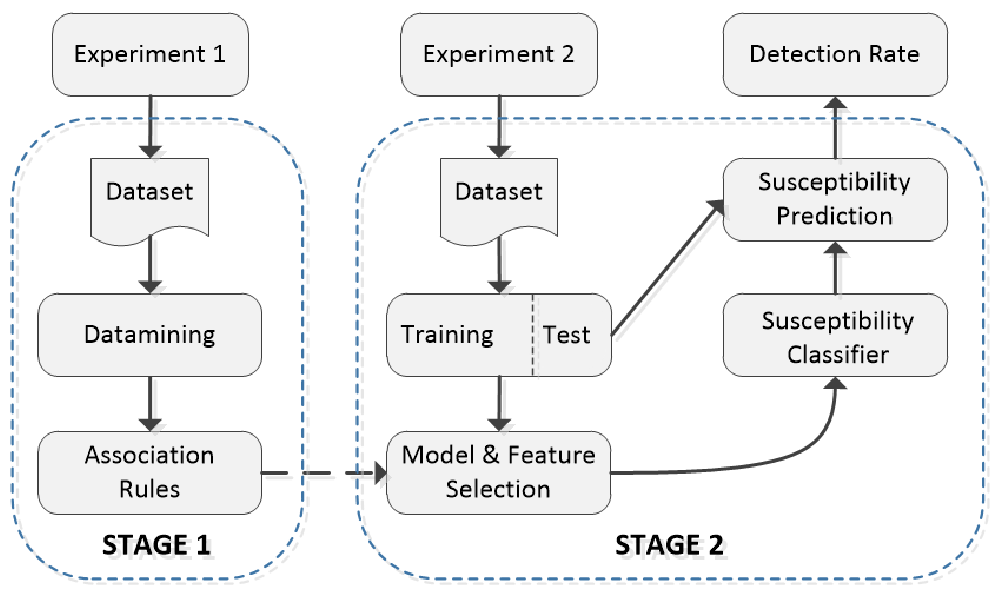
The study followed a two-stage experimental design:
- Stage 1 (Discovery): A massive online test with 4,333 participants used Association Rule Mining to find broad patterns. It discovered that technical literacy and frequent platform use were strongly correlated with higher detection rates.
- Stage 2 (Refinement): A controlled group of 315 users was tested with sophisticated "exhibits" including videos and animations to simulate behavioral deception.
The Model Architecture
The authors focused on two distinct approaches:
- Logistic Regression (LR): A transparent, linear model that provides clear "odds ratios" for each predictor.
- Random Forest (RF): A non-linear ensemble method that handles complex interactions between user habits.
The "Smoking Gun" Features
What makes someone a "Security Pro"? The data yielded surprising insights:
- Self-Study > Formal Lectures: The time elapsed since a user's last self-motivated study was one of the strongest predictors. Traditional "death-by-PowerPoint" lectures were almost useless in the models.
- The "Habitation" Effect: Familiarity is a double-edged sword. While it helps users spot "wrong" UI elements, extreme frequency can lead to automated behavior where users click pop-ups without thinking (Habitation).
- Literacy matters: Self-reported computer literacy, when cross-referenced, remained a robust indicator of risk.

Results: Can Machines Predict Human Error?
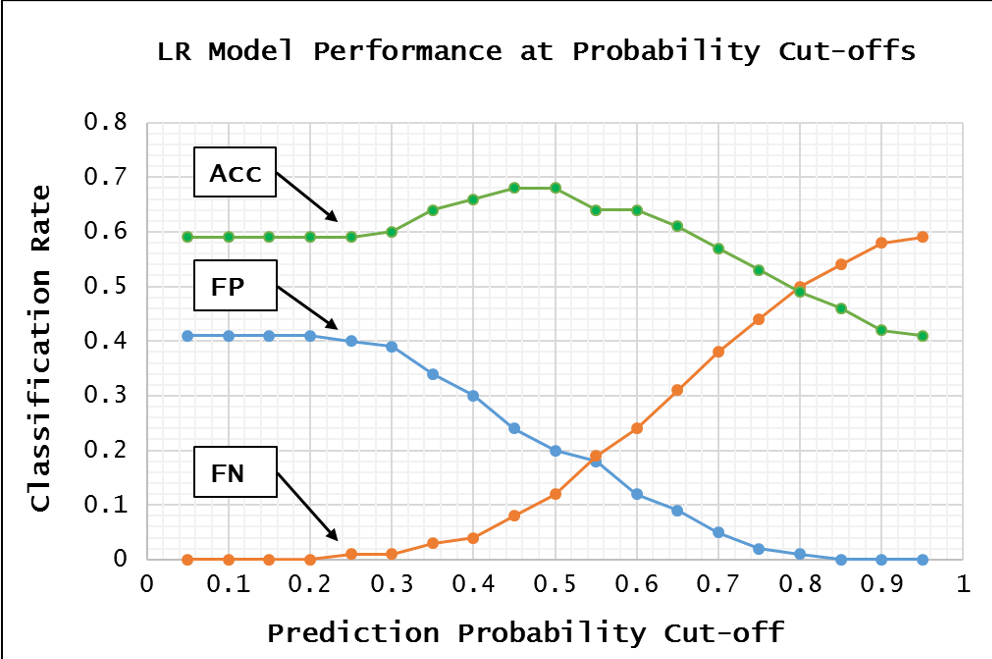
The results prove that susceptibility is not random. The Random Forest model achieved a 0.71 accuracy, significantly outperforming a "naive" classifier.
Crucially, the authors demonstrate that an organization can tune these models based on their risk tolerance. If you want to keep false negatives (missing a susceptible user) below 2%, you can set a low probability threshold, effectively creating a high-sensitivity "tripwire" for risky user behavior.
From "Weakest Link" to "Human Sensor" (HaaSS)
The ultimate takeaway is a paradigm shift. Instead of treating users as liabilities, this research suggests we treat them as sensors.
Some users in the study were exceptionally good at spotting "Typosquatting" and "Qrishing" (QR code phishing) attacks that no automated system caught. By predicting which users are "Human Sensors," security teams can prioritize user-reported threats, turning the "weakest link" into a decentralized, intelligent defense grid.
Final Thought
Security is evolving from "locking the door" to "knowing the resident." By using these predictive metrics, future systems can dynamically adjust permissions and warnings, providing a safety net that adapts to the human's current state of readiness.