Why Pre-Service Teachers Walk Away: Deconstructing the "Facebook Quitter" Phenomenon
Why do pre-service teachers quit Facebook? An investigation on ‘quitters forever’ and ‘quitters for a while’
This study investigates the motivations behind Facebook (FB) abandonment among 231 pre-service teachers in Turkey. It develops and validates the "Facebook Quitting Questionnaire" and utilizes a mixed-methods approach to categorize quitters into "temporary" and "permanent" groups, identifying perceived usefulness as the primary differentiator.
TL;DR
Social media is often viewed as an inescapable digital lung, yet a significant segment of users—including future educators—are choosing to "unplug." This study develops a specialized "Facebook Quitting Questionnaire" to categorize the reasons behind this exodus, finding that while privacy and time-waste are universal deterrents, the perceived utility of the platform is what ultimately separates those who leave for a weekend from those who delete their accounts forever.
Background Positioning
In the landscape of Social Networking Site (SNS) research, most focus on adoption and engagement. This work is a critical pivot toward rejection—specifically within the high-stakes context of teacher training, where personal lives and professional identities often collide.
The "Quitters" Taxonomy: Why They Leave
The research identifies a clear rift in the quitting population:
- Permanent Quitters: View the platform as fundamentally lacking value (low perceived usefulness).
- Temporary Quitters: Often leave to manage time (e.g., during exams) but maintain a belief in the platform's social or functional utility.
The Four Cornerstones of Disengagement
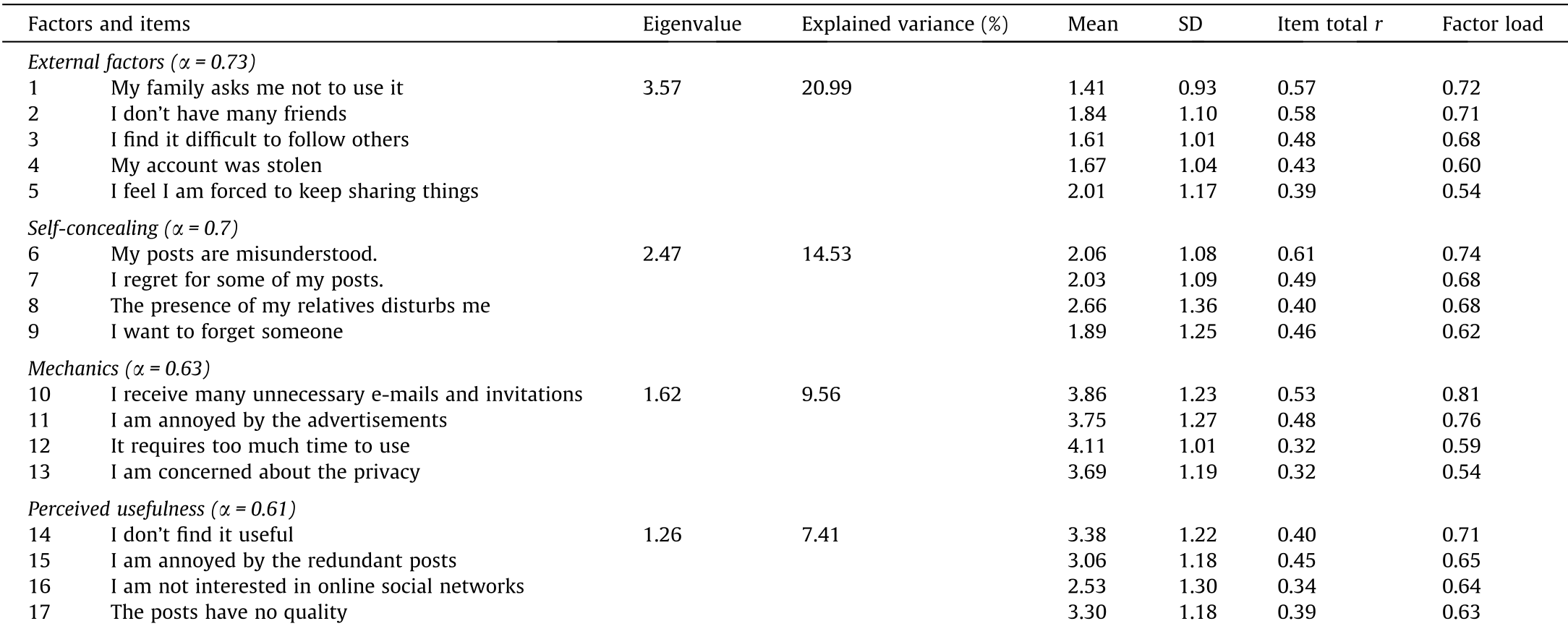
The authors' validated model breaks down the quitting motivation into a 4-factor structure:
- Mechanics: The "engines" of annoyance—advertisements, unnecessary emails, and the sheer time-drain of the interface.
- Perceived Usefulness: The core value proposition. If the quality of posts is low, the user sees no reason to stay.
- Self-Concealing: The desire for privacy and the regret over past digital footprints.
- External Factors: Social pressure from family or the loss of an account due to hacking.
Methodology: Beyond the Numbers
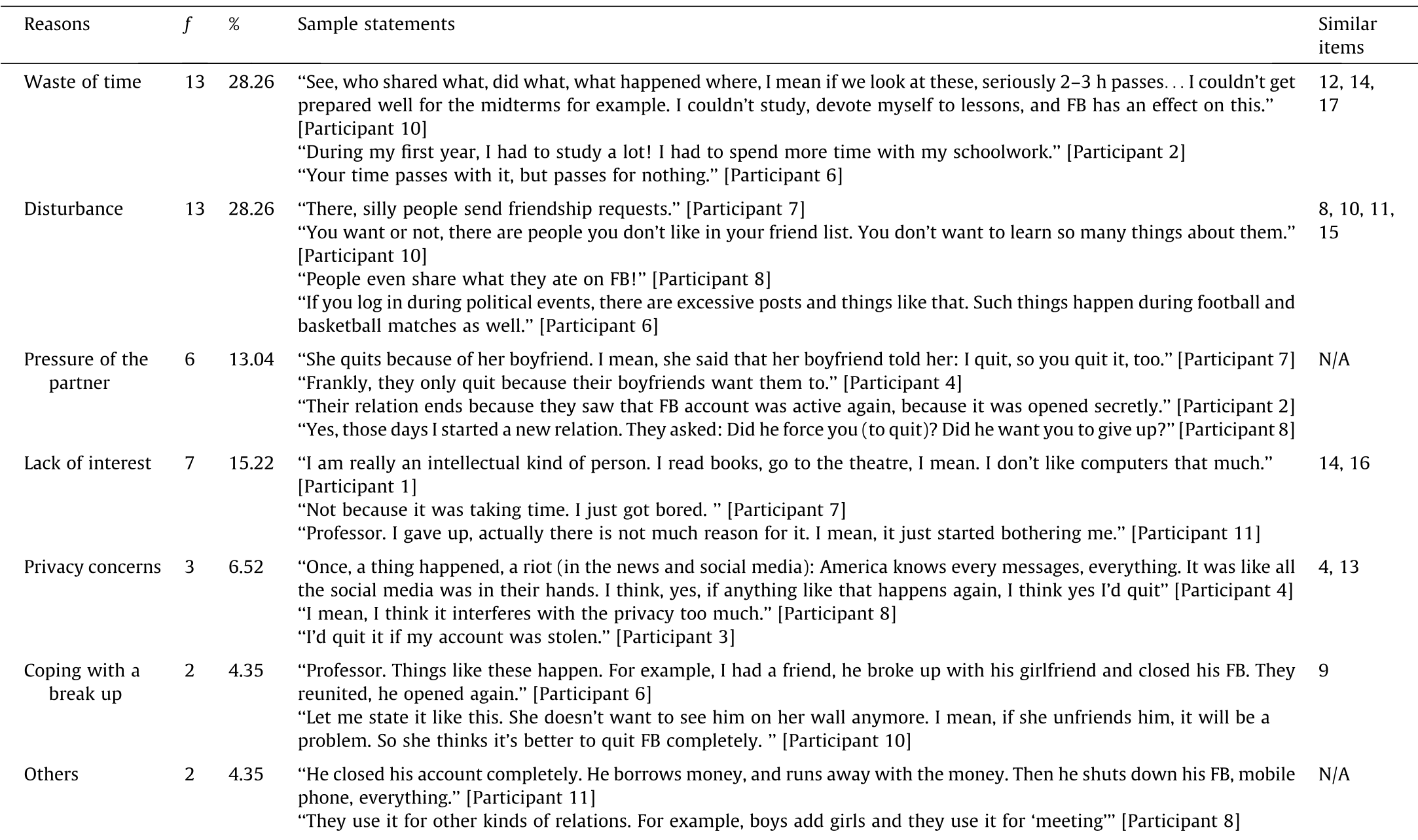
The study’s strength lies in its explanatory-sequential design. After quantitative clustering, the researchers went into "the field" to interview quitters. This revealed two fascinating, non-quantified drivers:
1. The Jealousy & Trust Factor
Interviews uncovered "Confidence building among couples" as a major reason. Quitting Facebook was often used as a performative gesture of mutual trust or a sacrifice to mitigate relationship jealousy. Interestingly, the study noted a gendered dimension, with male partners frequently pressuring female partners to quit.
2. The "Forced Adoption" Paradox
Many pre-service teachers expressed a desire to stay offline but felt obliged to return because of:
- Faculty Pressure: Professors using Facebook groups for official course materials and slides.
- Peer Pressure: Group assignments and social coordination occurring exclusively on the platform.
Critical Insight: The "Academic Safe Space"
The study's most profound implication for the EdTech industry is its critique of using public SNS for formal instruction. When educators force students onto Facebook, they are effectively:
- Interfering with the student's privacy preferences.
- Forcing them into a "disturbing" environment filled with ads and "quality-less" content.
- Ignoring those who have quit for personal health or relationship reasons.
The Takeaway: Instead of "colonizing" Facebook for education, institutions should focus on embedding the affordances of social networks (ease of sharing, community feel) into dedicated, private Learning Management Systems (LMS).
Limitations & Future Outlook
While the 17-item questionnaire provides a robust baseline, the sample is culturally specific to Turkish pre-service teachers. Future research must determine if these "quitting mechanics" hold true in a post-TikTok era, where the nature of social surveillance and "post-regret" has evolved. Objective metrics like "Virtual Identity Suicide" remain a fertile ground for understanding the psychology of the modern non-user.
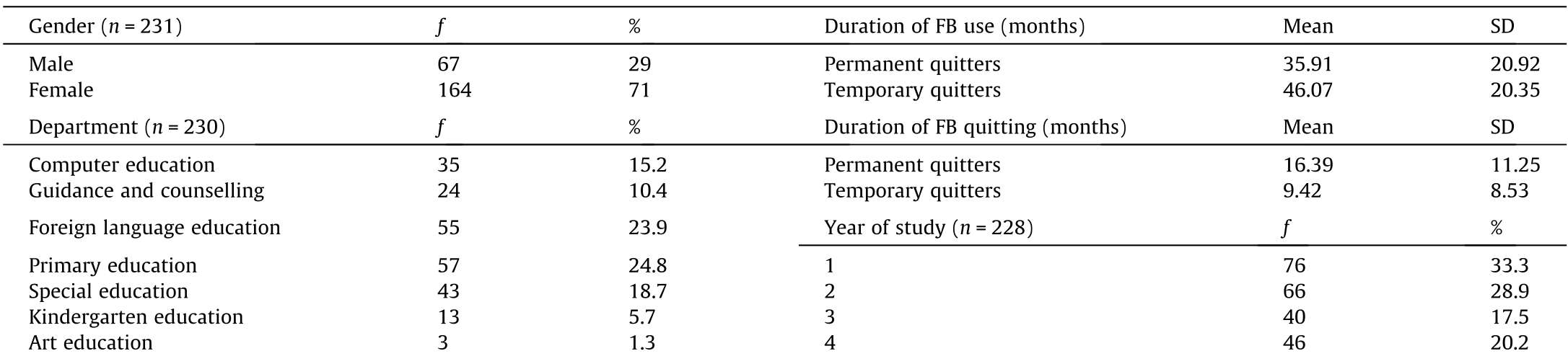
Summary Table of Participant Demographics