
OSP: Solving the Sparse Distance Prediction Problem with Synthetic Oracles
A Pre-training Oracle for Predicting Distances in Social Networks
The paper introduces "Oracle Search Pre-training" (OSP), a two-stage framework for predicting node-pair shortest hop-distances in sparse social networks. It utilizes synthetic Power Law graphs to pre-train an autoencoder, achieving high-accuracy distance inference even with only 1% of the network sampled.
TL;DR
Predicting the shortest path (hop-distance) between nodes in a social network is crucial for friendship recommendation and topology mapping. However, when you only have access to 1% of the data, traditional models collapse. This paper introduces Oracle Search Pre-training (OSP): a method that uses synthetic Power Law graphs as an "Oracle" to pre-train autoencoders, allowing for accurate distance inference from ultra-sparse measurements.
The "Sparse Data" Trap in Social Networks
In an ideal world, we would have the full adjacency matrix of a network. In the real world, we deal with "incomplete views" due to API limits, privacy settings, or huge computational costs.
Current state-of-the-art methods like Low-rank Matrix Completion (MC) rely on the mathematical redundancy of the distance matrix. But MC has a hard floor: it usually needs at least one measurement per row to function. Neural Networks could potentially do better, but they are "data-hungry" and fail to learn meaningful representations when they only see of the nodes.
The Insight: Synthetic Graphs as Knowledge Oracles
The authors hypothesize that while we don't know the full real-world network, we know its category. Most social networks follow a Power Law distribution (where a few "hubs" have many connections, while most nodes have few).
If we can find the right parameters for a synthetic Power Law model that "looks like" our target network, we can generate infinite training data. The challenge is: How do we find the right parameters (like node degree ) if we can't see the whole network?
Methodology: The Two-Stage Oracle
The OSP framework operates in three distinct phases:
- Stage 0 & I (Oracle Search): The model tests various "windows" of synthetic parameters. It checks which synthetic networks, when used for training, produce the lowest error on the available sparse real-world samples.
- Stage II (Pre-training & Fine-tuning): Once the "Oracle" identifies the best parameters (e.g., for an Email network), a large-scale synthetic dataset is generated to pre-train a Supervised Autoencoder.
- Final Inference: The model is fine-tuned on the actual sparse samples and then predicts the remaining of missing distances.
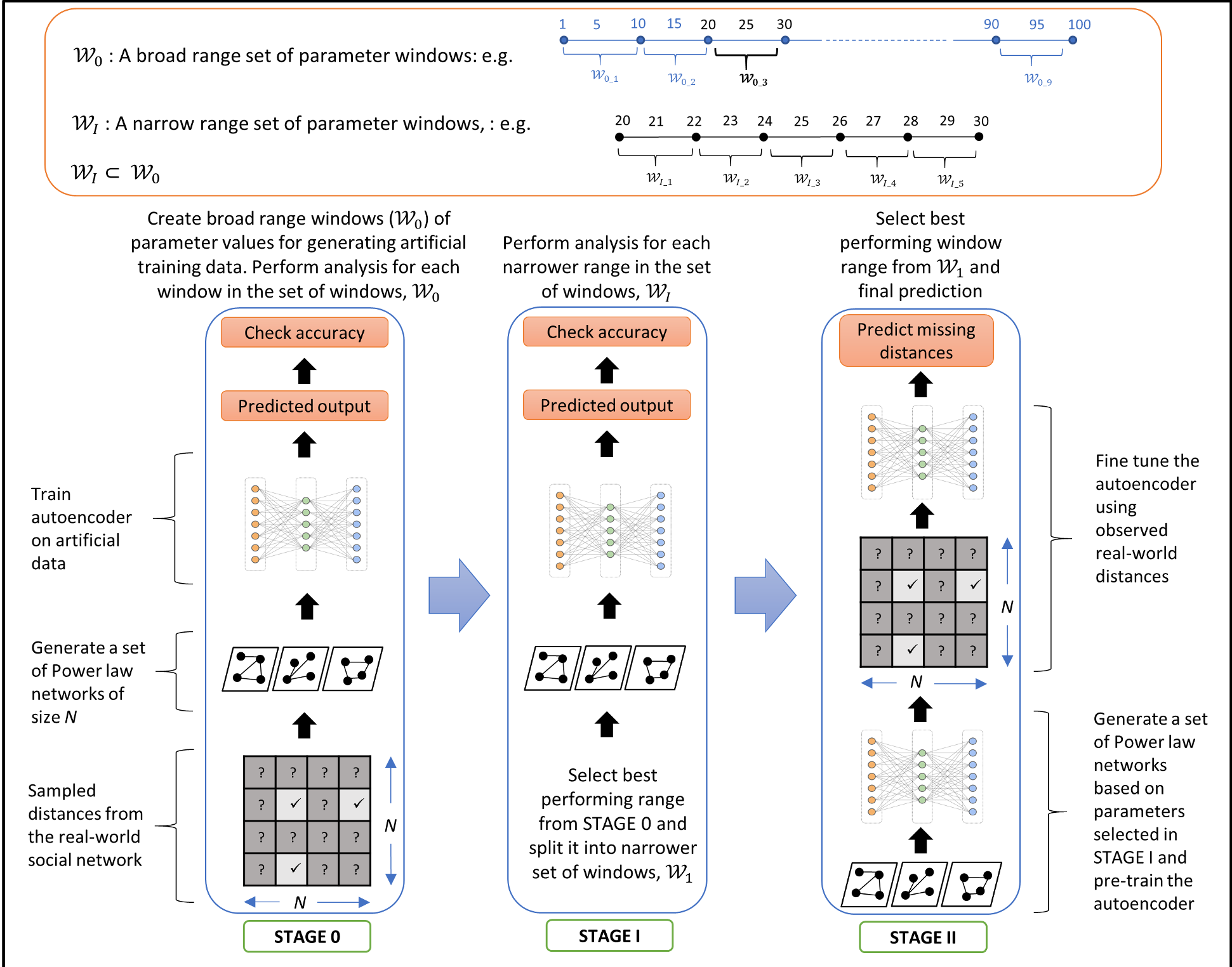 Figure 1: The OSP Workflow, from parameter selection to final stage prediction.
Experimental Results: Breaking the 1% Barrier
The researchers tested OSP on Facebook, Email (Virgili), and Train Bombing networks.
- Accuracy: In the Virgili Email network with just 0.5% of distances known, OSP achieved an error rate 53% lower than a standard neural network.
- Robustness: Unlike Matrix Completion, which struggles at low sampling rates, OSP maintains an Absolute Hop-Distance Error (AHDE) of less than one hop even at 1% sampling.
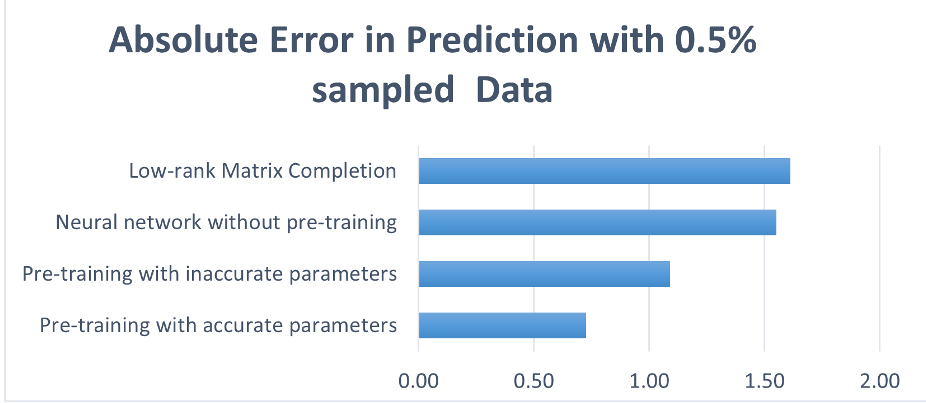 Figure 2: Performance comparison showing OSP significantly outperforming Matrix Completion and non-pre-trained models.
Deep Insight: Why Does the Oracle Work?
The effectiveness of OSP stems from the Inductive Bias inherent in the Power Law model. By forcing the neural network to learn the "physics" of shortest paths in hub-and-spoke architectures, the model develops a structural intuition.
The sensitivity analysis (Figure 10 in the paper) reveals a crucial tip: The best results occur when the synthetic node degree is slightly lower than the target network's average degree. This is because Power Law distributions are right-skewed; most nodes have a degree lower than the mean, making the low-degree synthetic data a more "faithful" representative of the majority of node pairs.
Conclusion & Future Outlook
OSP proves that we don't need "Big Data" if we have a "Smart Oracle." By leveraging synthetic data that shares the structural DNA of the target domain, we can perform complex inference in ultra-sparse environments.
The next frontier? Extending this to directed networks and multi-layer social structures where the relationship between nodes is even more complex.