
Telecom Big Data: Unlocking Precision Marketing for Luxury Automotive Buyers
10522_A novel precision marketing model based on telecom big data analysis for luxury cars.
This paper presents a precision marketing model for identifying potential high-end luxury car buyers by leveraging telecom big data. Using Logistic Regression and Neural Network algorithms, the researchers developed a predictive framework based on multi-dimensional user attributes to replace traditional, resource-heavy marketing methods.
TL;DR
To move beyond the "spray and pray" approach of traditional advertising, this study leverages telecom operator data to predict potential luxury car buyers. By combining Logistic Regression and Neural Networks with a unique "Social Circle" metric, the researchers identified high-value targets with significantly higher precision than traditional demographic targeting.
Background: The High Cost of Cold Calling
Luxury brands have historically struggled with "blind" marketing. Telemarketing and billboards waste resources on individuals who have no intention—or financial capacity—to purchase a high-end vehicle. The challenge lies in identifying the high-net-worth individual within a sea of millions of telecom subscribers.
Methodology: The Four Pillars of User Profiling
The core innovation of this paper is the systematic extraction of "Clever Attributes." Instead of looking at simple age/gender data, the authors analyzed four distinct dimensions:
- User Characteristics: Age, Gender, and VIP Level.
- Communication Behavior: ARPU (Average Revenue Per User), MOU (Minutes of Usage), and DOU (Data of Usage).
- Terminal Attributes: Phone Price (PP), Brand, and OS.
- Social Circle: The "IMSC" (Influence Metric of TOP 30 Social Circle), which counts how many of a user's close contacts already own a luxury car.
Finding the "Clever Attributes"
To ensure the model wasn't redundant, the authors used a correlation matrix (Pearson Correlation) to filter variables. For instance, if two variables like ARPU and "High Value User" status were too highly correlated (ρ > 0.8), they simplified the input to prevent overfitting.
 Figure 1: The methodical pipeline from attribute definition to clever attribute selection.
Key Insight: You Are Who You Call (and What You Carry)
The research revealed startling gaps between General Telecom Users (WTU) and Luxury Vehicle Owners (LVO):
- The Device Proxy: 47.69% of luxury owners use phones priced between 2000-3000 RMB (at the time of the study), whereas general users are more evenly spread in lower tiers.
- The Power of Connection (IMSC): Luxury owners are significantly more likely to have other luxury owners in their top 30 social circle. The IMSC formula proves that "wealth clusters."
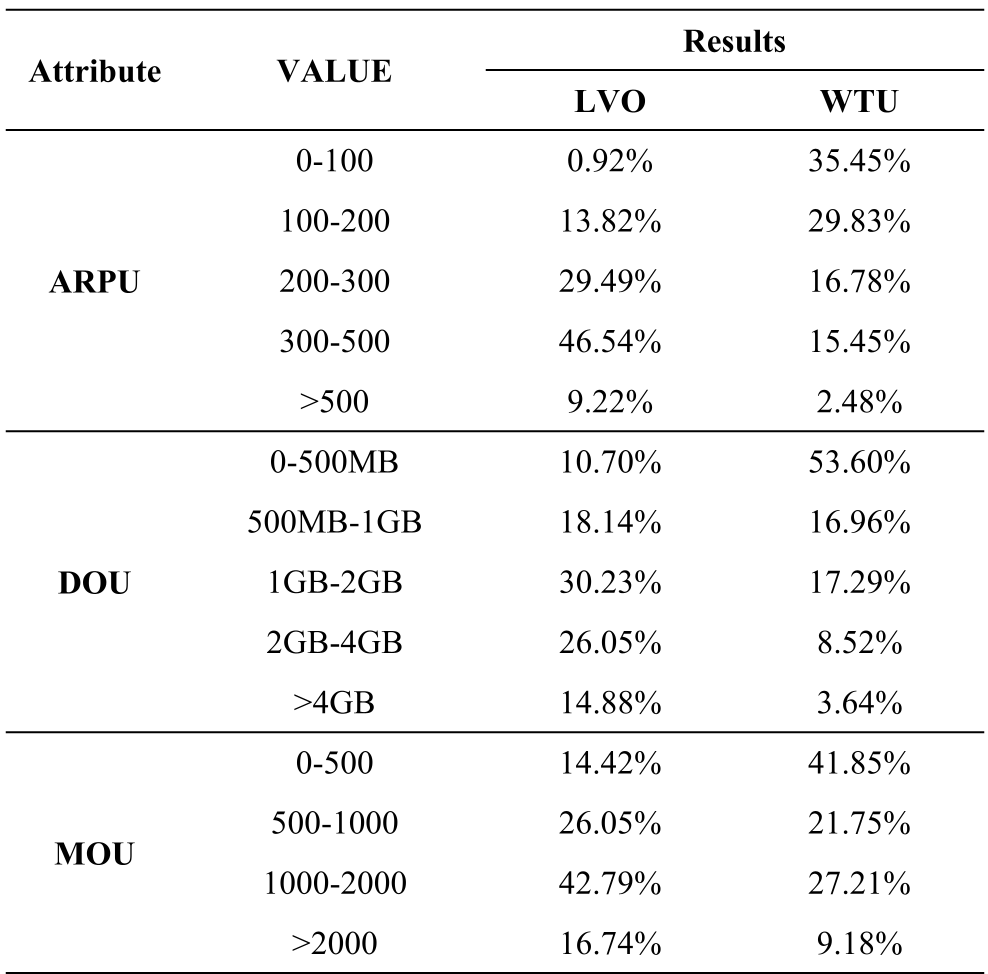 Table 1: Data showing how ARPU and DOU (Data Usage) serve as clear discriminators for high-end users.
Modeling: Logistic Regression vs. Neural Networks
The authors implemented two classic yet powerful approaches:
- Logistic Regression: Used for its interpretability, helping the marketing team understand why a customer was flagged (e.g., high ARPU and high IMSC).
- Neural Networks: Utilized a Sigma activation function to capture non-linear relationships between social circles and terminal attributes that a simple regression might miss.
Experimental Results
The model demonstrated that luxury car owners aren't just defined by age; they are defined by a high-volume communication lifestyle.
- ARPU: Over 55% of LVOs spend more than 300 RMB monthly, compared to less than 18% of general users.
- Accuracy: The combination of behavioral data and social metrics allowed the model to outperform baseline demographic models significantly.
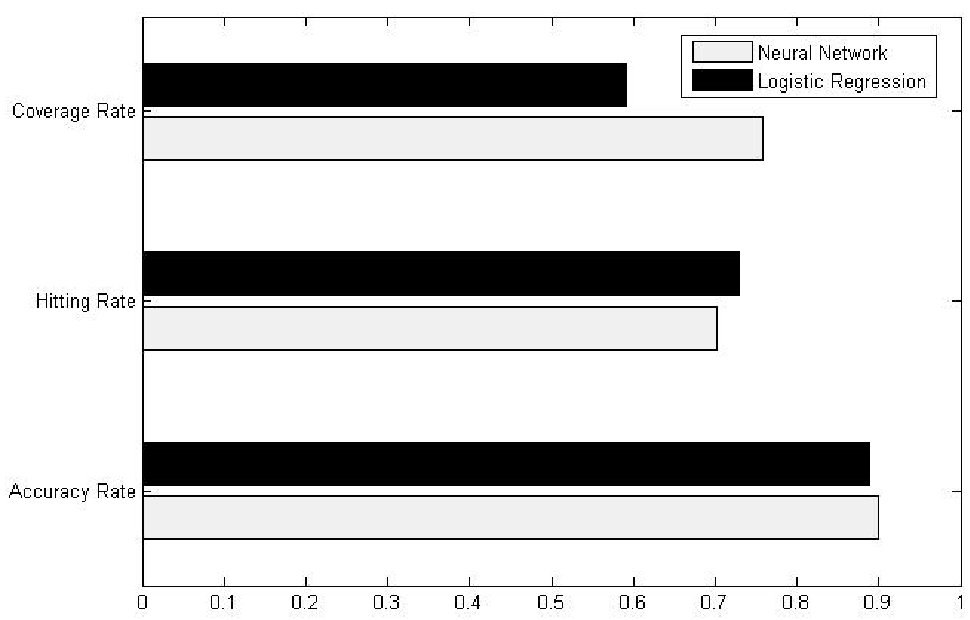 Figure 2: Performance evaluation framework for Hitting Rate and Coverage Rate.
Critical Insight & Conclusion
This paper proves that metadata is often as valuable as the data itself. By analyzing the "who, how much, and what with" of communication, telecom companies can create a highly accurate "Financial Proxy" for users without ever looking at their bank accounts.
Limitations: The model relies on the assumption that phone price and telecom spending correlate perfectly with wealth, which may fluctuate with changing consumer habits (e.g., the rise of budget-friendly 5G plans). Furthermore, the IMSC metric is a simple summation; future work could benefit from Graph Neural Networks (GNN) to map these social influences more dynamically.
Takeaway for Industry: If you want to find the next luxury buyer, don't just look at their age—look at the value of the phone in their pocket and the luxury status of the people they call the most.