
PHIA: Bridging the Gap Between Social Density and Spatial Intelligence
Precomputing Hybrid Index Architecture for Flexible Community Search over Location-Based Social Networks
The paper introduces the Precomputed Hybrid Index Architecture (PHIA), a novel indexing framework designed for spatial-attributed community search in Location-Based Social Networks (LBSNs). By leveraging the k-core decomposition model, PHIA enables the efficient retrieval of subgraphs that satisfy structural, geographic, and interest-based constraints simultaneously.
TL;DR
The explosion of Location-Based Social Networks (LBSNs) like Foursquare and Facebook Places has rendered simple graph models obsolete for community discovery. This paper introduces PHIA (Precomputed Hybrid Index Architecture), a system that uses k-core decomposition to pre-index social networks based on three dimensions: social structure (who knows whom), spatial proximity (who is nearby), and attribute similarity (who shares interests).
The Multidimensional Challenge
Most community search algorithms focus on structural cohesiveness—finding a group where everyone knows at least others. However, in the real world, a "meaningful" community is rarely just about connections. It is about:
- Topology: Is the group dense? (k-core)
- Geography: Are the members within a specific radius ?
- Context: Do they share a common interest (e.g., "Hot Dogs", "Martial Arts")?
Prior works often treat these as separate filters, leading to massive computational overhead during query time. The authors of this paper argue that we must precompute these relationships to make LBSN searches viable at scale.
Methodology: The PHIA Architecture
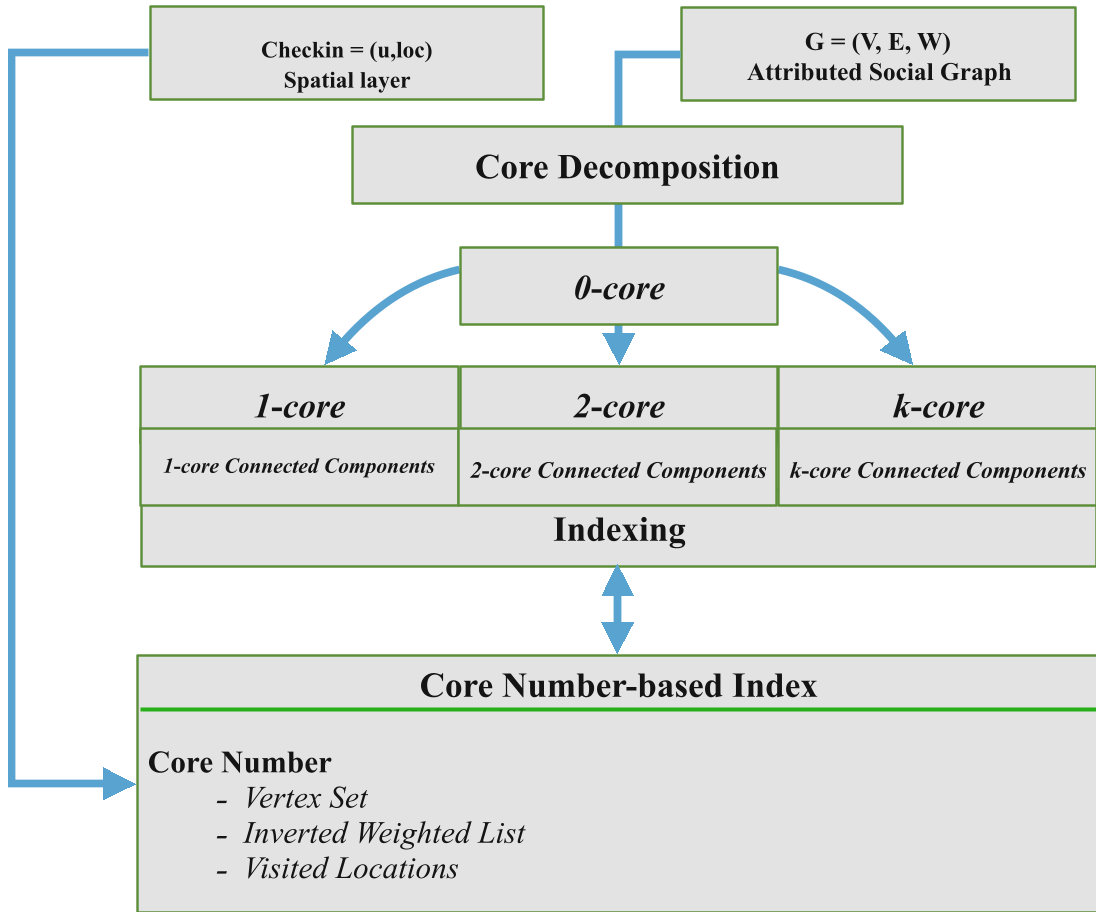
The core innovation lies in the Attri-Spatial Core-based Index. Instead of a flat index, the authors organize data according to the nested property of k-cores (where a -core is always a subset of a -core).
1. Precomputing Stage
The system recursively decomposes the graph. The 0-core (the whole graph) is broken down into 1-cores, 2-cores, and so on. These are stored in a document-oriented database (MongoDB) as connected components.
2. Hybrid Index Construction
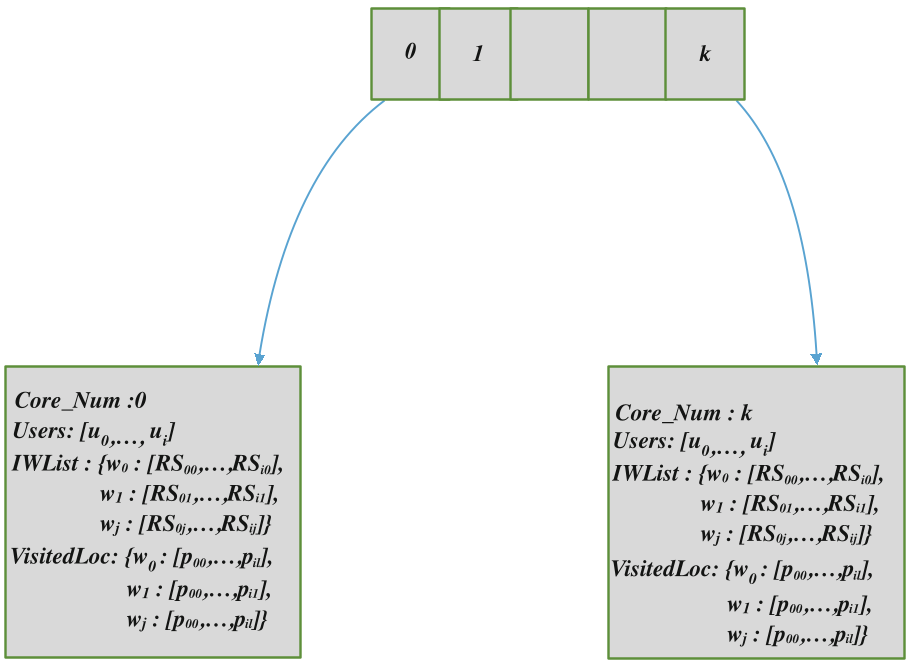
For every core level, the architecture maintains three pillars:
- VertexSet: The users belonging to that core.
- InvertedWeightedList: Keywords linked to weights (Relative Support - ) representing the intensity of a user's interest.
- VisitedLocations: The spatial coordinates of user check-ins.
Experiments and Results
The authors validated PHIA using the Weeplaces dataset, featuring 7.5 million check-ins. The implementation proved that by using the CoreNumber as the primary key, the system can instantly prune the search space.
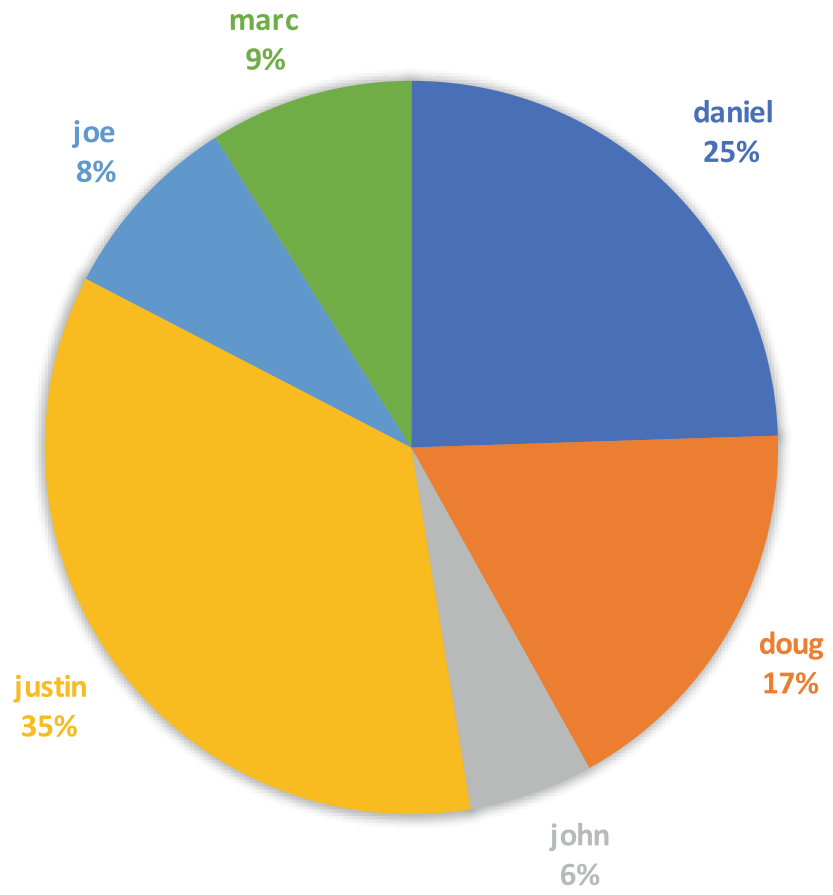
A key experimental finding was the ability to rank users within a community based on their Interest Support. For example, in a retrieved community of "Hot Dog" enthusiasts, the system can identify specific users (e.g., "Justin") who have a disproportionately high interest weight relative to their neighbors in the same k-core.
Critical Analysis & Conclusion
Takeaway
PHIA effectively turns a complex, multi-constraint search problem into a structured retrieval task. By precomputing the "social backbone" (k-cores) and layering spatial/attribute data on top, it achieves a "Flexible Community Search" that simple adjacency lists cannot match.
Limitations & Future Work
While the indexing is robust, the paper leaves the Ranking Function (how to optimally balance , , and interest weight) for future work. Additionally, the current model assumes a static graph; adapting PHIA for dynamic LBSNs where users move and check-in hourly remains a significant open challenge.
The potential for PHIA in hyper-local marketing and event planning is vast, provided it can be adapted to the high-velocity nature of modern social data.