
Decoding the Adolescent Digital Pulse: Why Group Norms Rule Social Media Use
Predicting adolescents’ use of social networking sites from an extended theory of planned behaviour perspective
This study investigates the psychological determinants of frequent Social Networking Site (SNS) use among adolescents using an extended Theory of Planned Behaviour (TPB) framework. By incorporating "group norm" and "self-esteem" into the model, the authors achieved a significant increase in predicting behavioral intentions, identifying attitude, perceived behavioral control (PBC), and peer group norms as the primary drivers.
TL;DR
Why do some teenagers check their social feeds dozens of times a day while others don't? This study utilizes an extended Theory of Planned Behaviour (TPB) to reveal that it isn't just about liking the platform; it’s about the perceived "rules" of the friend group. By adding Group Norms to the psychological equation, researchers increased their ability to predict teen behavior by a significant margin, proving that peer influence outweighs parental or societal pressure in the digital age.
Context: Beyond the "Subjective Norm"
For decades, psychologists used the TPB to predict behavior based on three pillars: Attitude, Subjective Norms (what important people think you should do), and Perceived Behavioural Control (PBC). However, in the context of adolescence—a developmental stage defined by peer alignment—the "Subjective Norm" often fails. Adolescents care less about what teachers or parents approve of and more about what their friends are actually doing.
Methodology: Extending the Framework
The researchers surveyed 160 Australian high school students (ages 13-16) in two phases. They moved beyond the standard model by adding:
- Group Norms: Do your closest friends use SNS frequently?
- Self-Esteem: Does a lower sense of self-worth drive teens to seek validation online?

The target behavior was defined as "frequent use," specifically engaging with sites like Facebook or MySpace (at the time of the study) at least twice per day.
Key Insights: The Peer Effect
The results provided a clear hierarchy of influence:
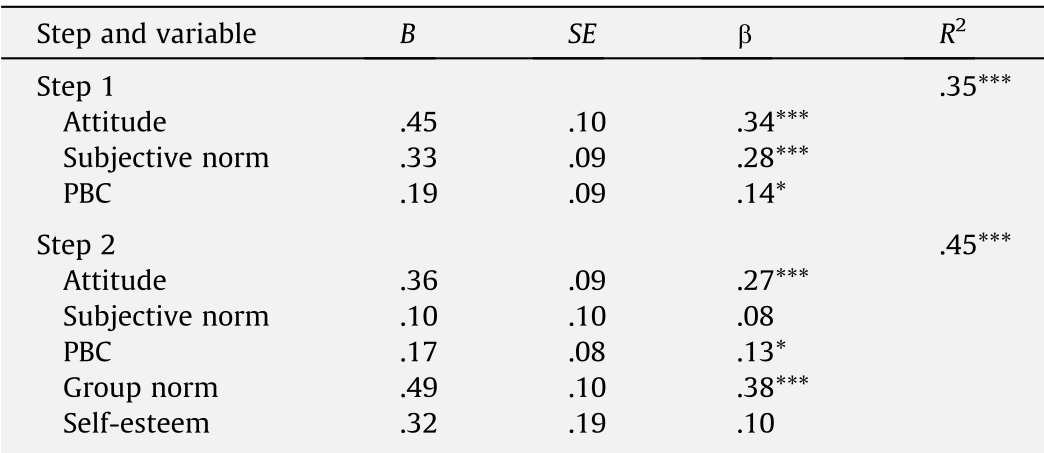
- Group Norm is King: Once group norms were introduced, the influence of "Subjective Norms" (parental/general pressure) vanished. Teens are motivated by the "ingroup" behavior of their friends.
- Attitude and Control: Having a positive view of SNS and feeling capable of using it significantly boosted intentions.
- The Self-Esteem Paradox: Contrary to the common "compensation" hypothesis (that low self-esteem drives tech use), this study found no direct link. This suggests that SNS use is a mainstream social tool utilized by teens across the self-esteem spectrum, rather than a crutch for the socially anxious.
Performance Comparison
The inclusion of Group Norms and Self-Esteem raised the explained variance () for Intention from 35% to 45%.
Critical Analysis & Conclusion
Takeaway for Policy and Education
If the goal is to reduce excessive SNS use, lecturing teens on "proper" behavior is likely to fail because it appeals to subjective norms. Instead, interventions should focus on:
- Perception Correction: Showing teens that their peer group's average use might be lower than they perceive.
- Structural Barriers: Reducing PBC by implementing time-limited access, effectively "taking the choice out of their hands."
Limitations
The study relies on self-reported data, which can be prone to recall bias. Furthermore, the digital landscape has shifted from the "MySpace era" to the "TikTok/reels era," where algorithmic feeds might override some aspects of intentional behavioral control.
Final Thought
This research confirms that for adolescents, the digital world is a mirror of their physical social circles. Their "intent" to be online is a direct reflection of their need to remain synchronized with their immediate peer group, a fundamental drive that technology has simply magnified.