
Decoding the Autistic Gaze: Predicting ASD Traits through Machine Learning and Eye-Tracking
Predicting Core Characteristics of ASD Through Facial Emotion Recognition and Eye Tracking in Youth
This study presents a machine learning framework to predict core Autism Spectrum Disorder (ASD) traits—social impairment and repetitive behaviors—using a Random Forest regressor. By analyzing eye-tracking (ET) data and task performance during a dynamic facial emotion recognition paradigm (DARE), the model identifies neurodevelopmental endophenotypes across ASD, ADHD, and typically developing (TD) youth.
TL;DR
Researchers have developed a machine learning model that predicts the severity of Autism Spectrum Disorder (ASD) symptoms by simply watching how a child looks at faces. By extracting fixation patterns and reaction times during a facial emotion recognition task, the Random Forest-based model successfully estimates scores on major clinical assessments (SRS-2 and RBS-R), offering a more objective lens for diagnosis than traditional parent-report questionnaires.
Background: Beyond the Label
Autism is not a binary switch; it is a spectrum of traits—social communication deficits and repetitive behaviors (RRBs)—that are distributed across the general population. A major challenge in clinical settings is the high comorbidity between ASD and ADHD (up to 80% overlap). While subjective assessments like the SRS-2 are the gold standard, they are prone to reporter bias. This paper seeks a "biomarker" approach: can we use the way someone searches a face for emotional cues to map their position on the neurodevelopmental spectrum?
Methodology: The Fusion of Gaze and Behavior
The study employed the Dynamic Affect Recognition Evaluation (DARE) task, where participants watch faces morph from neutral to a specific emotion and must "halt" the video as soon as they identify the expression.
1. Feature Extraction
The researchers didn't just look at if the participant got the answer right. Instead, they focused on:
- Task Performance: Reaction Time (RT) and normalized relative RT.
- Fixation Maps: The facial area was divided into a 6x6 grid. The density of eye fixations in each bin was calculated and smoothed with a Gaussian kernel to create a spatial signature of "how" the participant explored the face.
2. The Predictive Engine
Using Principal Component Analysis (PCA) to handle the 36-dimensional fixation vectors and a Random Forest regressor, the team predicted continuous clinical scores. This approach acknowledges that "autistic traits" exist in ADHD and typically developing (TD) groups as well.
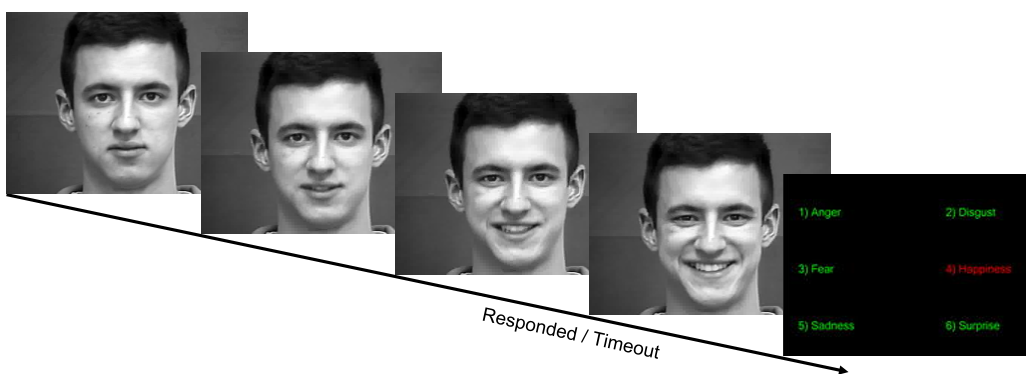 Fig 1: The DARE task workflow, capturing the transition from neutral to emotional expression.
Key Insights from Experimental Results
The findings confirm a long-standing intuition in visual social cognition: Individuals with ASD tend to fixate more on the background (non-social info) and less on the eye region.
Quantitative Success
- Social Responsiveness (SRS-2): The model predicted total scores with an R² of 0.325. It effectively separated ASD+ADHD groups (high predicted scores) from TD groups (low predicted scores).
- Repetitive Behaviors (RBS-R): Achieved an R² of 0.302. Fascinatingly, the model's predicted scores were better at separating ASD from TD than the actual observed assessment scores, suggesting the gaze-data might be "cleaner" than manual reports.
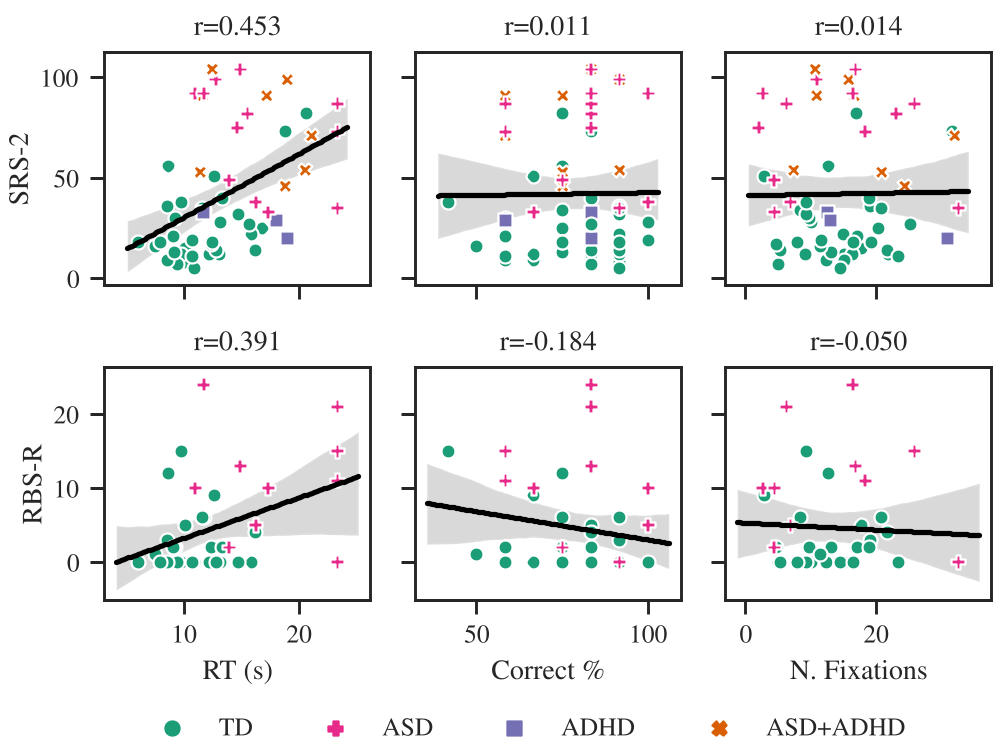 Fig 2: Strong correlation between model predictions and clinical SRS-2 scores.
Diagnosis Capability
The ROC analysis (Fig 5 in the paper) demonstrates that the DARE eye-tracking task achieves an AUC comparable to traditional assessments. This means gaze behavior itself can act as a reliable classifier for ASD diagnosis even without supervision from diagnostic labels.
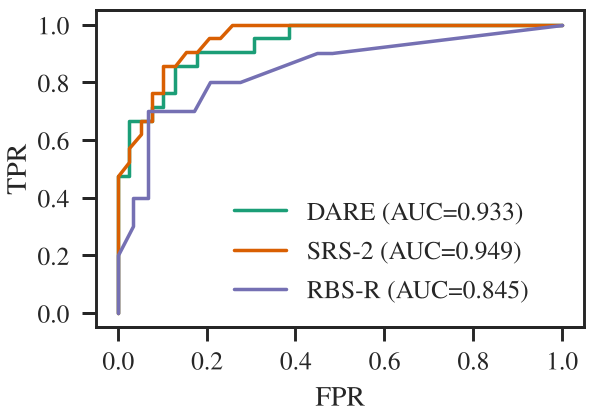 Fig 3: ROC curves showing the diagnostic potential of the proposed ET method.
Critical Analysis & Conclusion
This work emphasizes a shift toward Quantitative Neuropsychology. By treating ASD traits as a continuum rather than a set of boxes, the authors provide a tool that can navigate the blurry lines of ASD/ADHD comorbidity.
Limitations: The sample size (N=60) is relatively small, particularly for the RBS-R cohort. Additionally, the study's gender balance leans toward males, following general ASD prevalence but limiting insights into female-specific phenotypes.
Future Outlook: The integration of machine learning with objective physiological sensors (Eye-tracking, heart rate, skin conductance) is the future of precision psychiatry. If these models can be scaled, they could lead to early-detection tools that are entirely independent of a child's ability to vocalize their feelings or a parent's ability to observe them.
Takeaway: Your gaze is a window into your neurobiology. In the context of ASD, where you look is often more telling than what you say you see.