
Predicting Customer Demographics: Turning Mobile Metadata into Socioeconomic Insight
Predicting Customer Demographics in a Mobile Social Network
The paper proposes a predictive framework to infer customer demographics, specifically gender and economic status, within Mobile Social Networks (MSN). By analyzing Call Detail Records (CDR) and social connectivity patterns, the authors utilize a meta-approach involving C4.5, CART, and SVM classifiers to achieve state-of-the-art results in identifying prepaid users in developing nations.
TL;DR
In the world of mobile telecommunications, prepaid users are often "ghosts"—their profiles are anonymous and their demographics unknown. This paper presents a robust machine learning framework that analyzes Call Detail Records (CDRs) to predict gender and income levels. By leveraging communication patterns and social network topology, the authors provide a scalable way to enable "Targeted Advertisements" in developing economies.
Context & Motivation: The Prepaid Data Gap
In developing nations, the vast majority of mobile users opt for prepaid services. Unlike postpaid contracts, which require formal identification and credit checks, prepaid accounts are often unregistered or contain erroneous information.
The authors' core insight is based on the homophily principle: "A person is expected to be in a network of people with similar interests and behavior." By looking at who a person calls (connectivity) and how they call (behavior), we can reconstruct their demographic identity with high statistical probability.
Methodology: From Raw Logs to Demographic Labels
The researchers developed a systematic pipeline to transform "noisy" raw logs into actionable intelligence:
- Feature Selection: Identifying influential factors such as
Average Call Duration,Number of Sent Messages, andNetwork Degree(the number of unique contacts). - The Meta-Classifier Approach: Instead of relying on a single algorithm, the system evaluates C4.5 (Decision Trees), CART, and SVM (Support Vector Machines).
- Validation: Performance is measured using the Area Under the Curve (AUC) to ensure the model distinguishes between categories effectively.
Model Architecture and Feature Table
The following table illustrates the stark differences in behavioral attributes across genders that the model uses for classification:
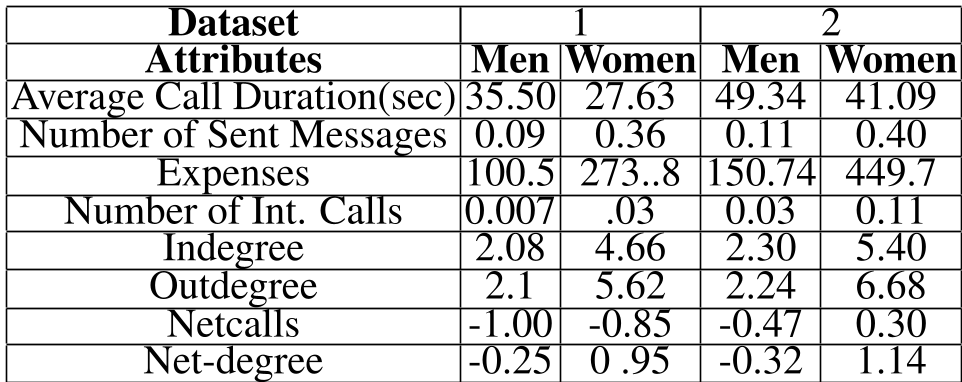
Key observations from the data show that in this specific study area, women exhibited significantly higher In-degree and Out-degree (social connectivity) and higher Expenses compared to their male counterparts.
Experimental Results: Visualizing Economic Status
One of the unique contributions of this paper is the use of Candlestick Charts—typically used in finance—to represent the distribution of predicted income levels. This allows researchers to verify the consistency of the prediction across different datasets.
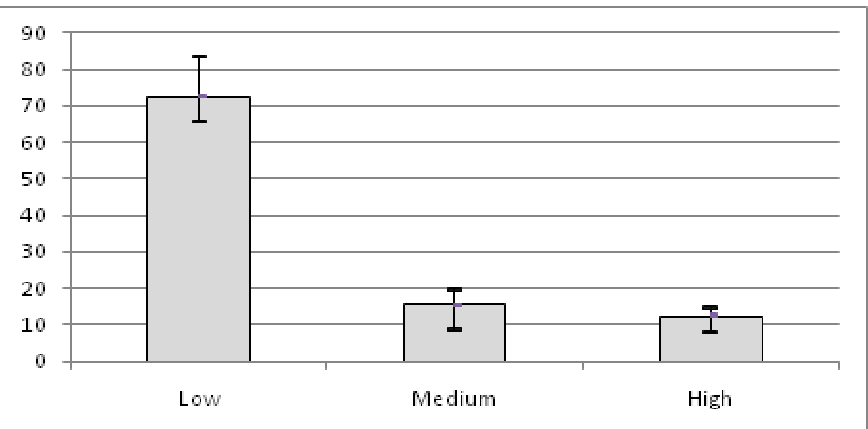
The results indicate that the model can effectively segment users into Low, Medium, and High-income clusters by analyzing "Usage" patterns as a proxy for purchasing power.
Critical Analysis & Future Outlook
Takeaway
This research proves that "How we communicate" is a digital fingerprint of "Who we are." For telecom operators, this unlocks the ability to move from mass broadcasting to personalized marketing without requiring users to fill out intrusive surveys.
Limitations
- Heuristic Labels: The training set relies on "custom rules" and domain expertise for initial labeling, which might introduce bias if the initial assumptions about gender behavior are outdated.
- Data Privacy: The paper focuses on the technical feasibility, but the ethical implications of mining CDRs for demographic profiling remain a significant hurdle for real-world deployment.
Future Work
The authors suggest a fascinating next step: Churn Prediction. By correlating demographics with usage decline, operators could predict which specific socioeconomic groups are likely to switch carriers and offer them tailored retention incentives.