
Hotspot Detection: Rethinking Continuous Emotion Recognition through Qualitative Agreement
Predicting Emotionally Salient Regions Using Qualitative Agreement of Deep Neural Network Regressors
This paper introduces a framework for defining and detecting "emotionally salient regions" (hotspots) in continuous speech using the Qualitative Agreement (QA) method. By leveraging an ensemble of Bidirectional Long Short-Term Memory (BLSTM) regressors, the authors achieve SOTA performance in identifying emotional peaks, reaching F1-scores of 60.9% for arousal and 50.4% for valence on the RECOLA dataset.
TL;DR
Researchers have developed a new framework to identify emotionally salient regions (hotspots) in long, unsegmented speech. By moving away from "absolute" emotion scores and focusing on Qualitative Agreement (QA)—the consensus of trends among different raters—the system more accurately identifies when a speaker deviates from a neutral state. Using an ensemble of BLSTM regressors, the method achieves significant performance gains on the RECOLA and SEMAINE datasets.
Problem & Motivation: The Noise of Human Emotion
Current Affective Computing models struggle with a fundamental truth: human emotion is subjective and messy. Most systems try to predict an "average" score derived from multiple annotators. However, because one person’s "7/10" excitement is another person’s "4/10," simple averaging washes out the nuances of emotional peaks.
Furthermore, real-life conversations are mostly neutral. Forcing a model to predict every second of a 10-minute conversation leads to high error rates. The authors argue we should focus on hotspots—the 10-20% of the time where something emotionally significant actually happens.
Methodology: The Power of Consensus
The core innovation lies in the Qualitative Agreement (QA) method. Instead of averaging raw scores, the process follows these steps:
- Individual Quantization: Map each rater's trace into a vector of "High," "Low," or "Neutral" based on their own median.
- Consensus Filtering: Only label a region as a hotspot if a majority (e.g., 66%) of raters agree on the trend.
- Ambiguity Awareness: Segments where raters disagree are labeled "No Consensus" (NC) and ignored during training, reducing the noise fed into the model.
The Ensemble BLSTM Framework
To detect these regions, the authors propose an ensemble approach. Instead of training one model on one average trace, they train six separate BLSTM regressors—one for each annotator.
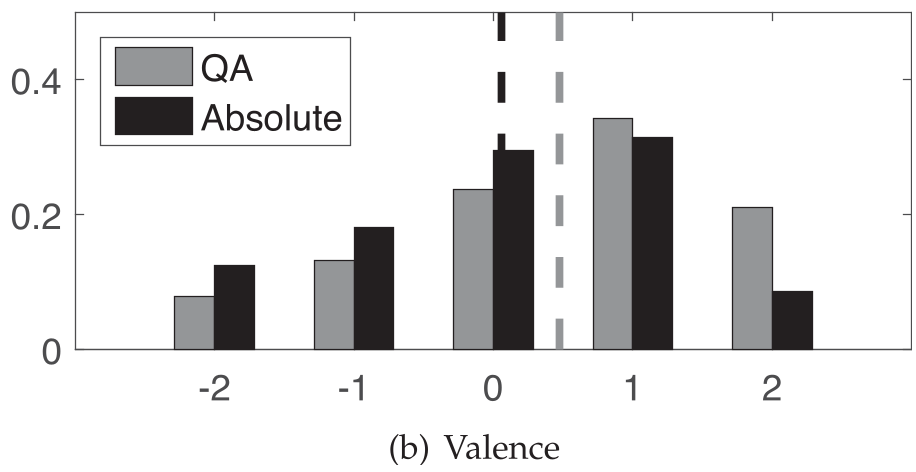 Figure 1: Frameworks for predicting hotspots, highlighting the ensemble of regressors vs. direct classification.
By using an ensemble, the system captures the "consensus of predictions," effectively mimicking the human validation process during inference.
Experiments & Results
The researchers tested three frameworks:
- Framework I: Direct classification (Baseline).
- Framework II: Regression on the average trace.
- Framework III: The proposed ensemble of individual regressors.
The results on the RECOLA database were clear: Framework III (Ensemble + QA fusion) consistently outperformed others.
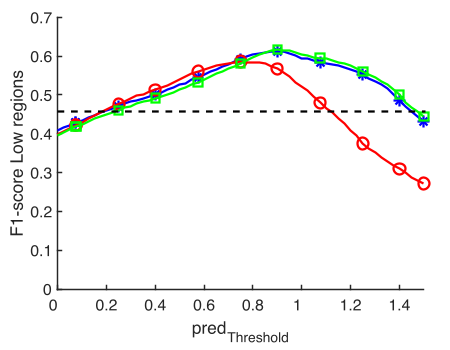 Figure 2: F1-score performance across different frameworks. Higher values in QA-based definition show that "Consensus" labels are easier for models to learn than "Averaged" labels.
Key Technical Insights:
- Arousal vs. Valence: Arousal (excitement) remains much easier to track via acoustics than Valence (positivity/negativity), a common trend in speech processing.
- Reliability Boost: Using the QA-based ground truth increased the inter-rater reliability (Kappa) from 0.33 to 0.52.
- Handling Ambiguity: By discarding "No Consensus" regions, the F1-score jumped, proving that teaching a model "I don't know" is better than teaching it conflicting data.
Critical Analysis & Conclusion
The "Hotspot" approach is an elegant solution to the sparsity of emotion in natural speech. By treating emotion as a relative trend rather than an absolute value, the authors have created a system that is far more suitable for commercial applications like call center quality control or mental health monitoring.
Limitations: The current model relies on acoustic features (eGeMAPS). While effective, many emotional nuances in valence are hidden in facial expressions or lexical content (what is being said), which are not yet fully integrated into this specific ensemble setup.
Future Outlook: The next step for this tech is "in-the-wild" application. If we can detect emotional hotspots without pre-segmenting speech, we can build real-time "Highlight Reels" for human interactions, focusing our attention on the moments that truly matter.