
Smart Healthcare: Predicting Frailty in the Aging City of Bologna
7827_Predicting Frailty Condition in Elderly Using Multidimensional Socioclinical Databases.
This paper presents a smart healthcare framework for the Municipality of Bologna, Italy, featuring two predictive models based on 12 integrated socioclinical databases. Utilizing logistic regression, the study achieves SOTA-level risk stratification for elderly frailty, predicting emergency hospitalization, mortality, and the transition risk from "nonfrail" to "frail" status.
TL;DR
Researchers from the University of Bologna have developed a dual-model system that leverages 12 integrated socioclinical databases to predict frailty in the elderly. Beyond just identifying "who is currently frail," the system uniquely predicts "who is likely to become frail" within a year, achieving an impressive AUROC of 0.879.
Background: The Smart City's Greatest Challenge
As global life expectancy rises, the burden on national welfare systems intensifies. Frailty is no longer viewed as a simple biological decline but a complex interplay of clinical and social factors. This paper moves the needle by treating frailty as a predictable event within a Smart City infrastructure, using the city of Bologna as a massive retrospective cohort.
The "Why": Beyond the Hospital Walls
Existing SOTA methods often suffer from referral bias because they only look at primary care or hospital data. The authors argue that factors like housing conditions, marital status, and income are just as predictive of emergency hospitalization as chronic kidney disease or diabetes.
Methodology: The Architecture of Predictive Health
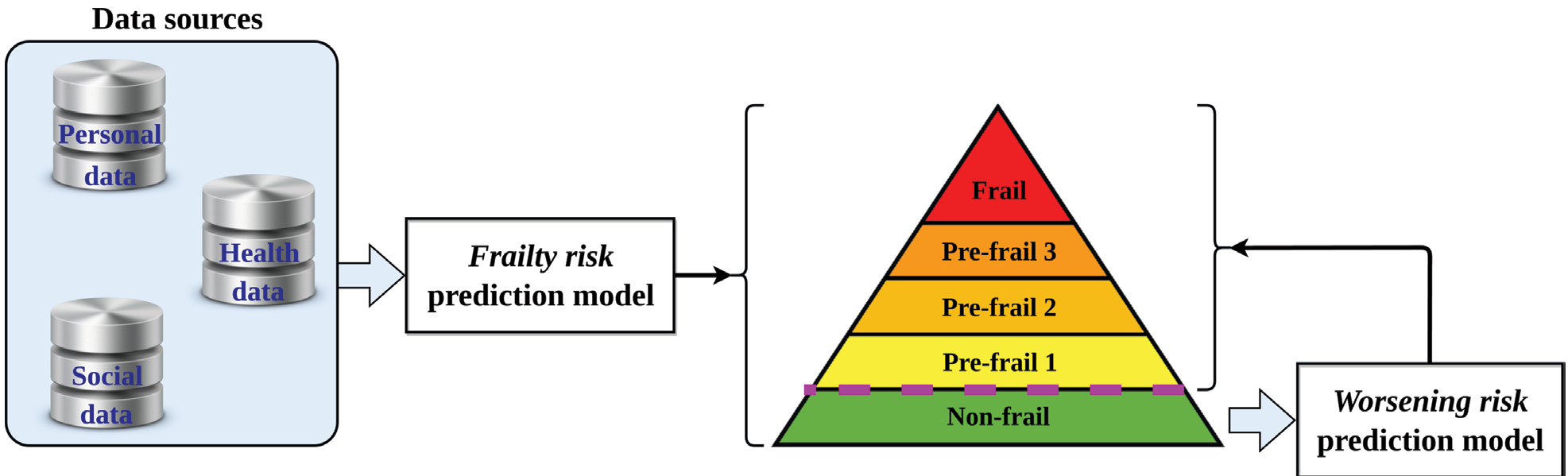
The researchers built a sophisticated data warehouse as the foundation for their analysis. By mapping fiscal codes across a dozen registries (Death, Pharmacy, Mental Health, Civil Registry, etc.), they created a 360-degree view of the individual.
1. The Frailty Risk Model
This model stratifies subjects into five classes: Nonfrail, Prefrail (1, 2, 3), and Frail. It utilizes 27 variables to predict the probability of a "major event" (hospitalization or death).
2. The Worsening Risk Model
This is the paper's most innovative contribution. It isolates the "nonfrail" population and predicts their movement into the frail category within the next year.
Experimental Results: High-Stakes Accuracy
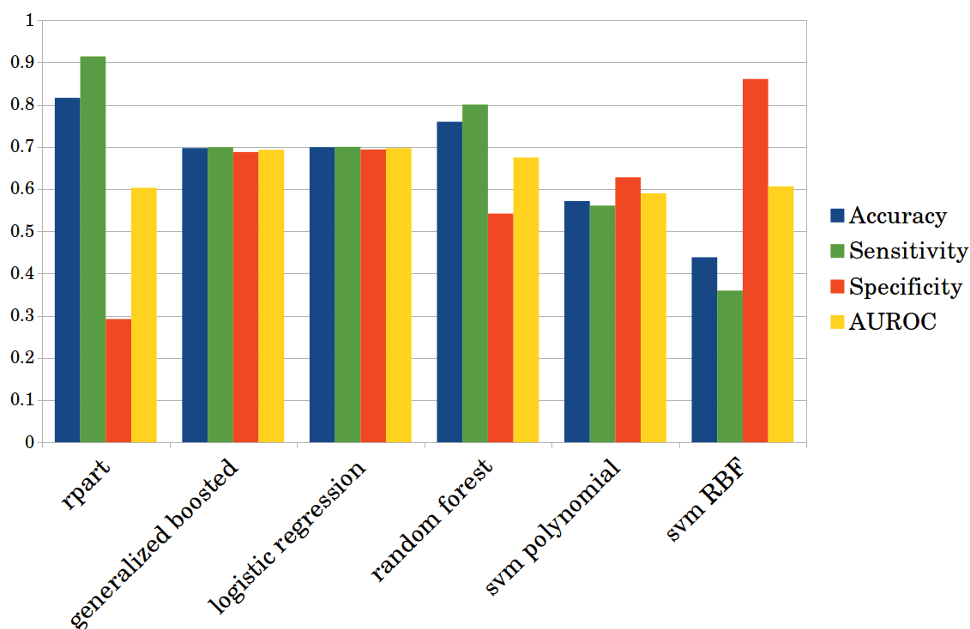
The study compared Logistic Regression with other machine learning algorithms like Random Forest and SVM. Interestingly, while Random Forest showed high accuracy, it suffered from low specificity, meaning it failed to flag the most vulnerable subjects.
| Metric | Frailty Risk Model (Test) | Worsening Risk Model (Test) |
|---|---|---|
| AUROC | 0.6968 | 0.8795 |
| Goodness of Fit | 0.0768 (Hosmer-Lemeshow) | 0.0598 (Brier Score) |
The Worsening Risk Model performed exceptionally well, proving that the markers for "starting to decline" are highly detectable in integrated databases.
Critical Insight & Future Work
The beauty of this work lies in its Interpretability. By using Logistic Regression, the authors provide clear Odds Ratios (ORs) for every variable. For instance, Dementia (OR 1.448) and Home-based care (OR 1.549) are powerful indicators of frailty risk.
Limitations
- Geographic Specificity: The model is optimized for the Italian healthcare and social security structure.
- Social Fluctuations: As noted in 2016 data, socioeconomic changes (like austerity or inflation) can necessitate model recalibration.
Conclusion
This research provides a blueprint for Smart Cities to transform administrative "big data" into life-saving preventive services. By identifying those at risk of becoming frail, cities can intervene with personal transportation, social counseling, and meal programs before a crisis occurs, significantly reducing the burden on Emergency Departments.