
Pediatric Insulin Resistance: Moving from Invasive Blood Tests to ML-Based Screening
Predicting Insulin Resistance in Children Using a Machine-Learning-Based Clinical Decision Support System
The paper introduces a Machine Learning-based Clinical Decision Support System (CDSS) for diagnosing insulin resistance (HOMA-IR) in children using non-invasive anthropometric data. By utilizing a heterogeneous ensemble classifier, the system achieves an overall accuracy of 78%, providing a cost-effective screening tool for pediatric populations.
TL;DR
Researchers have developed a non-invasive Clinical Decision Support System (CDSS) that predicts insulin resistance in children with 78% accuracy. By combining standard biometrics like BMI with age-standardized growth curves (LMS method) and socioeconomic data, the system provides a low-cost, "painless" alternative to traditional blood-based glucose and insulin testing.
Context & Motivation
The worldwide obesity epidemic has led to a surge in Type 2 Diabetes (T2DM) among children—a demographic previously dominated by Type 1 cases. The standard diagnostic metric, HOMA-IR, requires precise blood glucose and insulin levels, necessitating invasive blood draws.
The authors' core "Insight" is that while BMI alone is a weak predictor in growing children, age-standardized anthropometry (relative to population norms) combined with socioeconomic factors can serve as a powerful proxy for metabolic health.
Methodology: The Core Architecture
The system is built on a non-knowledge-based architecture, meaning it learns patterns directly from data rather than relying on predefined medical rules.
1. Standardization via the LMS Method
Children grow at different rates, making a 10-year-old’s BMI incomparable to a 15-year-old’s. The authors utilized the LMS method to convert raw measurements into z-scores (standard deviations from the mean).
This allows the model to understand not just "how heavy" a child is, but "how heavy they are relative to the average child of the exact same age and sex."
2. The Ensemble Stack
Instead of relying on a single algorithm, the study employs a Heterogeneous Ensemble Classifier. This "wisdom of the crowd" approach combines:
- Multilayer Perceptron (Neural Networks)
- Decision Trees & Forests
- Support Vector Machines (SVM)
- Naive Bayesian Networks
- Logistic Regression
Experiments & Results
The model was validated using a dataset from the Glasgow Royal Hospital for Children.
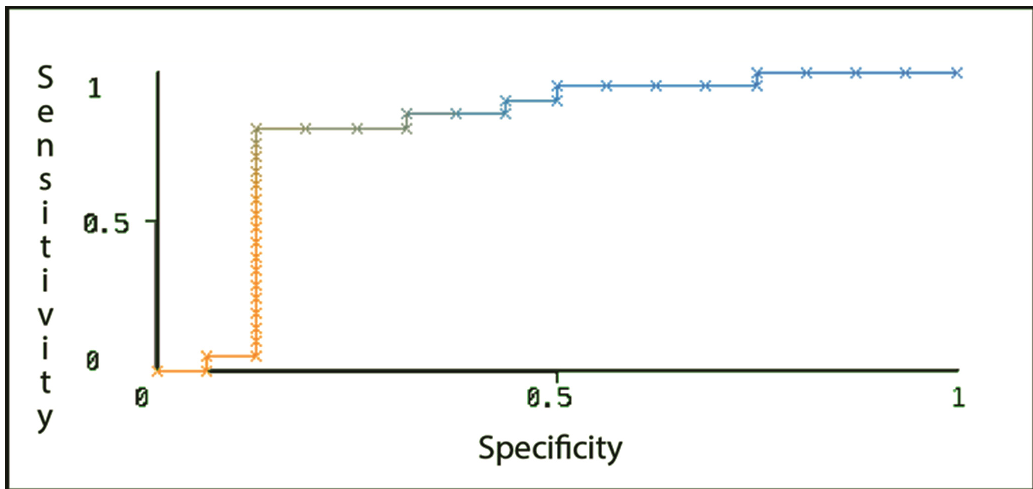
- Performance: 81% Sensitivity (identifying those with IR) and 75% Specificity.
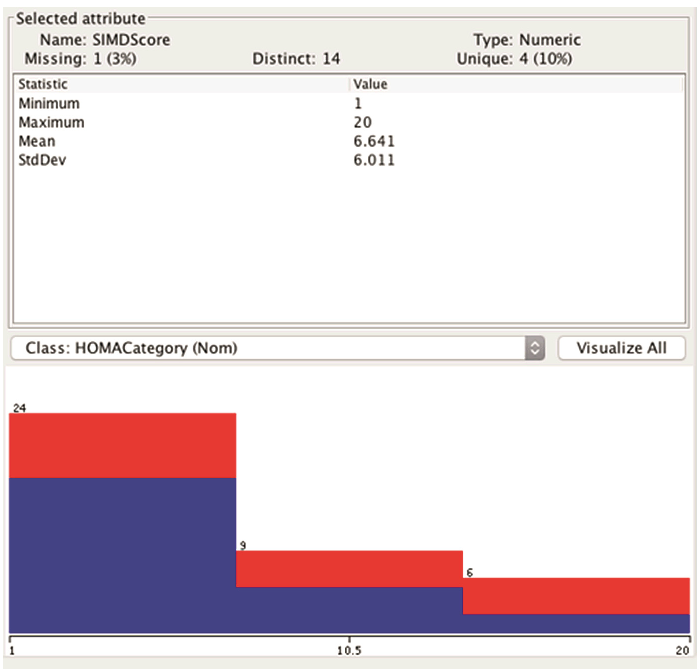
- Social Determinants: The study confirmed a strong correlation between lower postcode deprivation scores (higher poverty) and insulin resistance, as shown in the deprivation histograms.
- Ethnic Predisposition: Simulations indicated that South Asian and African populations had a higher probability of IR at identical BMI levels compared to white populations, reflecting known clinical disparities.
Critical Analysis & Conclusion
Takeaway
This work demonstrates that complex metabolic states can be inferred from "surface-level" data if that data is properly standardized for pediatric growth. The integration of a user-friendly CDSS interface suggests a future where school nurses or parents could perform initial screenings without a lab visit.
Limitations
- Dataset Size: The accuracy (78%) is promising but requires training on a larger, more diverse dataset to reach the 90%+ threshold needed for definitive clinical diagnosis.
- Risk Categorization: The current output provides "Low/Medium/High Risk" rather than a definitive "Yes/No," which is appropriate for screening but limited for diagnostic finality.
Future Outlook
The authors plan to transition this to mobile platforms (iOS/Android). By lowering the barrier to screening, this technology could catch insulin resistance in the "pre-diabetic" stage, allowing for lifestyle interventions before permanent pancreatic damage occurs.