
Intelligent Timing: Boosting ABMS Efficiency with Neural Interaction Prediction
17163_Predicting Interactions Between Agents in Agent-Based Modeling and Simulation of Sociotechnical Systems.
This paper introduces an Intelligent Interaction Timing Component (ITC) for Agent-Based Modeling and Simulation (ABMS) of complex sociotechnical systems. It utilizes a Backpropagation Neural Network (BPNN) to predict interaction times between heterogeneous agents, significantly optimizing the trade-off between simulation accuracy and computational efficiency.
TL;DR
Simulating large-scale sociotechnical systems like air traffic control is a computational nightmare because agents must "sync up" precisely when they interact. This paper introduces an Intelligent Interaction Timing Component (ITC) that uses a Backpropagation Neural Network (BPNN) to predict these interaction moments. The result? A massive reduction in redundant computations without sacrificing the accuracy of emergent system behaviors.
The Synchrony Paradox in Sociotechnical Systems
Agent-Based Modeling and Simulation (ABMS) is the gold standard for studying emergent phenomena. However, developers face a brutal trade-off:
- Synchronous Execution: Every agent updates at every tick. It's accurate but glacially slow.
- Asynchronous Execution: Agents jump ahead in time independently. It's fast, but they might "skip over" critical interactions (like two planes colliding) if the jump is too large.
The authors argue that existing "dead reckoning" (linear extrapolation) isn't enough for complex systems where agents—like human pilots or controllers—constantly change their behavior stochastically.
Methodology: The Intelligent ITC
The core innovation is the Intelligent ITC, a modular framework designed to monitor pairs of agents and predict their next point of contact.
1. The Neural Architecture
Instead of hard-coding physics equations, the authors train a BPNN. In the Air Traffic Control (ATC) test case, the network takes five state variables (range, relative bearings, and airspeeds) and outputs a predicted "time-to-conflict."
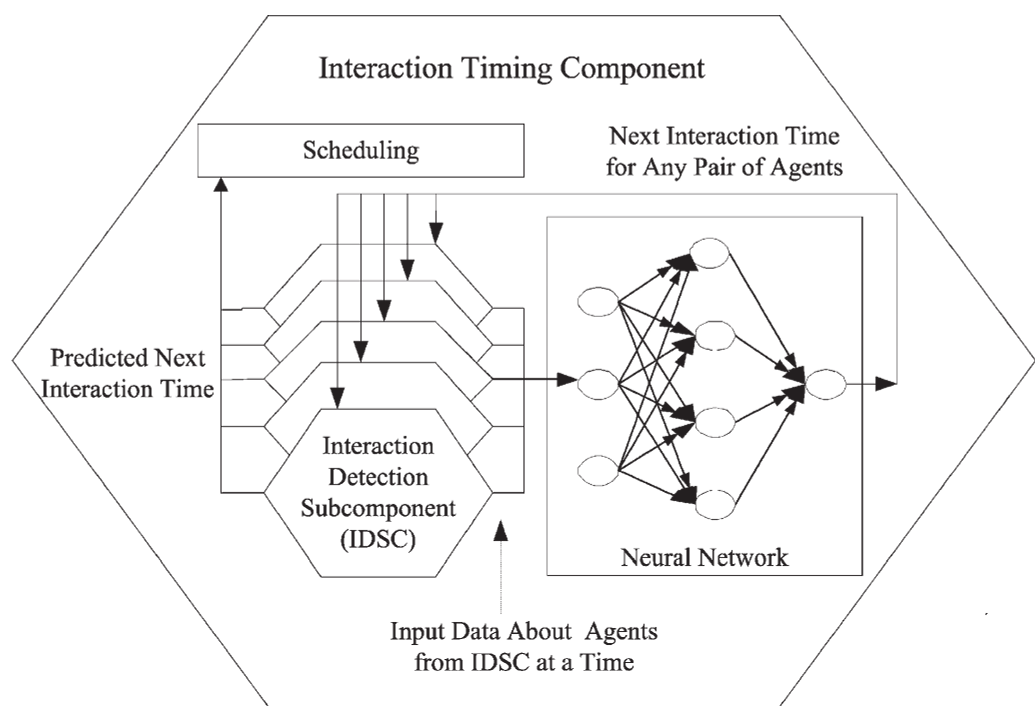 Figure 1: The Intelligent ITC control structure integrating the BPNN into the simulation loop.
2. Balancing Risk via Signal Detection Theory
The authors brilliantly apply Signal Detection Theory (SDT) to simulation timing. They treat an interaction prediction as a "signal" and an unnecessary update as a "false alarm." By adjusting a threshold (), they can make the simulation more "conservative" (fewer missed hits) or "aggressive" (faster execution).
Experimental Results: Air Traffic Control Testbed
The authors simulated aircraft arriving at Atlanta Hartsfield-Jackson Airport. They compared their Intelligent ITC against a Conservative Prediction Method (CPM).
Computational Efficiency
The BPNN-based method outperformed all baselines. By accurately predicting when aircraft actually needed to interact, it eliminated thousands of "unnecessary updates" where the aircraft models would otherwise have had to calculate their states fruitlessly.
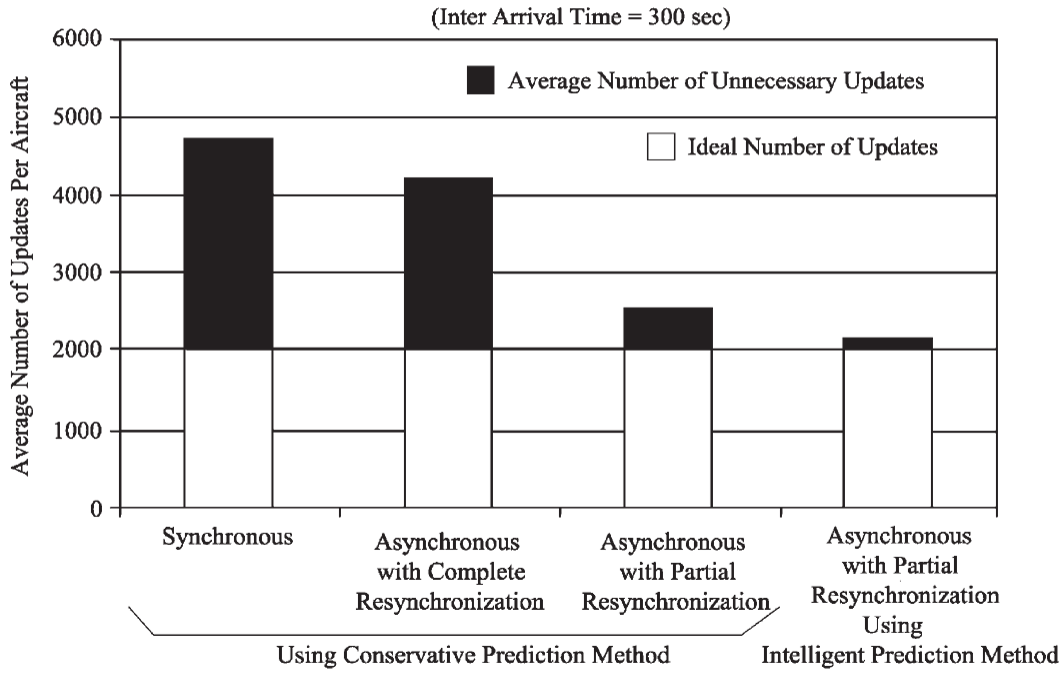 Figure 2: Performance analysis showing the reduction in aircraft updates using partial resynchronization and intelligent prediction.
The SOC Curve Advantage
The System Operating Characteristic (SOC) curves prove that for any given level of "safety" (correctly detecting a potential collision), the Intelligent ITC generates far fewer "false alarms" (wasted CPU cycles) than the conservative model.
Critical Insight: Why This Matters
Most simulation optimizations are domain-specific. This paper provides a generalized framework. If you change the flight routes or the airport layout, you don't need to rewrite the collision logic—you simply retrain the neural network on the new dynamics.
Limitations & Future Work
- Training Overhead: The network requires "pre-simulation" data to learn. Future work could involve online learning, where the agent learns to predict interactions during the live simulation.
- Stochastic Volatility: If the environment becomes too chaotic (e.g., extreme weather), any prediction model will eventually degrade.
Conclusion
By treating simulation timing as a learnable pattern rather than a rigid clock, Lee and Pritchett have opened the door for high-fidelity simulations of vast, complex systems that were previously too "heavy" to run efficiently. For researchers in RL, Digital Twins, and Logistics, this provides a blueprint for smarter, faster agent-based models.