
Beyond the Résumé: The Mechanics of Job Seeking in the Social Media Era
Predicting Intentions to Apply for Jobs Using Social Networking Sites: An Exploratory Study
This exploratory study develops and tests a theoretical model to predict jobseekers' intentions to apply for jobs via Social Networking Sites (SNSs). Using Partial Least Squares (PLS) modeling on a pilot dataset, it integrates the trust-risk paradigm with the Unified Theory of Acceptance and Use of Technology (UTAUT) to explain digital recruitment behaviors.
TL;DR
Social Networking Sites (SNSs) have fundamentally shifted the recruitment landscape from static applications to dynamic social vetting. This study investigates the psychological drivers—Trust, Privacy, and Utility—that determine whether a user will actually use a social platform to apply for a job. The findings reveal that while social capital (knowing someone on the "inside") boosts interest, the fear of "creepy" employer prying remains a significant barrier.
The Core Conflict: Exposure vs. Opportunity
Traditional job boards like Monster.com are transactional. SNSs, however, are relational. This creates a paradox for the modern jobseeker:
- The Benefit: Visualizing "Inside Connections" (first, second, or third-degree contacts at a target company) provides a massive competitive advantage.
- The Risk: Applying via an SNS potentially opens the door for recruiters to browse personal photos, political opinions, and social circles—information that is legally and ethically grey in a hiring context.
Methodology: Bridging E-Commerce and HR
The researchers grounded their model in the Trust-Risk Paradigm (commonly used in B2C e-commerce) and UTAUT (Unified Theory of Acceptance and Use of Technology).
The Research Model
The study evaluated several hypotheses, focusing on how privacy concerns trickle down through risk beliefs to eventually impact the Behavioral Intention (BI) to apply.
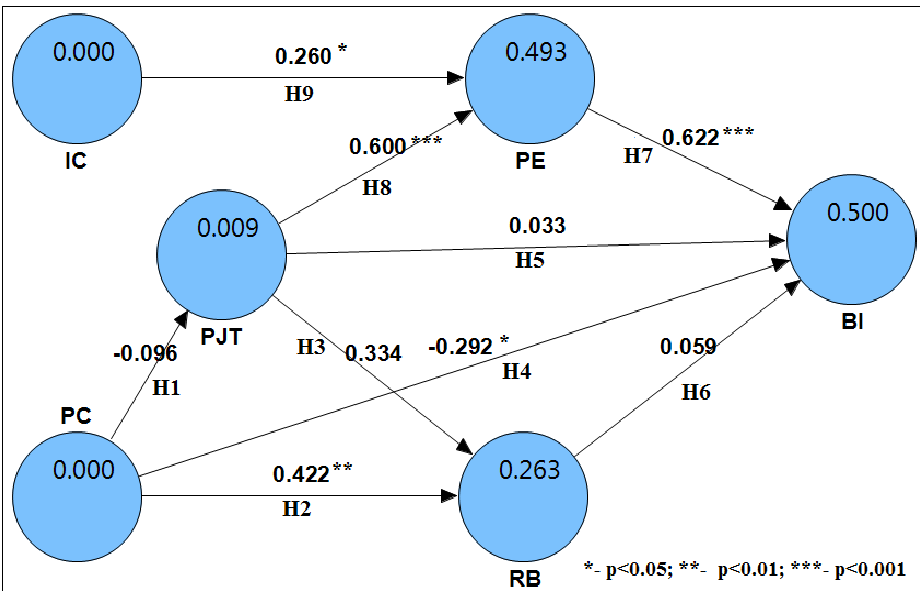 Figure 1: The validated structural model showing significant paths (solid lines) and non-significant ones (dotted lines).
One of the most innovative aspects was the introduction of the "Inside Connections" variable, which tested if simply knowing the platform could show you your internal advocates changed your perception of the tool's value.
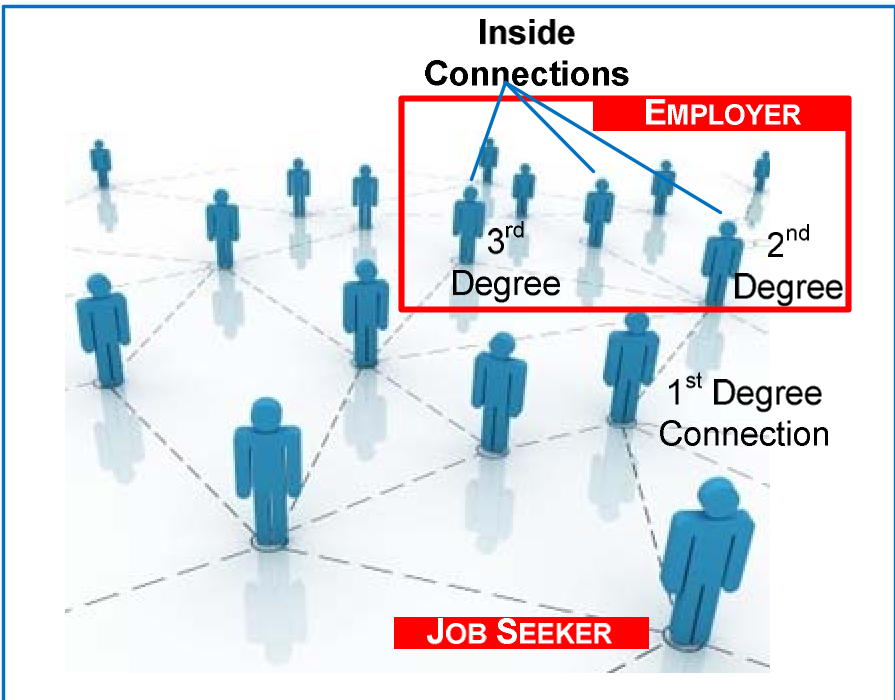 Figure 2: The conceptualization of nested social connections (1st, 2nd, and 3rd degree) as a utility feature.
Key Insights from the Data
The pilot study, involving active and passive jobseekers, yielded several high-signal findings:
- Performance Expectancy is King: By far the strongest predictor of intention (). If a jobseeker believes the SNS will help them land a desirable job faster, they are much more likely to overlook other concerns.
- The Power of Referrals: Providing information about the "Inside Connections" feature significantly improved Performance Expectancy. Social capital is the "killer app" of recruitment SNSs.
- The Privacy Tax: Privacy concerns have a direct negative impact on the intention to apply (). Interestingly, in this specific pilot, these concerns did not significantly damage trust in the recruiters but acted as an independent deterrent.
- The Trust Paradox: Perceived Justice (the belief that recruiters will be fair) didn't directly lead to more applications, but it did boost the perceived utility of the platform. Trust makes the tool feel more effective.
Performance Distribution & Analysis
The researchers used Partial Least Squares (PLS) to handle the relatively small pilot sample (). The measurement model showed high internal consistency (Cronbach’s Alpha > 0.7 for all constructs).
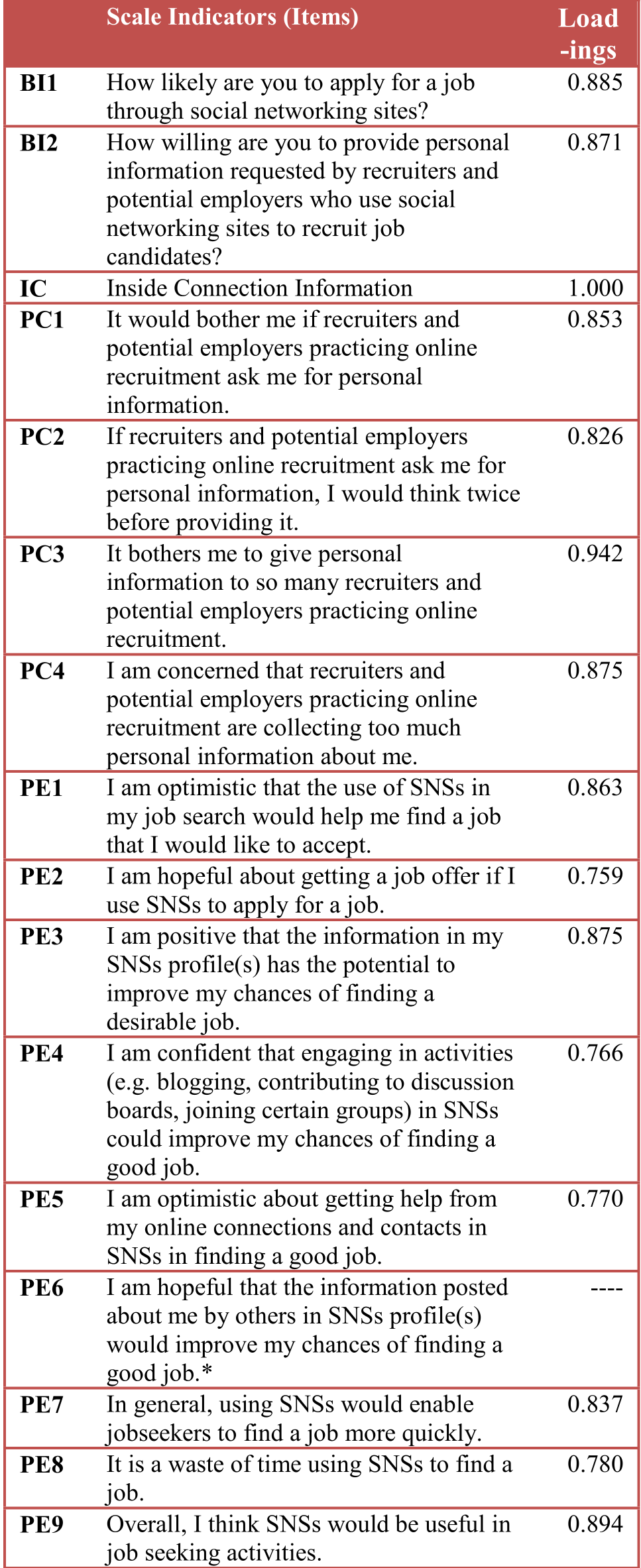 Table 1: Factor loadings for Performance Expectancy and Privacy Concerns, demonstrating high convergent validity.
Critical Analysis & Future Outlook
While this study was exploratory, it highlights a critical "Return on Investment" (ROI) problem for platforms like LinkedIn. If candidates are afraid to apply because of privacy, the quality and quantity of the applicant pool drop, reducing the value for recruiters.
Limitations:
- The sample was student-heavy, potentially skewing more tech-optimistic.
- It utilized a hypothetical "Inside Connections" illustration rather than a live platform interaction.
The Takeaway for the Industry: Platform designers must move beyond "just another job board" features. To win, an SNS must maximize the visibility of Social Capital (Inside Connections) while implementing strict Privacy Firewalls that reassure candidates that their Saturday night photos won't influence their Monday morning interview.
Conclusion
This research provides a foundational roadmap for understanding the "Social" in Social Recruiting. It proves that while utility drives adoption, privacy concerns are the friction that can stall the entire engine.