
PREP: Revolutionizing Supercomputer Scheduling via Job Running Path Insights
PREP: Predicting Job Runtime with Job Running Path on Supercomputers
This paper introduces PREP (Path RuntimE Prediction), a novel framework for job runtime estimation on supercomputers to optimize backfilling scheduling. By leveraging a new feature called "job running path" and utilizing sub-models based on job clusters, PREP achieves a state-of-the-art prediction accuracy of 88.5%.
TL;DR
To solve the chronic underutilization of supercomputers caused by inaccurate runtime estimates, the PREP framework introduces a simple yet brilliant insight: the directory path from which a job is submitted is a highly accurate predictor of its duration. By clustering jobs based on "Running Paths" and training specialized sub-models, PREP pushes prediction accuracy to 88.5%, outperforming standard baselines by over 13%.
The Problem: The "Overestimation Trap"
Supercomputers typically use First-Come-First-Serve (FCFS) with Backfilling. Backfilling is essential—it allows small, short jobs to jump the queue and fill idle resource "holes" reserved for large head jobs.
However, backfilling relies on knowing exactly how long a job will run. Users, fearing their jobs will be killed if they exceed their time limit, notoriously overestimate runtimes. Traditional ML models have tried to fix this by looking at User ID or CPU count, but these features are often too coarse to distinguish between a quick test run and a heavy production simulation.
The Core Insight: The "Running Path" as a Fingerprint
The authors discovered that a job's running path (e.g., /home/user/project_v1/test_run/) is strongly correlated with its actual runtime. Paths often encode:
- The specific project or application version.
- The dataset size or type.
- The experimental phase (e.g., "test" vs "final").
Method: Intelligent Path Clustering
Because file paths are strings with deep hierarchical meaning, a simple string comparison isn't enough. PREP uses a Weighted Levenshtein Distance, where segments closer to the root (like the project folder) carry more weight than the final subdirectory.
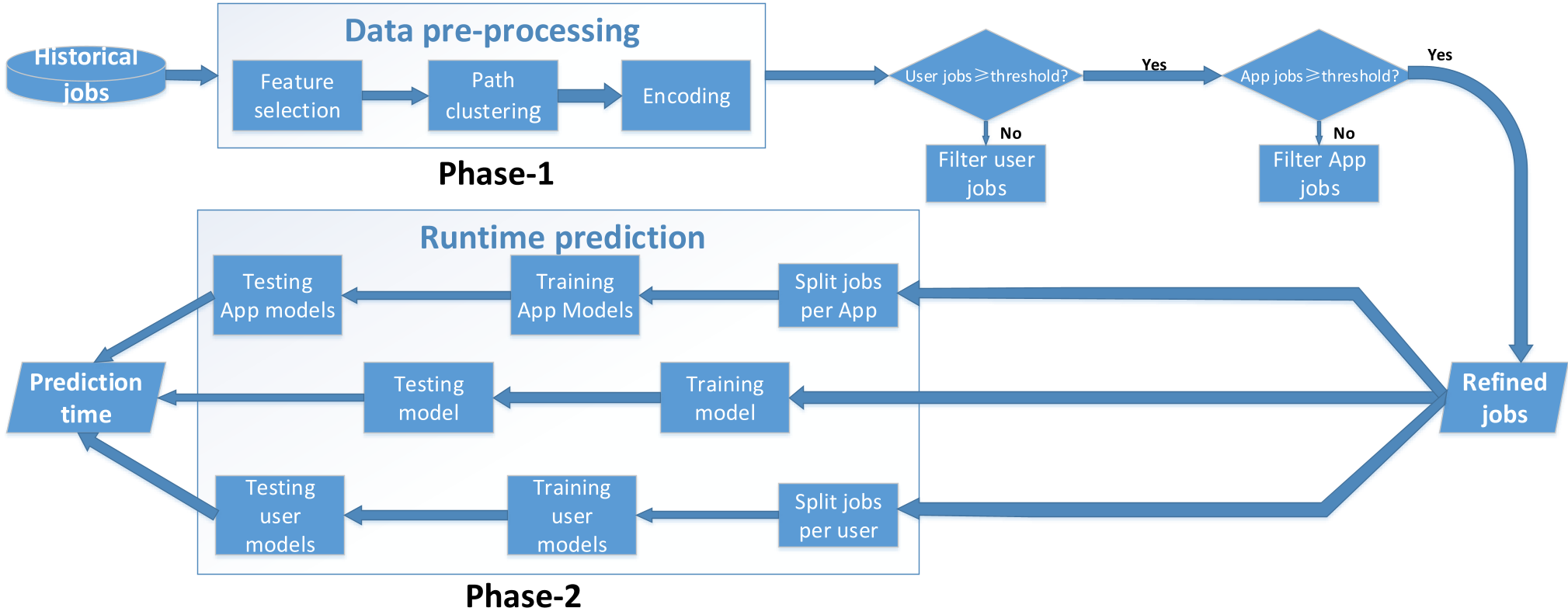
The framework follows a sophisticated pipeline:
- Feature Selection: Using Pearson correlation to eliminate redundant features (keeping
ReqCPUS,UID,Submit Time, etc.). - Path Refinement: Removing non-alphabetical characters to group similar experimental iterations.
- App Sub-modeling: Instead of one "global" model, PREP creates specialized experts (Sub-models) for different clusters of applications.
Experiments: Proving the Path's Value
The researchers tested PREP against 211,113 historical jobs from the CARDC supercomputer.
1. Does the Path actually help?
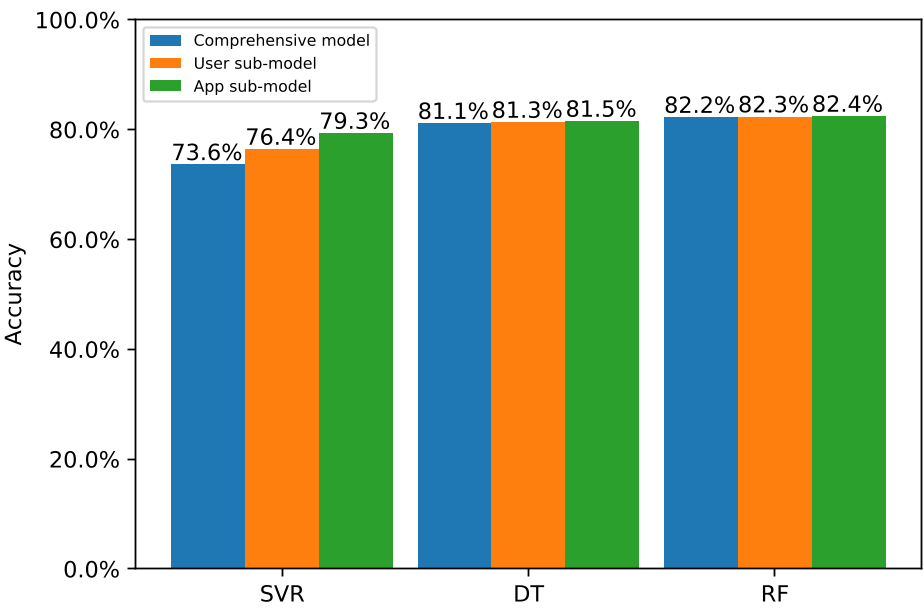
Yes. Comparing models with and without the "Path" feature showed a consistent accuracy jump across all algorithms.
2. SOTA Comparison
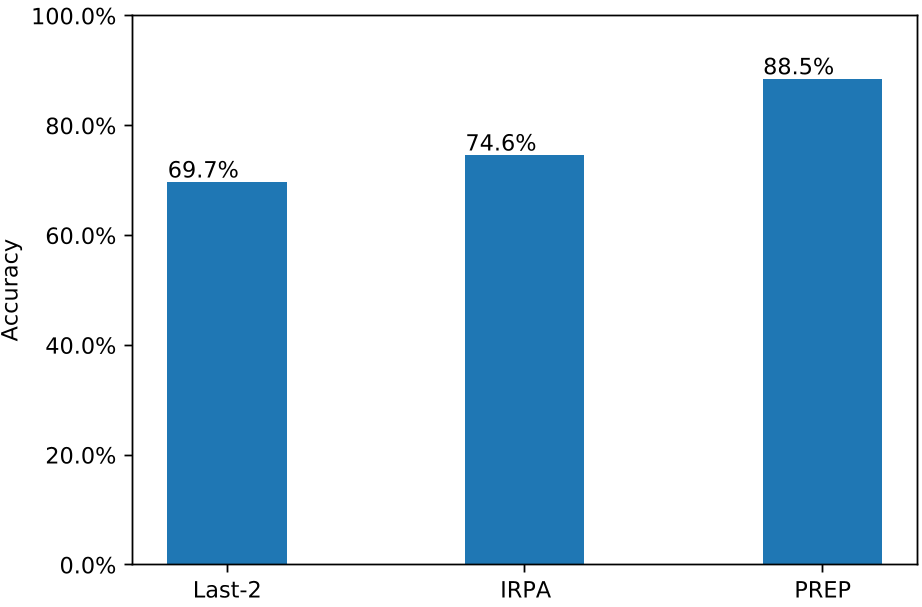
PREP was compared against Last-2 (a common heuristic using the average of the last two jobs) and IRPA (a multi-model synthesis). PREP's Decision Tree (DT) approach reached 88.5%, providing a much more reliable signal for the scheduler.
Deep Insight: Navigating the Low-Accuracy "Long Tail"
The authors provide an honest look at where ML fails. About 20% of applications showed lower accuracy. The cause? Data Scarcity. Applications with fewer than 10 historical jobs or those labeled as "testing" are inherently erratic. PREP handles this by identifying these low-confidence clusters, allowing the system to fall back on user estimates for "new" or "experimental" paths while using ML for the "heavy lifters."
Conclusion
PREP proves that the "context" of a job—where it lives in the filesystem—is just as important as the job's "specs" (CPUs/Memory). By transforming string-based path hierarchies into mathematical clusters, PREP provides a practical, high-accuracy tool for modern HPC centers to reclaim wasted idleness and slash queue wait times.
Key Takeaway: In system optimization, sometimes the most valuable features are hiding in plain sight in the metadata of the environment.